Can you have aioli while pregnant? Usually yes when it is commercial, pasteurized, refrigerated, and served from a clean source. Double-check house-made garlic aioli, fresh restaurant sauces, homemade mayo, and raw-egg dressings because ordinary raw egg changes the risk. Do now: ask whether the sauce is commercial/pasteurized or made in-house with raw egg.
Source basis: This guide cross-checks the practical answer against U.S. Food and Drug Administration (FDA), NHS UK, American College of Obstetricians and Gynecologists (ACOG) and the full references listed below.
Raw egg dessert and brunch decision map
Searchers are splitting the same safety question across tiramisu, raw egg desserts, mayo, aioli, runny yolks, and brunch dishes. Use the exact path below before treating every raw-egg query as the same answer.
Quick answer: aioli while pregnant, store-bought mayo, or house-made sauce
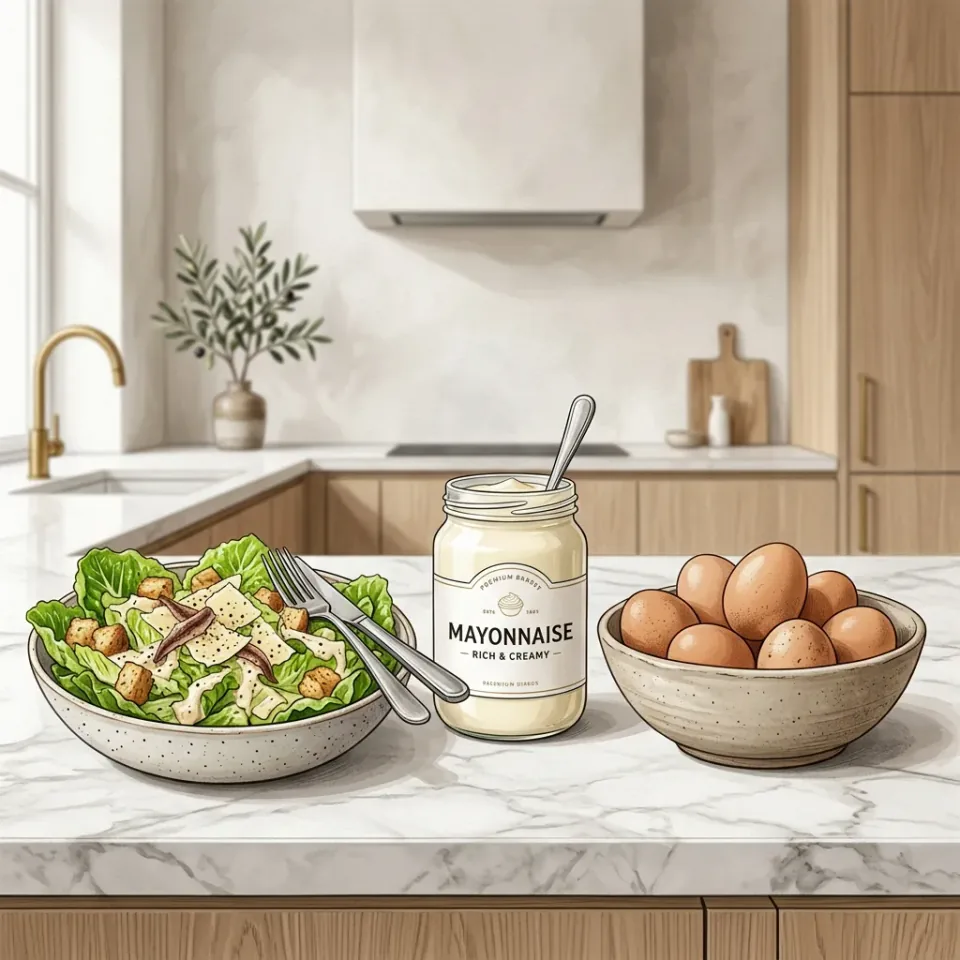
For aioli while pregnant, the useful split is commercial and pasteurized versus house-made with raw egg. Store-bought mayonnaise, bottled dressings, and many commercial sauces are usually made with pasteurized egg products, which makes them a lower-concern option when they are in date and stored as directed.
House-made garlic aioli, fresh restaurant emulsions, homemade mayo, and classic raw-egg sauces deserve one quick question before you eat: is the egg pasteurized, egg-free, or ordinary raw egg?
Commercial and cold
Raw egg risk reasons
Ask one question
Warning signs
Exact ingredient
Can you have aioli while pregnant?
Yes, you can usually have aioli while pregnant when it is commercial, pasteurized, refrigerated, and served from a clean source. The answer changes with house-made aioli because classic aioli often uses raw or lightly cooked egg.
At a restaurant, ask one plain question: is the aioli commercial/pasteurized or made in-house with raw egg? If staff cannot confirm, choose a bottled pasteurized sauce, an egg-free sauce, or a different topping. That single detail covers most of the search intent behind aioli pregnancy questions.
Commercial aioli
House-made aioli
Already ate it
Why raw eggs pose a risk in pregnancy
The primary safety concern with raw or undercooked eggs is Salmonella food poisoning, caused by the bacterium Salmonella Enteritidis. The Food and Drug Administration (FDA) and the CDC warn that Salmonella can contaminate eggs before the shell even forms. During pregnancy, immune changes make you more vulnerable to severe illness.
According to the American College of Obstetricians and Gynecologists (ACOG), Salmonella does not cross the placenta to infect the baby directly. However, severe maternal vomiting, diarrhea, high fever, and resulting dehydration can cause maternal complications that increase the risk of preterm labor or fetal distress.
It is important to understand that Salmonella is a bacterial pathogen that affects your digestive tract. Symptoms usually appear between 12 and 72 hours after eating contaminated food and can include fever, abdominal cramps, and severe diarrhea that lasts 4 to 7 days. Because hydration is vital for maintaining amniotic fluid and supporting fetal circulation, any severe bout of vomiting or diarrhea requires immediate medical evaluation and supportive care, such as intravenous fluids if you are unable to keep liquids down.
Bacterial Risk
Maternal Impact
When raw eggs are safe: Pasteurization and the British Lion exception
Pasteurization is a common, heat-treatment process that makes eggs safe for pregnant women without altering their culinary properties. By heating the eggs just enough to destroy active Salmonella bacteria, food producers can create stable, creamy emulsions without cooking the egg white or yolk. This ensures that the texture and taste of your favorite dressings remain identical while becoming reassuringly safe.
If you are in the UK, National Health Service (NHS) guidelines state that hen eggs stamped with the red British Lion mark are safe to eat raw or runny. The laying hens are vaccinated against Salmonella under this scheme, eliminating the risk. Eggs without the Lion stamp must still be cooked until both yolk and white are solid.
The pasteurization process involves heating shell eggs to a precise temperature of 140°F (60°C) for exactly 3.5 minutes. If you are preparing your own custom dressings or egg-based desserts from scratch, purchasing commercially pasteurized shell eggs at the supermarket is a reliable way to make these recipes safe at home.
Commercial Pasteurized
UK British Lion Stamped
Ordinary Shell Eggs
What to do next and when to call a doctor
When dining at restaurants, creamy dressings and specialty sauces are often prepared fresh from scratch. Always ask your server if the Caesar dressing, hollandaise, or aioli contains raw, unpasteurized eggs. As a next step, if the kitchen cannot confirm or uses fresh raw eggs, choosing a pasteurized bottled brand or egg-free alternative is a much safer option.
For home cooking, you don't have to give up classic recipes. Supermarket pasteurized shell eggs are worth checking out—these have been heat-treated, making it easy to prepare safer homemade dressings, runny yolks, or egg-based desserts.
At social gatherings, picnics, or buffet lines, take extra care with mayonnaise-based salads like potato salad, coleslaw, or macaroni salad. Even if made with pasteurized mayonnaise, these dishes are susceptible to bacterial growth if left at room temperature. The FDA recommends discarding any perishable foods left out for more than two hours, or one hour if the ambient temperature is above 90°F (32°C). Always ensure cold dishes are kept chilled on ice.
What not to overthink
If you accidentally ate mayonnaise on a sandwich from a standard restaurant or deli, you do not need to be overly concerned. The FDA notes that the vast majority of restaurants use commercial, pre-made mayonnaise because it is shelf-stable and cost-effective.
Also, do not treat one bite as a diagnosis. Salmonella risk is mainly about whether symptoms develop and whether the food was likely raw, unpasteurized, or poorly stored. If you feel well, note what you ate and move back to pasteurized or fully cooked choices. If fever, repeated vomiting, diarrhea, dehydration, severe cramps, blood in stool, or feeling seriously unwell appears, ask your care team for advice.
Keep the decision small
Use Doola for checks
How the Doola Research Team researched this
The Doola Research Team performed a source-first review of food safety guidelines from the FDA, CDC, USDA, ACOG, and the UK NHS to define safe eating habits and help you check high-risk ingredients during pregnancy. Our guide focuses on translating clinical care and food safety requirements into clear, practical kitchen decisions for expectant parents, helping you check ingredients with confidence and avoid unnecessary worry.
Related questions
When you are managing daily dietary choices during pregnancy, you need quick, reliable answers from the CDC and FDA about raw egg exposure, Salmonella risk factors, and safe food preparation. Here are clear, source-backed answers to the most frequent questions parents ask about mayonnaise, dressings, and runny eggs.
Is aioli safe during pregnancy? expand_more
Is commercial mayonnaise pasteurized? expand_more
Can I eat runny or soft-boiled eggs while pregnant? expand_more
What desserts contain raw eggs? expand_more
When should I call my doctor after raw egg exposure? expand_more
References
Source-cited references used for this article. Open the original guidance when you want the public-health details behind the summary.