|Pregnancy symptoms

Why Do I Pee So Much While Pregnant? Causes and When to Call

schedule 5 min read
Authors: Doola Research Team
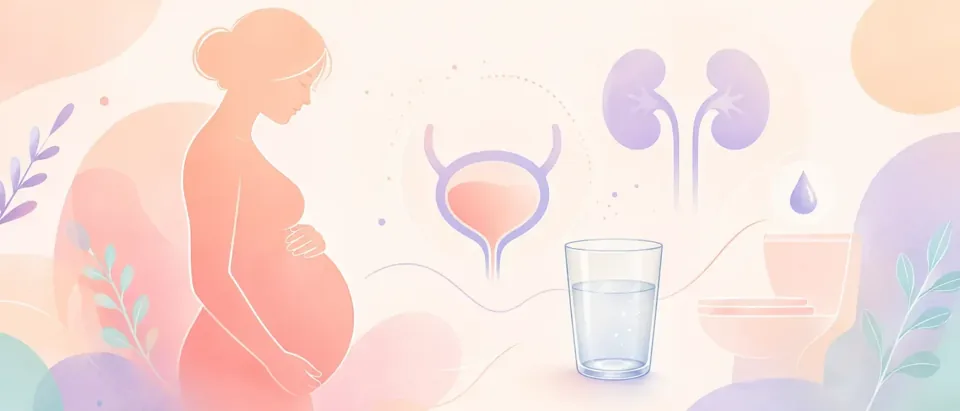
Abstract pregnancy illustration showing hydration, bathroom trips, and bladder pressure.

If you are asking why do I pee so much while pregnant, the usual answer is that pregnancy changes fluid handling and the growing uterus can press on the bladder. In guidance, according to MedlinePlus, frequent urination can start early and continue through pregnancy. ACOG's 2023 UTI guidance matters because urinary symptoms can also overlap with infection. In practice, peeing more often is common, but it is not a 100% diagnosis of a normal symptom. For example, a gradual increase without pain or fever usually fits a common pregnancy pattern, while burning, sharp pain, fever, blood in urine, back or side pain, cloudy or foul-smelling urine, nausea, vomiting, or feeling unwell should move the question to clinician guidance.

Is peeing a lot normal during pregnancy?

Peeing a lot during pregnancy is often normal, but the useful first step is to separate a common pressure-and-fluid pattern from urinary symptoms that need care. In guidance, according to MedlinePlus, frequent urination can happen early and throughout pregnancy. ACOG's 2023 UTI guidance says suspected UTI symptoms should be discussed with an ob-gyn or clinician. In practice, this quick scan is not a 100% diagnosis tool; it helps decide what to try, what to watch, and when to call. For example, gradual frequency without pain, fever, blood, or illness is different from sudden urinary urgency with burning, back pain, cloudy urine, or feeling unwell.

Is this normal? check_circle

Often, yes

Peeing more often is common in pregnancy, especially when it builds gradually and does not come with pain, fever, blood, or feeling unwell.
Why it happens science

Fluid changes + pressure

Pregnancy can change how your body handles fluid, and a growing uterus can press on the bladder so it feels full sooner.
What to do water_drop

Hydrate, do not hold it

Keep drinking water, avoid holding urine for long stretches, and try shifting more fluids earlier in the day if nights are hardest.
Call if medical_services

Pain or illness shows up

Burning, sharp pain, fever, blood, cloudy or foul-smelling urine, back or side pain, or feeling unwell should be checked with your clinician.
Related topics travel_explore

What to look into next

Useful next topics include UTIs in pregnancy, hydration, pelvic-floor changes, urine leakage, and nighttime bathroom trips.

Why can pregnancy make you pee more?

Frequent urination during pregnancy is usually a fluid-and-pressure symptom. In guidance, according to MedlinePlus, many people make more bathroom trips early in pregnancy, and urination can stay more frequent throughout pregnancy. First, pregnancy changes blood volume and fluid handling, so the kidneys may process more fluid. Second, the uterus grows and can press on the bladder, especially later in pregnancy.

In practice, the symptom is common but not a 100% explanation for every urinary change. ACOG's 2023 urinary-tract guidance is important because burning, pain, fever, blood, cloudy urine, foul odor, back pain, or feeling unwell can point away from routine pregnancy pressure and toward clinician input.

When does frequent urination happen during pregnancy?

Frequent urination can happen in more than one pregnancy stage. In guidance, according to MedlinePlus, bathroom trips can increase early and stay more frequent throughout pregnancy. First trimester changes can reflect fluid shifts. Third trimester changes often reflect pressure as the uterus and baby sit closer to the bladder. In practice, timing is useful but not a 100% safety check; symptoms and your baseline matter more than the exact week.

First trimester schedule

Early pregnancy

Frequent urination can begin early in pregnancy, even before your belly looks different. If there is no pain, fever, blood, or feeling unwell, this can fit a common pregnancy pattern.

Source
Second trimester trending_flat

Mid-pregnancy

Some people notice fewer bathroom trips as the uterus rises higher in the belly. Others stay about the same, which is why your personal baseline is the useful comparison.

Source
Third trimester compress

Late pregnancy

Later in pregnancy, pressure on the bladder can make you feel full sooner. You may go more often and pass less urine each time.

Source
Call if symptoms appear medical_services

Any stage

Burning, pain, fever, blood, cloudy or foul-smelling urine, back or side pain, or feeling unwell should be treated as a reason to contact your clinician rather than just waiting.

Source

What is usually normal with pregnancy urination?

Normal pregnancy urination can mean more bathroom trips, waking at night to pee, feeling like the bladder fills faster, or passing smaller amounts each time. In guidance, according to MedlinePlus, frequent urination is a common pregnancy symptom, and NIDDK explains that bladder pressure and pelvic-floor changes can contribute to leakage or urgency. In practice, a steady increase without pain or illness is more reassuring than a sudden change with symptoms. For example, third-trimester bladder pressure can create frequent small trips even when hydration is normal.

The useful comparison is your own baseline, not a perfect number of bathroom trips. Normal does not mean pleasant, and it is not a 100% rule. Step 1 is comparing the pattern with last week or last month. Step 2 is checking for burning, fever, blood, back pain, cloudy urine, or feeling unwell. Step 3 is raising extreme, new, or disruptive frequency at prenatal care even without classic infection signs.

wc

More trips

You may need the bathroom more often than before pregnancy, including overnight.
compress

Less each time

Later in pregnancy, pressure can mean the bladder holds less, so each trip may produce a smaller amount.
accessibility_new

Some leaking

Leaking with coughing or sneezing can happen. Pelvic-floor exercises may help, and persistent leakage is worth discussing with your clinician.

When should you call your clinician?

Call your clinician when frequent urination comes with infection or illness signals. In guidance, according to ACOG, pregnant people who think they may have a UTI should call their ob-gyn right away because urine testing can confirm infection and treatment is available. ACOG's 2023 clinical consensus also treats UTIs in pregnancy as important to identify and manage.

In practice, call for burning, sharp pain, fever, chills, blood, cloudy or foul-smelling urine, lower belly pain, back or side pain, nausea, vomiting, inability to pee, or a sudden major change. This list is not a 100% diagnosis, but it is a useful threshold for clinician guidance.

medical_services
Burning, sharp pain, or pain while peeing, especially if it is new.
medical_services
Blood in your urine, cloudy urine, or urine that smells unusually strong or foul.
medical_services
Fever, chills, nausea, vomiting, or feeling generally unwell with urinary symptoms.
medical_services
Lower belly pain, back pain, or side/flank pain, which can matter more in pregnancy.
wc
Not being able to pee or empty your bladder, or a sudden major change in your usual pattern.

What can you try today?

The goal is not to stop peeing during pregnancy. The goal is to stay hydrated, reduce avoidable bladder irritation, and notice when the pattern changes into something that deserves medical input. In guidance, according to MedlinePlus, pregnant people may need more water, so sharply cutting fluids because bathroom trips are annoying can create a different problem. For example, dehydration can make a parent feel worse while failing to solve bladder pressure.

In practice, first shift more fluids earlier in the day if nighttime trips are hardest. Second, take time to empty the bladder and avoid long stretches of holding urine. Third, ask about pelvic-floor support if leakage or urgency disrupts daily life. These steps are not a 100% fix, but they are safer than dehydration or ignoring burning, fever, blood, back pain, cloudy urine, or feeling unwell.

medical_services
Keep drinking water through the day unless your clinician has given you a different fluid plan.
water_drop
If nights are the hardest, try drinking more earlier in the day and less right before bed.
wc
Take your time when peeing, and try leaning forward to help empty the bladder more completely.
wc
Avoid holding urine for long stretches, especially if you are already uncomfortable.
accessibility_new
Ask about pelvic-floor exercises or pelvic-floor physical therapy if leakage, pressure, or urgency is affecting daily life.

What questions come up about peeing more while pregnant?

Frequent urination during pregnancy raises practical questions: whether the pattern is normal, why the symptom happens, what to try, whether the change could be a UTI, and whether the baby could be affected. In guidance, according to MedlinePlus, frequent urination can be common in pregnancy; in guidance, according to ACOG's 2023 UTI guidance, symptoms that suggest infection should be checked. In practice, these answers are not a 100% diagnosis tool. First, compare frequency with the usual baseline. Second, check for burning, sharp pain, fever, blood, back or side pain, cloudy or foul-smelling urine, nausea, vomiting, or feeling unwell. Third, bring persistent or disruptive symptoms to prenatal care even when the pattern seems common.

Is peeing a lot normal during pregnancy? expand_more
Often, yes. Frequent urination is common in pregnancy, especially early and late. It is more reassuring when it builds gradually and does not come with burning, pain, fever, blood in urine, back or side pain, cloudy or foul-smelling urine, or feeling unwell.
Why does pregnancy make me pee more? expand_more
Pregnancy can change how your body handles fluid, and the growing uterus can put pressure on the bladder. That can make your bladder feel full sooner, even when there is not much urine to pass.
What should I do if I pee a lot while pregnant? expand_more
Keep drinking water unless your clinician gave you a different plan, avoid holding urine for long stretches, try drinking more earlier in the day if nights are hardest, and take your time when peeing so your bladder empties as much as possible.
When should I call my clinician? expand_more
Call promptly if frequent urination comes with burning, sharp pain, fever, chills, blood in urine, cloudy or foul-smelling urine, lower belly pain, back or side pain, nausea, vomiting, or a sudden major change in your pattern.
Could peeing a lot mean a UTI while pregnant? expand_more
It can. A UTI can overlap with normal pregnancy frequency, so symptoms like burning, pain, fever, blood, cloudy or foul-smelling urine, or feeling unwell should be checked with your ob-gyn or clinician.
Can frequent urination affect my baby? expand_more
Frequent urination by itself is usually a pregnancy symptom, not a direct sign that something is wrong with the baby. The risk changes if it points to an untreated UTI, dehydration, fever, pain, blood in urine, or feeling unwell, which is why those symptoms should be checked.
What related topics should I look into next? expand_more
Useful next topics include UTI symptoms in pregnancy, hydration during pregnancy, pelvic-floor changes, urine leakage, sleep disruption from nighttime bathroom trips, and when to call your prenatal care team.

How did the Doola Research Team research this?

The Doola Research Team's method is source-first: for frequent urination during pregnancy, we reviewed MedlinePlus pregnancy symptom guidance, ACOG UTI patient guidance, ACOG's 2023 clinical consensus on UTIs in pregnancy, NHS UTI information, and NIDDK bladder-control education. We analyzed the parent question in three parts: what is usually normal, what to try, and what symptoms should prompt care.

In practice, the article is educational and not a 100% diagnosis tool. We use public-health and clinician-facing sources to separate common pregnancy patterns from warning signs, then turn those sources into plain-English next steps for parents.

fact_check

Source first

We prioritized public-health and clinician-facing sources such as MedlinePlus, ACOG, NHS, and NIDDK before writing the article.
psychology

Parent question first

We mapped the article around what a parent wants to know quickly: whether this is normal, why it happens, what to do, and when to call.
medical_services

No diagnosis

We flag symptoms that should prompt clinician guidance, but we do not diagnose UTIs, dehydration, bladder conditions, or pregnancy complications.

What should you check next in Doola?

Frequent urination is the kind of pregnancy question where parents often do not know what they do not know yet. Doola is being built to turn vague symptoms into proactive, source-linked next steps instead of leaving you to search alone. In practice, a urinary symptom question can connect to hydration, UTIs, pelvic-floor support, sleep disruption, and prenatal-care questions.

Use Doola Learn and the Doola app as an orientation layer, not a 100% diagnosis tool. The next useful step is to save your symptom pattern, check warning signs, and bring persistent or worrying changes to your clinician.

References

Source-linked references used for this article. Open the original guidance when you want the public-health details behind the summary.