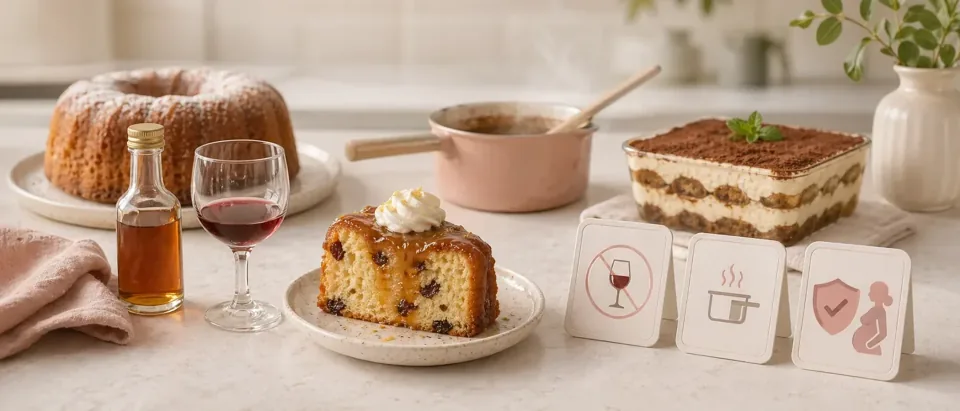
Alcohol in food while pregnant is usually a cooking-method question, not just an ingredient question. More reassuring: a small amount of wine or beer added early and cooked down in a sauce, stew, or braise. Avoid or check: tiramisu, rum cake, boozy frosting, flambé, uncooked desserts, marinades, or alcohol added late. Do now: ask when alcohol was added and choose alcohol-free if the answer is unclear.
Source basis: This guide cross-checks the practical answer against CDC, ACOG, NHS and the full references listed below.
Cooked early is different from added late
Alcohol in food while pregnant comes down to timing, heat, and amount. Wine simmered into a stew for a long time is different from rum in frosting, tiramisu, flambé, or a sauce where alcohol is added at the end. If the finished food still tastes alcoholic, the simpler pregnancy choice is to avoid it.
CDC and ACOG guidance is clear that there is no known safe amount of drinking alcohol during pregnancy. For food, the practical question is whether alcohol is still a meaningful part of the serving. Long cooking can reduce alcohol, but it does not make every recipe alcohol-free.
Long-cooked background flavor
Alcohol-forward foods
First practical step
Warning signs
Read next
Long-cooked sauce or stew
Boozy dessert or late-added sauce
If it already happened
Three-second version
Why cooking does not make every dish alcohol-free
The common myth is that alcohol always “burns off.” In real cooking, alcohol reduction depends on heat, time, surface area, and when the alcohol was added. A quick pan sauce, flambé, or cold dessert can keep more alcohol than a long-cooked stew.
Pregnancy guidance is stricter for alcoholic drinks than for trace cooked flavor, but the safest everyday rule is simple: avoid food where alcohol is still a feature, and choose the alcohol-free version when the recipe is unclear.
Certain point
Risk changes when
The restaurant question that matters
The timing is the point. Alcohol added early to a sauce and cooked down has a different risk profile from alcohol stirred in at the end, brushed on after baking, or poured into a cold dessert. At a restaurant, ask, “Is alcohol added before cooking, or is it still in the finished dish?” If the answer is vague, choose another item.
More reassuring
A sauce, stew, or braise where alcohol was added early and cooked down.
Needs a check
Desserts, sauces, or fillings where alcohol is uncooked, added late, or still noticeable.
Next step
Ask when the alcohol was added; choose alcohol-free if the answer stays unclear.
What to do with sauces, desserts, and swaps
For cooked sauces, ask when alcohol was added and how long the dish cooked. For desserts, ask whether the recipe uses rum, liqueur, wine, raw egg, or unpasteurized dairy. When you cannot check, alcohol-free swaps such as stock, citrus, vinegar, herbs, juice, or alcohol-free extract keep the decision simple.
When to call your clinician
Clinical guidance cannot turn one vague food memory into a precise number. If you intentionally drank alcohol, had an alcohol-forward food, or feel stuck in worry, call your care team for personalized advice. If raw egg or unpasteurized dairy was involved, check that food-safety risk too.
Call now for
Also check for
Personal context
What not to overthink
You do not need to interrogate every sauce forever. The practical split is alcohol as a cooked background flavor versus alcohol as the point of the dish.
Keep the decision small
Use Doola for checks
How we checked this
We checked CDC and ACOG pregnancy alcohol guidance, NHS alcohol-in-pregnancy guidance, and USDA alcohol-retention data for cooked foods. This guide separates alcohol as a long-cooked flavor from alcohol-forward foods; it is educational and does not diagnose or replace your care team.
References
Source-cited references used for this article. Open the original guidance when you want the public-health details behind the summary.