|Pregnancy food safety

Queso Fresco Pregnancy Safety: Can You Eat It?

schedule 10 min read
Authors: Doola Research Team
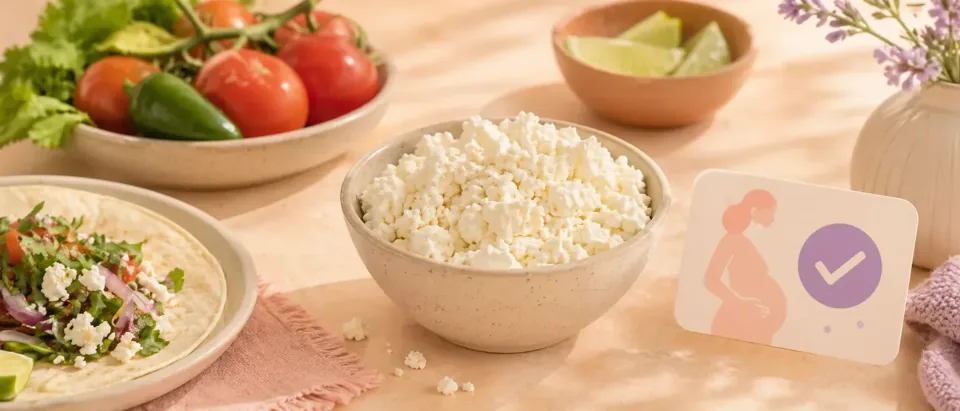
Editorial illustration of queso fresco, taco ingredients, and pregnancy food-safety guidance.

Queso fresco pregnancy guidance is cautious: the practical answer is usually to avoid queso fresco-type cheeses. The 2025 answer, according to FDA consumer guidance, is that pregnant women and other high-risk groups should not eat queso fresco-type cheeses. CDC also keeps soft cheeses in its listeria education because outbreaks have been linked to soft cheeses and raw milk, and CDC notes pregnant people are about 10 times more likely to get listeria infection than other adults. First, a pasteurized label lowers one risk but does not guarantee every later handling step was safe. Second, queso fresco is fresh, moist, refrigerated, and ready to eat, which makes, for example, a safer swap easier than trying to judge one serving.

Queso fresco pregnancy safety has a cautious answer: soft fresh cheeses are one of the food categories where a simple label check does not always settle the question. FDA and CDC both keep calling out queso fresco-type cheeses because they can support listeria contamination and growth even when the milk itself was pasteurized.

First, sort what this means

If you only have a minute, use this scan before reading the full article. It separates the practical food-safety answer from the label details, exposure follow-up, and symptoms that should move you toward clinician guidance.

The short version is source-linked and action-first: according to FDA 2025 guidance, high-risk groups, including pregnant people, should avoid queso fresco-type cheeses, and CDC explains that soft cheeses have been involved in listeria outbreaks. CDC also notes pregnant people are about 10 times more likely to get listeria infection than other adults. In practice, a pasteurized label is useful but not a 100% guarantee after production and handling. First, decide whether the food is a queso fresco-type fresh cheese. Second, if you already ate it, identify the product and watch for symptoms instead of guessing from the label alone.

Can I eat it? block

Usually avoid it

FDA guidance for high-risk groups, including pregnant people, is to avoid queso fresco-type cheeses rather than trying to judge each serving casually.
Why it matters science

Soft fresh cheese supports risk

Queso fresco is fresh, moist, ready to eat, and repeatedly linked with listeria concerns. Pasteurized milk helps but does not remove every handling risk.
What to do restaurant

Choose a safer swap

For tacos, bowls, or cravings, use a different cheese profile or a fully cooked hot preparation instead of cold crumbled queso fresco.
Already ate it? fact_check

Check product + symptoms

One exposure does not mean you will get sick. Identify the brand or restaurant, check recall context, and watch for symptoms.
Call if medical_services

You feel unwell

Fever, muscle aches, diarrhea, vomiting, stiff neck, confusion, or feeling unwell after possible exposure should be discussed with your clinician.
Related topics travel_explore

What to look into next

Useful next checks include listeria during pregnancy, deli meats, smoked seafood, recalls, and other refrigerated ready-to-eat foods.

Why does queso fresco pregnancy safety keep coming up?

Queso fresco pregnancy safety keeps coming up because FDA and CDC guidance treats soft fresh cheese as a repeated listeria-risk pattern, not just an old internet warning. In 2025, according to FDA and CDC materials, the pattern matters more than brand confidence: queso fresco is usually eaten cold, stored refrigerated, and added after cooking. CDC also says pregnant people are about 10 times more likely to get listeria infection than other adults.

The core issue is that pasteurization lowers one risk but is not a 100% guarantee if contamination happens later in production, storage, or serving. In practice, the safest framing is not "which queso fresco can I justify?" but "what swap gives me the same meal without a repeatedly flagged refrigerated ready-to-eat cheese?"

Jan 16, 2025
CDC updates its soft cheese and raw milk guidance and keeps queso fresco in the higher-risk category.
2025 FDA update
FDA refreshes consumer education materials recommending high-risk groups avoid queso fresco-type cheeses.

What queso fresco situations are higher concern?

The risk logic is not limited to one exact brand name. The category that raises concern is fresh, soft, high-moisture cheese that is ready to eat and usually kept refrigerated. Queso fresco is the headline example, but similar cheeses can create the same question depending on how they are produced and handled.

In practice, queso fresco pregnancy risk is highest when the cheese is cold, crumbly, fresh, and added after a dish is already cooked. The 2025 public-health answer, according to FDA guidance, is that the safer decision for pregnant people is to avoid queso fresco-type cheeses rather than trying to verify every production and storage step. A pasteurized label is helpful, but it is not a 100% guarantee after handling. CDC's soft-cheese guidance points to the same risk pattern, and CDC notes pregnant people are about 10 times more likely to get listeria infection than other adults.

restaurant

Queso fresco eaten cold

Fresh, high-moisture cheese repeatedly linked to listeria outbreaksAvoid during pregnancy
task_alt

Pasteurized queso fresco

Pasteurization helps, but contamination can still happen after that stepDo not assume the label alone makes it low concern
restaurant

Freshly cooked dish using another cheese

Hot preparation lowers some ready-to-eat risk patternsOften the easier swap when you want the same meal profile
restaurant
Queso fresco and queso fresco-type cheeses bought prepackaged or served fresh.
restaurant
Soft fresh cheeses from deli counters, markets, or restaurants when sourcing and handling are not clear.
restaurant
Crumbly cheese toppings added cold after cooking, especially if they stay refrigerated and ready to eat.
medical_services
Other soft cheeses if they are made from raw milk or if an outbreak or recall notice is active.

What should you do if you already ate queso fresco?

One exposure does not mean you will get sick, and the next step is usually to get specific rather than panic. The practical questions are whether the cheese was part of a current recall or outbreak notice, how recently you ate it, and whether you have symptoms that need clinician input.

This is also one of the situations where it helps to know the exact product. A wrapped cheese from a store, a restaurant topping, and a homemade dish do not all create the same follow-up path.

First, write down the brand, restaurant, date, and amount if you can. Second, check FDA or CDC recall and outbreak pages for the product or producer. Third, contact your clinician promptly if fever, muscle aches, diarrhea, vomiting, stiff neck, confusion, or feeling unwell appears after a possible listeria exposure. In practice, one exposure is not a 100% sign of illness, but symptom context matters. This matters because, according to CDC, pregnancy makes listeria more important because pregnant people are about 10 times more likely to get listeria infection than other adults.

1.
Check the exact product or restaurant if you can identify it.
2.
Look for any current FDA or CDC recall or outbreak notice tied to that food.
3.
Pay attention to symptoms and contact your clinician if you feel unwell or are worried about exposure.
4.
Use a source-linked guide for your next question instead of relying on vague "pasteurized is always fine" summaries.
restaurant
Was it definitely queso fresco or another soft fresh cheese?
restaurant
Do you know the brand, restaurant, or store source?
medical_services
Is there any active recall, outbreak, or public-health notice involved?
medical_services
Do you have symptoms or a reason to call your clinician now?

What are safer swaps for queso fresco?

Most people asking about queso fresco are trying to solve a real meal, not win a technical food-safety debate. That means a good swap should keep the same dish easy to eat. In practice, that often means using a different cheese profile or a hot preparation instead of trying to negotiate whether one fresh crumbled topping is probably okay.

A safer swap is a food decision that removes the cold fresh-cheese pattern while keeping the meal familiar. The 2025 public-health answer, according to FDA guidance, is that the avoid-list is focused on queso fresco-type cheeses for high-risk groups, so the swap should remove that category rather than rely on a label guess. In practice, no substitute is a 100% guarantee, but removing the flagged category lowers the decision burden. For example, use sealed shredded cheese from a reliable source, a fully heated filling, avocado, salsa, beans, or another topping that is not a refrigerated queso fresco-type cheese.

restaurant

Taco or bowl topping

Swap to a sealed pasteurized shredded cheese or another cheese that is not in the queso fresco-type category.
restaurant

Crumbly fresh-cheese craving

Choose a fully cooked hot dish or another topping from a source you trust instead of cold fresh cheese.

What should you check next after queso fresco?

If this question came from one specific meal, the best next move is usually to compare it with nearby foods in the same risk pattern. Soft cheeses, deli meats, and smoked seafood often trigger the same kind of pregnancy question: refrigerated, ready to eat, and easy to underestimate.

Doola's next-step logic is cluster-based: once queso fresco raises a listeria question, parents often need the same framework for deli meat, smoked seafood, refrigerated spreads, and recalls. This matters because, according to CDC, pregnant people are about 10 times more likely to get listeria infection than other adults. In practice, one article is not a 100% safety plan, so reading those related 2025 food-safety guides turns one search into a safer checklist instead of isolated yes-or-no answers.

What questions come up about queso fresco during pregnancy?

Queso fresco during pregnancy is a listeria-risk question, not just a cheese-label question. These short answers summarize FDA 2025 and CDC guidance for pasteurization, accidental exposure, safer swaps, risk to pregnancy, and when to call. This matters because, according to CDC, pregnant people are about 10 times more likely to get listeria infection than other adults. First, use the FAQ to separate food category, exposure, and symptoms. Second, remember that a FAQ is not a 100% diagnosis tool. In practice, the source-linked answers are orientation for the next step, not a replacement for clinician advice.

Can I eat queso fresco while pregnant if it says pasteurized? expand_more
FDA guidance still recommends that pregnant people and other high-risk groups avoid queso fresco-type cheeses. Pasteurization lowers one risk, but contamination can still happen after pasteurization during production, handling, or storage.
What should I do if I already ate queso fresco while pregnant? expand_more
Try to identify the exact product, restaurant, or store source. Check whether a recall or outbreak notice applies, and contact your clinician if symptoms appear or if you are worried about a specific exposure.
What symptoms matter after eating queso fresco? expand_more
Fever, muscle aches, diarrhea, vomiting, stiff neck, confusion, loss of balance, or feeling unwell after a possible exposure are reasons to contact your clinician. This article cannot diagnose listeriosis.
What is the risk of queso fresco during pregnancy? expand_more
The concern is listeria. Pregnant people can have mild symptoms while listeriosis can still create serious pregnancy risks, so public-health guidance treats queso fresco-type cheeses cautiously instead of relying only on a pasteurized label.
What can I use instead of queso fresco? expand_more
A sealed pasteurized shredded cheese, a different lower-concern topping, or a fully cooked hot dish can often solve the same meal craving without relying on cold fresh cheese.

How did the Doola Research Team research this?

The Doola Research Team's method is source-first: for queso fresco pregnancy safety, we reviewed FDA 2025 consumer guidance, FDA's listeria food-safety materials, and CDC soft-cheese listeria guidance before writing practical next steps. We analyzed the parent question in three parts: whether to eat it, what pasteurization changes, and what to do after exposure.

This article is not a diagnosis tool. The research summary, according to FDA and CDC guidance, is that listeria prevention depends on both food category and handling context, and CDC notes pregnant people are about 10 times more likely to get listeria infection than other adults. Doola turns that evidence into a cautious decision flow rather than a casual yes-or-no answer.

fact_check

Source first

We prioritized FDA and CDC guidance before summarizing queso fresco-type cheese risk, pasteurization nuance, and exposure follow-up.
psychology

Parent question first

We organized the article around the real search intent: whether queso fresco is safe, what the label does and does not solve, and what to do if you already ate it.
medical_services

No diagnosis

We flag symptoms that should prompt clinician guidance, but we do not diagnose listeriosis or replace care from a clinician.

References

Source-linked references used for this article. Open the original guidance when you want the public-health details behind the summary.