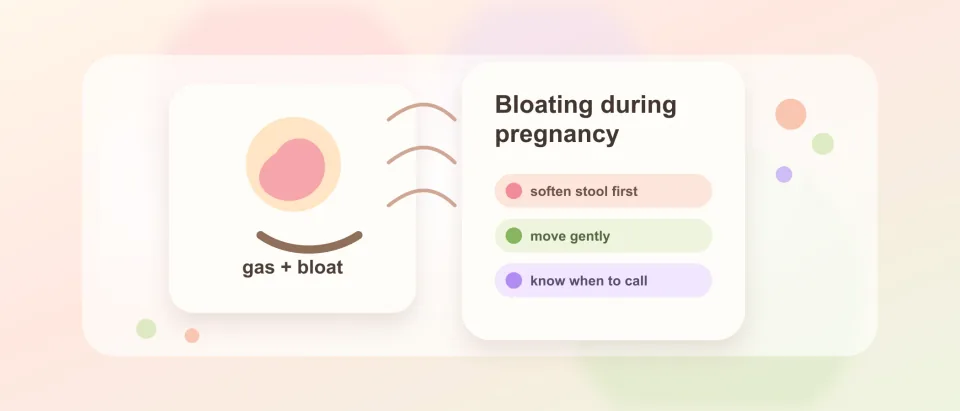
Bloating during pregnancy is common, especially early on or when constipation is in the mix. Pregnancy hormones can slow digestion, which makes gas and fullness easier to feel. Do first: soften stool, sip fluids, move gently, eat smaller meals, and track foods that reliably make the pressure worse. Get care advice if pain is strong, lasting, or comes with vomiting, bleeding, fever, or major bowel changes.
Source basis: This guide cross-checks the practical answer against ACOG, Mayo Clinic, Cleveland Clinic and the full references listed below.
Quick start: what usually helps first
Short answer: bloating during pregnancy is usually a digestion-and-pressure problem, not a sign that something is wrong with the baby. ACOG and Mayo Clinic connect pregnancy bloating with slower digestion, gas, and constipation.
Do now: soften stool, reduce trapped gas, and notice repeat triggers. Get care advice if pain feels strong, lasts, or comes with bleeding, fever, vomiting, chest pain, or major bowel changes.
Full, tight, gassy belly
Worse by evening
Soften stool gently
Big meals and gas foods
Strong pain or new symptoms
Full, gassy, worse after meals
Bloating plus hard stool
Strong pain or pain that will not settle
Why pregnancy can make bloating feel intense
ACOG describes pregnancy hormones as one reason the digestive system can slow down. Mayo Clinic also lists bloating and constipation among common pregnancy symptoms. Put simply: food and stool may move more slowly, so gas has more time to build up.
That is why bloating often travels with constipation, heartburn, or gas pain. A meal that used to feel normal can suddenly sit heavy. A day with less water, less movement, or more iron-related constipation can make the belly feel tight by late afternoon.
This can be annoying and surprisingly uncomfortable, but it is not a character flaw. You are not “doing pregnancy wrong.” The pattern is what matters: mild gas pressure that shifts is different from sharp, strong, or persistent pain.
Early pregnancy
Bloating can show up before a visible bump because digestion may already be moving more slowly.
Constipation days
Hard stool or infrequent bowel movements can make gas harder to pass, adding pressure and cramps.
Later pregnancy
As the uterus grows, fullness, reflux, and pressure can feel more obvious after meals or long sitting.
What to do next
Start with the pressure pattern. If bloating is worse after meals, try smaller portions, slower eating, and a short gentle walk. Mayo Clinic connects bloating with gas buildup and constipation, so helping gas move can matter.
If constipation is present, treat that first. ACOG suggests fiber-rich foods and plenty of water. Increase fiber gradually; a sudden jump can create more gas before it helps.
Adjust triggers instead of over-restricting. If beans, broccoli, cabbage, fizzy drinks, or very large meals repeatedly bother you, reduce the portion, spread them out, or choose a gentler swap for now.
When to call about bloating or gas pain
Call your care team if bloating comes with strong or persistent abdominal pain, vomiting, fever, bleeding, chest pain, shortness of breath, or a sudden bowel change. Mayo Clinic gas guidance treats symptom-linked pain as worth medical advice.
Also ask if constipation lasts, you cannot pass stool or gas, pain keeps returning, or you are considering medicine. Mayo Clinic pregnancy guidance recommends checking before stool softeners or laxatives.
Use urgent care if pain feels severe, one-sided, or frightening. Bloating can be common; escalating pain deserves a real person, not more scrolling.
Pain that does not behave like gas
Vomiting, fever, bleeding, chest pain
Medicine questions
What not to overthink
A belly that looks more pregnant at night than in the morning is often a common gas-and-stool pattern. Meals, fluid shifts, and constipation can change how your abdomen feels through the day.
Do not treat every bloated day as a diet failure. The next step is simpler: check constipation, eating speed, fluids, movement, and one or two repeat triggers.
If you are comparing bloat vs bump, the answer may become both over time. A true bump grows more steadily; bloat usually changes faster.
Morning-to-night change is common
Keep the foods that work
How the Doola Research Team researched this guide
We started with the real parent question behind the search: “I feel huge, gassy, and uncomfortable; is this common, and what can I safely do?” We reviewed ACOG, Mayo Clinic, and Cleveland Clinic guidance on pregnancy digestion, constipation, gas, bloating, food triggers, and medicine caution.
This guide is source-reviewed educational support. It does not diagnose abdominal pain, bowel disease, infection, pregnancy complications, or medication safety. Use it to choose gentle steps and decide what to bring to your clinician or pharmacist.
References
Source-cited references used for this article. Open the original guidance when you want the public-health details behind the summary.
 ACOG: What can help with constipation during pregnancy?
acog.org
open_in_new
ACOG: Problems of the Digestive System
acog.org
open_in_new
ACOG: What can help with constipation during pregnancy?
acog.org
open_in_new
ACOG: Problems of the Digestive System
acog.org
open_in_new