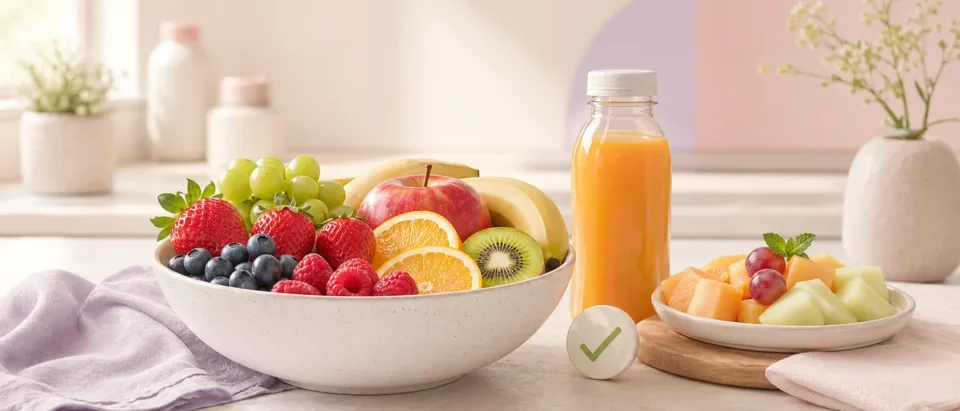
Fruits during pregnancy are generally a safe food category, not a fruit-by-fruit avoid list. In this 2026 Doola review, our analysis found that the answer usually changes because of handling: washing whole fruit, keeping cut fruit cold, choosing pasteurized juice, and watching symptoms after a possible exposure. According to FDA, produce should be washed under running water before eating, cutting, or peeling; according to CDC, pregnant women are a higher-risk group for foodborne illness. First, choose whole fruit that looks fresh. Second, wash it before the knife goes in. Third, treat pre-cut fruit, unpasteurized juice, and raw sprouts more carefully. For example, 100% fruit juice can still be the wrong choice if it is unpasteurized.
Is fruit safe during pregnancy? Start here
Fruit during pregnancy is best understood as a handling question. In this 2026 Doola framework, our analysis separates fruit safety into whole fruit, cut fruit, juice, sprouts, symptoms, and exact-fruit questions. According to FDA, the practical baseline is to wash produce under running water before eating, cutting, or peeling. According to FoodSafety.gov, pregnant women are a higher-risk group for foodborne illness, so the same kitchen habits carry more weight. First, whole washed fruit is usually the low-concern pattern. Second, pre-cut fruit depends on cold storage and clean prep. Third, juice should be pasteurized. For example, a washed orange peeled at home is a different risk pattern than a warm party tray of cut melon.
Most whole fruits are safe
The risk is handling, not fruit itself
Wash, chill, and choose pasteurized
Do not ignore illness after exposure
Check exact fruits next
What fruit rules actually matter during pregnancy
Fruits during pregnancy are not treated by official public-health sources as a universal avoid category. The citable rule is narrower: according to FDA, fruits and vegetables can carry harmful bacteria if they are not handled safely, and produce should be washed under running water before eating, cutting, or cooking. Our 2026 Doola analysis found that broad fruit searches often mix nutrition, foodborne illness, and exact-fruit myths into one question. First, choose fruit that looks fresh. Second, rinse it before the knife touches it. Third, keep cut fruit cold. For example, washing a melon rind matters because cutting can move surface germs onto the edible fruit.
FDA produce guidance also says not to use soap, detergent, or commercial produce wash on fruits and vegetables. For firm produce, a clean produce brush can help; for all produce, clean hands, clean knives, and clean boards matter. According to FoodSafety.gov, pregnant women should be especially careful about foodborne illness because pregnancy changes the risk context. That does not mean every fruit is dangerous. It means the safest answer is a repeatable routine: wash, separate, chill, choose pasteurized juice, and call a clinician if symptoms appear after a questionable exposure.
Whole fresh fruit
Pre-cut fruit and cut melon
Juice and cider
Raw sprouts
When fruit safety matters most across pregnancy
Fruit safety matters across pregnancy because the risk point changes from shopping to symptoms. In our 2026 Doola framework, the question is not whether fruit is 100% safe in every setting; no food guide can promise that. The question is which step reduces risk right now. According to FDA, produce safety starts before cutting, because washing under running water should happen before eating, peeling, or slicing. First, shopping is about fresh produce and pasteurized juice. Second, meal prep is about clean hands, boards, knives, and counters. Third, serving is about keeping cut fruit cold. Finally, after a possible exposure, symptoms and recall context decide whether to call a clinician.
Shopping
Pick fruit without major bruising or damage. Choose pasteurized juice or cider. Keep pre-cut fruit cold from store to home.
Washing and cutting
Wash whole fruit under running water before cutting or peeling, including melons and citrus. Use clean knives, boards, counters, and hands.
Serving
Serve cut fruit cold and avoid fruit trays that have been left out for long periods. Refrigerate leftovers promptly.
After a possible exposure
Write down what you ate, when, whether it was pasteurized or refrigerated, and call your clinician if fever, vomiting, diarrhea, stiff neck, confusion, or unusual illness appears.
Which fruits deserve extra context?
Specific fruit searches deserve context because parents are often asking about different risks under the same word 'fruit.' Our 2026 Doola analysis found four recurring patterns: pineapple questions often come from labor myths, papaya questions often mix ripe and unripe papaya, dates questions often appear late in pregnancy, and grapefruit questions may involve medication interactions. According to FDA and CDC food-safety framing, the broad safety issues are still washing, refrigeration, pasteurization, and symptoms. For example, cut melon is a handling question, while grapefruit with medication is a clinician or pharmacist question. The hub should explain the pattern, then send exact-fruit intent to Can-I-Eat pages.
This hub-and-spoke split protects search clarity. A broad Learn page can answer 'fruits during pregnancy' with source-linked rules, while Can-I-Eat pages answer narrower questions such as papaya, pineapple, watermelon, dates, grapefruit, cherries, or pomegranate. That matters because a single fruit article cannot give a 100% personal answer for blood sugar, allergies, medication interactions, or cultural preparation methods. First use the broad safety framework. Then use the exact food page when the fruit itself is the real question.
Papaya
Pineapple
Grapefruit
Melon and pre-cut fruit
What should I do before eating fruit while pregnant?
Before eating fruit while pregnant, use a repeatable food-safety routine. According to FDA, fruits and vegetables should be washed under running water before eating, cutting, or cooking, even when the peel or rind will not be eaten. In our 2026 Doola review, this was the most consistent source-backed step across produce guidance. First, wash whole fruit. Second, use clean hands, knives, cutting boards, and counters. Third, separate fruit from raw meat, poultry, seafood, and their juices. For example, a clean knife matters because cutting through a rind or peel can carry germs onto the part you eat.
For juice and pre-cut fruit, the decision changes from washing to processing and temperature. According to FDA guidance for moms-to-be, pregnant people should choose pasteurized juice and cider. A bottle labeled 100% juice is not the same thing as a pasteurization guarantee, so check the label. For cut fruit, buy it cold, keep it refrigerated, and be cautious with trays that have been sitting out. These steps do not make food 100% risk-free, but they reduce the common handling risks that official sources repeatedly flag.
When should a fruit question become a clinician question?
A fruit question should become a clinician question when symptoms, personal medical context, or recall context changes the risk. According to CDC food-safety guidance, pregnant women are a higher-risk group for foodborne illness, so symptoms after a questionable exposure deserve more attention than the fruit name alone. In practice, call a clinician for fever, repeated vomiting, diarrhea, stiff neck, confusion, blood in stool, severe dehydration, severe abdominal pain, or feeling seriously unwell after fruit, juice, sprouts, or produce exposure. For example, illness after unpasteurized juice is a different situation from simply eating a washed apple.
Personal conditions also matter. Gestational diabetes, kidney disease, allergies, immune-compromising conditions, and medication interactions can make a general fruit answer incomplete. Grapefruit is the clearest example because it can interact with some medicines, while other fruits may matter because of blood sugar or allergy history. No Learn article can give a 100% personalized medical answer. First use public-health guidance for food safety. Second ask your clinician, dietitian, or pharmacist when the question depends on your pregnancy, medications, or symptoms.
Common questions about fruits during pregnancy
Fruit FAQs during pregnancy are most citable when they separate ordinary food choices from safety triggers. According to FDA, the core produce rule is washing fruit under running water before eating, cutting, or peeling. According to FoodSafety.gov and CDC, pregnancy raises the stakes for foodborne illness, so symptoms after a questionable exposure should not be ignored. Our 2026 Doola analysis found that most fruit questions fall into 5 practical buckets: whole fruit, pre-cut fruit, pasteurized juice, raw sprouts, and personal medical context. First, ask whether the fruit was washed or cut cleanly. Second, check whether juice was pasteurized and cut fruit stayed cold. Third, use symptoms or recalls to decide whether to call. For example, 'What fruits should I avoid?' is usually less useful than 'Was it washed, pasteurized, refrigerated, or linked to symptoms or recalls?'
What fruits should I avoid during pregnancy? expand_more
Is pre-cut fruit safe during pregnancy? expand_more
Do I need to wash fruit with soap while pregnant? expand_more
Is fruit juice safe during pregnancy? expand_more
Can fruit affect my baby during pregnancy? expand_more
What symptoms after eating fruit during pregnancy should I call about? expand_more
What should I do if I already ate questionable fruit? expand_more
How the Doola Research Team researched this
The Doola Research Team built this article from official food-safety sources first, then mapped those rules to the way parents actually search. In our 2026 review, we prioritized FDA guidance for produce and juice, CDC and FoodSafety.gov guidance for pregnant women as a higher-risk group, and international public-health guidance from Canada and the NHS. We used lifestyle or SEO articles only as search-intent context, not as authority for safety claims. For example, competitor pages often list best fruits, but official sources explain the more durable safety rules: wash produce, choose pasteurized juice, avoid raw sprouts, and watch symptoms.
Our analysis found that the strongest article structure is a hub, not another exact lookup page. The broad query 'fruits during pregnancy' needs source-linked rules, while exact questions about papaya, pineapple, watermelon, dates, grapefruit, cherries, or pomegranate belong closer to Can-I-Eat intent. That split reduces cannibalization and helps the reader act without searching again. First, this page answers the broad safety framework. Second, internal links route fruit-specific questions. Finally, the article keeps an education boundary: Doola can organize guidance, but only a clinician can diagnose illness or personalize medical advice.
Source first
Intent aware
Education boundary
References
Source-linked references used for this article. Open the original guidance when you want the public-health details behind the summary.