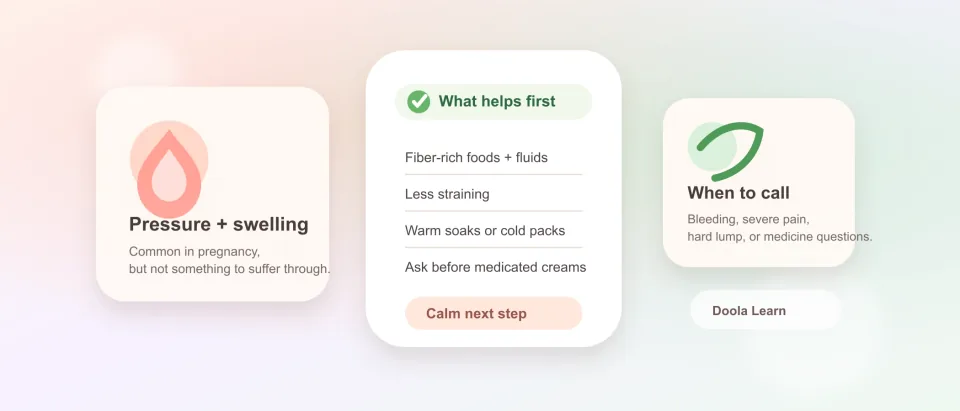
Hemorrhoids during pregnancy are common, but you do not have to just suffer through them. The useful first move is to keep stools soft, lower pressure, and soothe the area with gentle comfort steps. Get care advice for repeated bleeding, severe pain, a hard very painful lump, or before using medicated creams, suppositories, laxatives, or stool softeners.
Source basis: This guide cross-checks the practical answer against ACOG, NHS, NHS Specialist Pharmacy Service and the full references listed below.
Quick start: what usually helps first
Short answer: hemorrhoids during pregnancy are common, especially with constipation or extra pelvic pressure. The safest first move is usually to soften stool, avoid straining, reduce pressure, and use gentle comfort care such as warm water soaks or cold compresses.
ACOG and NHS guidance both treat bleeding, severe pain, and medicine questions as reasons to get care advice. That is the line to keep clear: soothe a mild familiar flare, but do not guess about repeated bleeding or strong pain.
Swollen, itchy, sore veins
Pressure plus constipation
Soften stool and reduce pressure
Warm, cold, and witch hazel
Creams, suppositories, laxatives
Itchy, sore, swollen after constipation
Repeated bleeding or more than a small streak
Severe pain or a hard tender lump
Why pregnancy makes hemorrhoids easier to trigger
ACOG and NHS guidance describe hemorrhoids, or piles, as swollen blood vessels in or around the anus and rectum. Pregnancy can add pressure to those veins, and constipation makes the whole cycle worse: harder stool leads to more straining, and more straining can make hemorrhoids swell or bleed.
Later pregnancy can be especially annoying because pelvic pressure increases. Birth can also flare hemorrhoids for some people. That does not mean they are permanent, and it does not mean you did anything wrong.
The pattern matters more than the label. A small itchy flare after constipation is different from severe pain, regular bleeding, or a hard tender lump that makes sitting difficult.
Constipation flare
Hard stool and long toilet sits can irritate swollen veins and make bleeding or soreness more likely.
Later pregnancy
The growing uterus can add pressure around the pelvis and rectum, making hemorrhoids easier to notice.
After birth
Some people improve after birth, but persistent bleeding, pain, or large lumps still deserve care advice.
What to do next
Start with stool-softening habits because they treat the driver, not just the soreness. Add fiber gradually through foods like fruit, vegetables, beans, oats, and whole grains. Drink enough fluids to make that fiber useful. If food is hard because of nausea or aversions, bring up a fiber supplement or stool softener with your clinician.
Then reduce pressure. Do not sit on the toilet scrolling while waiting. Try not to strain. If you sit for long stretches at work or in the car, stand up when you can. A cushion may help some people, but the bigger win is usually changing pressure and bowel habits.
For comfort, Mayo Clinic and NHS-style guidance commonly mention warm water soaks, cold compresses, and witch hazel pads. If you are considering a hemorrhoid cream, suppository, numbing product, laxative, or pain medicine, check with your clinician or pharmacist about what fits your pregnancy.
When to call or ask for care advice
Call your care team if bleeding happens more than once, is more than a small bright-red streak, or worries you. ACOG and NHS guidance note that hemorrhoids can bleed, but pregnancy rectal bleeding should not be self-diagnosed.
Ask sooner if pain is severe, you notice a hard swollen lump, symptoms are getting worse, you cannot pass stool, or home steps are not helping. NHS Specialist Pharmacy Service guidance also points pregnant people back to a clinician or pharmacist before medicated hemorrhoid treatments.
Use urgent care if bleeding is heavy, you feel faint, you have severe abdominal pain, or something feels seriously wrong. This guide helps you organize the next question; it cannot diagnose the cause of bleeding or severe pain.
Bleeding that repeats
Pain that feels intense
Medicine questions
What not to overthink
Hemorrhoids can feel embarrassing, but they are one of those pregnancy problems many people have and few people want to discuss out loud. Your care team has heard this before. Truly. You will not be the first person to say, “I think I have a hemorrhoid and I am miserable.”
Do not spend the whole day comparing pictures online. The more useful check is whether you are constipated, bleeding, in severe pain, or unsure about treatment. If one of those is true, ask for help. If not, start with stool-softening and comfort steps, then watch whether the flare settles.
If constipation is part of the pattern, Doola’s constipation guide is the better next read. If you are trying to check whether a supplement, tea, or product label is pregnancy-appropriate, Doola Scan can help you organize the exact item before you ask about it.
Skip the shame spiral
Focus the question
How the Doola Research Team researched this guide
We started with the parent question behind the search: “I am pregnant, this hurts, and I do not know what I can safely use.” Then we reviewed ACOG, NHS, Mayo Clinic, Cleveland Clinic, MedlinePlus, and NHS Specialist Pharmacy Service guidance on hemorrhoids, pregnancy, constipation, comfort care, bleeding, and medicine caution.
This guide is source-reviewed educational support. It does not diagnose rectal bleeding, severe pain, thrombosed hemorrhoids, constipation complications, or medication safety for your personal pregnancy. Use it to decide what to try gently and what to bring to your clinician or pharmacist next.
References
Source-cited references used for this article. Open the original guidance when you want the public-health details behind the summary.
 ACOG: What can I do for hemorrhoids during pregnancy?
acog.org
open_in_new
ACOG: Problems of the Digestive System
acog.org
open_in_new
ACOG: What can I do for hemorrhoids during pregnancy?
acog.org
open_in_new
ACOG: Problems of the Digestive System
acog.org
open_in_new
 NHS: Piles in pregnancy
nhs.uk
open_in_new
NHS: Piles (haemorrhoids)
nhs.uk
open_in_new
NHS: Piles in pregnancy
nhs.uk
open_in_new
NHS: Piles (haemorrhoids)
nhs.uk
open_in_new