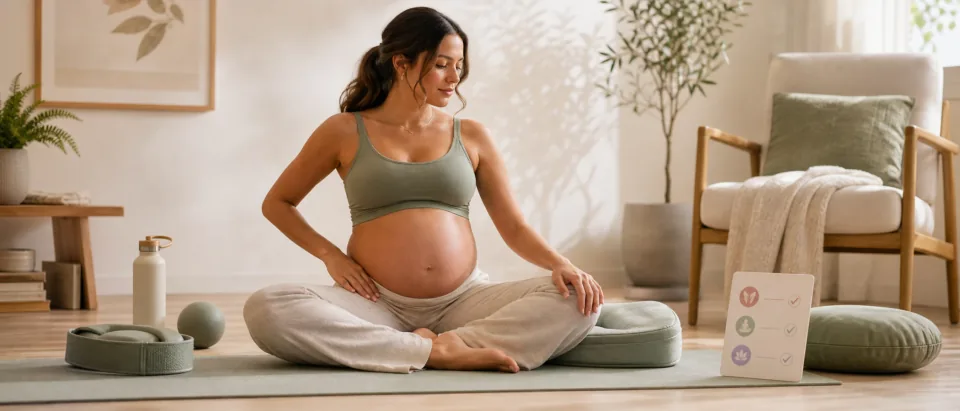
Pelvic pain during pregnancy: pain around the pubic bone, hips, groin, or lower back can be common, especially when walking, climbing stairs, rolling in bed, or standing on one leg makes it worse. Check more carefully if pain is severe, one-sided, worsening, contraction-like, or comes with bleeding, fever, fluid leaking, pain when peeing, or feeling unwell. Do now: note location, movement triggers, and whether rest or support helps.
Source basis: This guide cross-checks the practical answer against NHS, Pregnancy Birth and Baby, ACOG and the full references listed below.
Quick decision
Notice the movement trigger: pelvic pain during pregnancy often shows up with stairs, walking, rolling in bed, getting out of a car, or standing on one leg. Severe pain, bleeding, fever, contractions, fluid leakage, or pain with urination should be checked.
Clinical guidance keeps the split practical: movement-linked pelvic pain is different from pain with bleeding, fever, urinary symptoms, fluid leaking, or contractions.
Movement-triggered pain
Function changes the plan
Track the trigger
Symptoms around it
Cramps or contractions?
Three-second answer
Why it can happen
Pregnancy changes posture, weight distribution, and joint support, so movement-related pelvic pain can be common. NHS and Pregnancy Birth and Baby guidance describe pelvic girdle pain around the pubic bone, hips, groin, thighs, or lower back.
The useful clue is mechanical: pain that flares with stairs, walking, rolling in bed, getting out of a car, or standing on one leg behaves differently from pain that arrives with fever, bleeding, contractions, or feeling unwell.
Worse with movement
Limits daily activity
Symptom-paired pain
Certain point
What changes it
When the pattern matters
This kind of pain often announces itself during tiny daily movements: turning over at night, stepping into pants, climbing stairs at work, or getting out of the car. Those patterns can point toward pelvic girdle strain.
Pain that is severe, one-sided, constant, contraction-like, or paired with bleeding, fever, fluid leaking, or pain when peeing belongs in the care-advice bucket. Clinical guidance keeps that split clear.
Walking or stairs
Usually common when movement clearly brings it on and rest helps.
Rolling in bed
Keep knees together and use pillows if advised; ask if sleep is badly affected.
Work or errands
If walking, standing, or dressing becomes hard, ask about physiotherapy and support.
Any time
Bleeding, fluid, fever, contractions, one-sided severe pain, or pain when peeing needs care advice.
What to do next
Try movement changes that reduce shearing: smaller steps, knees together when turning, sitting to get dressed, pillow support at night, and rest breaks before pain spikes.
If walking, sleep, work, or self-care is getting harder, ask early about pelvic health physiotherapy, support belts, and pregnancy-safe pain relief. You do not have to wait until pain is unbearable.
When to call
Call for severe pain, bleeding, fever, contractions, fluid leakage, pain with urination, one-sided intense pain, or if you cannot walk safely.
Pregnancy guidance supports calling when pelvic pain pairs with symptoms outside the usual movement pattern.
What not to overthink
Common does not mean “just tolerate it.” Pelvic pain can be part of pregnancy and still deserve support, especially when it changes how you move through the day.
The reassuring pattern is movement-linked discomfort that settles with rest or support. The pattern to escalate is pain plus bleeding, fever, fluid leakage, urinary pain, contractions, or a severe one-sided feeling.
Do not just push through
Do not self-diagnose labor
Do not wait for crisis
How Doola researched this guide
We reviewed NHS, Pregnancy Birth and Baby, ACOG, and Healthdirect guidance, then shaped this guide around the everyday movement question behind pelvic pain: what feels like pelvic girdle strain, what support may help, and which symptom pairs should prompt care advice. This guide is educational and does not diagnose pelvic pain.
References
Source-cited references used for this article. Open the original guidance when you want the public-health details behind the summary.