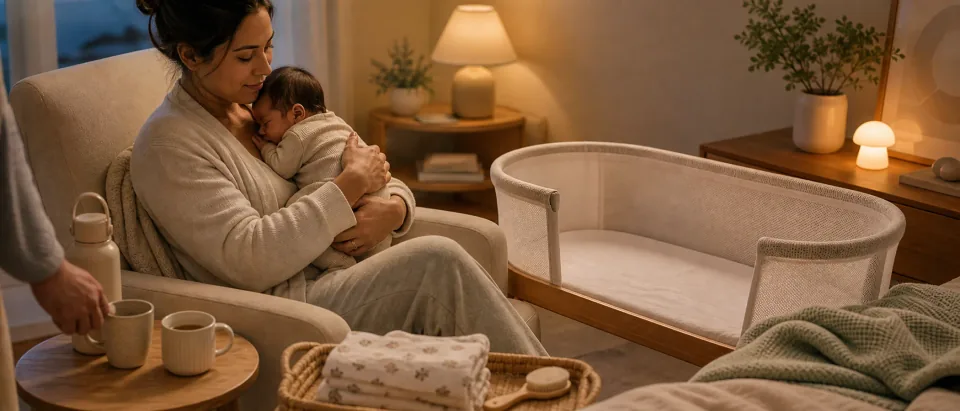
When baby only sleeps held, the safest plan is the one you can still follow at 3 a.m. Keep the safe sleep space ready, avoid sleeping with baby on a couch or chair, and decide what you will do before you are nodding off. If you cannot stay awake, place baby on their back in a firm, flat, empty sleep space or get another awake adult involved.
Source basis: This guide cross-checks the practical answer against HealthyChildren, CDC, NHS and the full references listed below.
Safe sleep is about the sleep environment
HealthyChildren/AAP and CDC guidance emphasizes back sleeping, a firm flat surface, and an empty sleep space. NHS guidance also encourages placing baby down when sleepy and keeping the sleep area clear.
This article focuses on the gap between advice and real nights: how to preserve the safest possible choice when the parent is exhausted.
When the sleep setup matters most
The safest sleep setup matters every time baby sleeps, but the most fragile moment is usually after a feed, when the adult is warm, still, and exhausted. That is when couches and chairs become especially risky.
If baby wakes on transfer, that is frustrating but safer than an adult accidentally sleeping with baby in an unsafe position.
Before the feed
Prepare the bassinet, clear the surface, and decide who takes over if you get sleepy.
During exhaustion
Choose the safe surface before your body starts microsleeping.
Set the room up before the hard part
Build the safer setup before the hard moment arrives: clear the sleep space, choose where baby goes if you get drowsy, and make the handoff plan obvious at 3 a.m.
When to get care advice
Call the pediatrician if baby cannot settle because of poor feeding, reflux concerns, noisy breathing, fever, weight-gain worries, or unusual sleepiness. Seek urgent help for breathing trouble or color change. Ask family, a partner, or local postpartum support for backup before exhaustion turns unsafe.
If exhaustion is pushing you toward a couch, recliner, or soft-bed sleep situation, ask for backup or pediatric guidance before that becomes the default night plan.
Call now
If unsure
How we checked this
This guide is based on HealthyChildren/AAP, CDC, and NHS safe-sleep guidance. It keeps the recommendation firm while focusing on the realistic moment when fatigue makes unsafe sleep more likely.
The guide applies safe-sleep sources to the specific moment parents describe: baby sleeps only while held and the adult is close to falling asleep too.
How Doola researched this guide
Doola started with the search question “safe sleep when baby only sleeps held,” then checked the concern against trusted public-health, pediatric, obstetric, dermatology, or postpartum sources rather than forum answers alone.
The visible guidance was written from the decision points those sources support: what is more reassuring, what changes risk, what to do next, and when to contact a clinician. Primary references include HealthyChildren.org, CDC, NHS.
This guide cannot diagnose why baby will not transfer to a sleep space. It helps identify the unsafe setup, exhaustion point, and baby symptoms worth discussing with a pediatrician.
References
Source-cited references used for this article. Open the original guidance when you want the public-health details behind the summary.