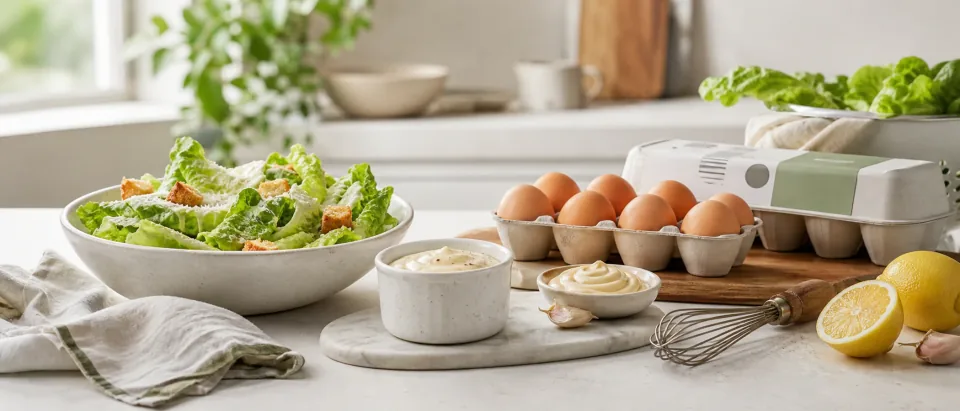
Caesar dressing and aioli during pregnancy: Check the egg: FDA and CDC guidance point to the same split: bottled or commercial dressings made with pasteurized eggs are usually the safer choice, while homemade Caesar, fresh aioli, and restaurant sauces with raw egg are the versions to avoid unless pasteurized egg is confirmed. Do now: ask if it is pasteurized, egg-free, or house-made with raw egg.
Source basis: This guide cross-checks the practical answer against U.S. Food and Drug Administration, Centers for Disease Control and Prevention, FoodSafety.gov and the full references listed below.
The useful split at the table
If you are staring at a menu, the question is not whether Caesar is always bad. It is who made the sauce, and with what egg. FDA guidance specifically lists homemade and fresh-made Caesar dressing, aioli, hollandaise, bearnaise, and homemade mayonnaise as raw-egg foods to avoid during pregnancy unless made safer with pasteurized eggs or thorough heating. CDC and FoodSafety.gov make the same practical split: raw or undercooked eggs are riskier, while pasteurized eggs in foods that will not be cooked are the safer option. Check whether the sauce is commercial or house-made, then ask whether pasteurized egg is used.
Commercial or egg-free
House-made sauce
Ask one question
After eating
Exact foods
Bottled Caesar dressing
House-made Caesar or aioli
Already ate an unclear sauce
Why the same salad can have two answers
A supermarket Caesar kit and a restaurant Caesar can look almost identical, but the risk can be different. FDA notes that commercial mayonnaise, dressings, and sauces contain pasteurized eggs, while a traditional fresh Caesar dressing may use raw egg yolk for texture. Fresh aioli can have the same issue because it is often an egg emulsion. FDA egg-safety guidance says recipes served raw or undercooked, including Caesar dressing, should use pasteurized shell eggs or pasteurized egg products. That makes the safest question short: is the dressing made with pasteurized egg, or is it egg-free?
If the answer is unclear, choose another dressing. You do not need to interrogate every ingredient, but you do want the egg answer because pasteurization is the detail that changes the pregnancy risk.
The reassuring version
The caution version
What to ask at a restaurant
Use one calm question: is the Caesar dressing or aioli made in-house with raw egg, or is it a commercial pasteurized dressing? FDA and CDC guidance make that question useful because pasteurized eggs are the safer choice for sauces that will not be cooked. If the server knows it is bottled, pasteurized, vegan, or egg-free, the sauce is usually a lower-concern choice. If the answer is house-made and no one can confirm pasteurized egg, skip it for pregnancy and choose another dressing.
For a Caesar salad, check the other pregnancy details too: washed greens, pasteurized cheese, freshly cooked chicken if it includes chicken, and no raw sprouts. The dressing is usually the part people miss, but the safest restaurant decision is the whole plate: clean greens, safe toppings, cold storage, and a verified dressing.
If you already ate it
One serving of Caesar dressing or aioli does not automatically mean something bad happened. Write down what you ate, where it came from, and whether it was homemade, restaurant-made, bottled, pasteurized, or unclear. Then watch for foodborne illness symptoms. FoodSafety.gov explains that immune-system changes during pregnancy can increase vulnerability to foodborne illness, so symptoms after a suspect raw-egg sauce deserve a lower threshold for care advice. Call your care team if fever, repeated vomiting, diarrhea, dehydration, severe cramps, blood in stool, or feeling seriously unwell appears.
If you feel fine, the most useful next step is usually to check the source and avoid the unclear raw-egg version next time. The action is simple: document the exposure, watch for symptoms, and call if illness signs appear.
Write down
Watch for
Do not self-diagnose
Safer swaps that still taste like Caesar or aioli
Good pregnancy-friendly swaps include bottled Caesar dressing, vegan Caesar, yogurt-based Caesar, lemon-tahini dressing, commercial garlic mayo, and homemade aioli made with pasteurized egg products. For homemade recipes, FDA says raw-egg recipes can be made safer by using pasteurized eggs or by heating the egg mixture thoroughly. CDC also lists pasteurized eggs in uncooked foods such as salad dressing as the safer pregnancy option. For a no-cook sauce, pasteurized egg products are the cleaner choice because they preserve the creamy texture without relying on raw ordinary shell eggs.
Caesar taste
Aioli taste
Simple backup
What not to overthink
You do not need to avoid every creamy dressing. Ranch, bottled Caesar, commercial mayonnaise, and many store-bought aiolis are not the same as a raw-egg sauce made at a restaurant. FDA separates commercial dressings and sauces from homemade raw-egg versions, which is the reassurance worth keeping. The label, the egg type, and refrigeration matter more than the creamy texture. The practical habit is simple: bottled or pasteurized is usually fine; house-made raw egg is the caution point.
How we checked this
This guide is based on official pregnancy food-safety guidance from FDA, CDC, and FoodSafety.gov, plus FDA egg-safety advice for raw or undercooked egg recipes. We used community and search intent to shape the real-life questions - restaurants, bottled dressing, homemade aioli, and already ate it - but the safety claims come from public-health sources. The article's original job is to separate exact food lookup intent from the deeper sauce decision: the Can-I-Eat pages answer one food quickly, while this Learn guide explains why pasteurized, egg-free, bottled, or house-made changes the answer. Doola Learn is educational and source-cited; it does not diagnose illness or replace care from your clinician.
References
Source-cited references used for this article. Open the original guidance when you want the public-health details behind the summary.