|Pregnancy food safety

Cinnamon During Pregnancy: Tea and Supplement Safety

schedule 7 min read
Authors: Doola Research Team
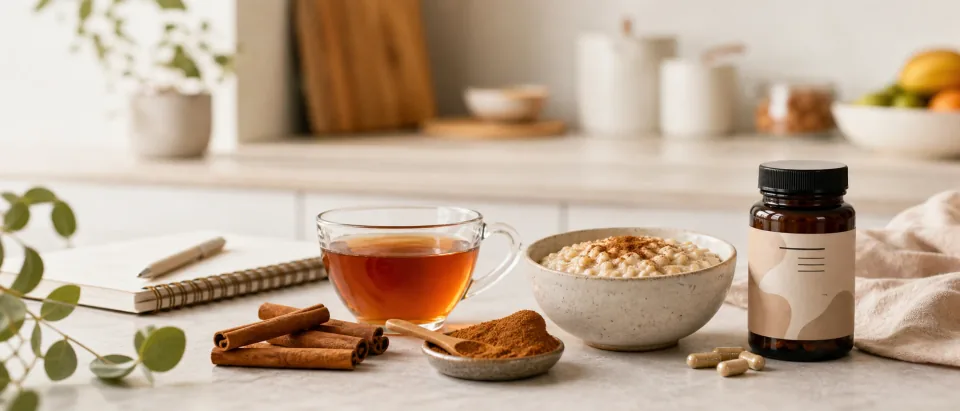
Editorial cinnamon sticks, tea cup, spice spoon, and warm pregnancy wellness kitchen scene.

Cinnamon During Pregnancy: normal food amounts such as a sprinkle in oatmeal, baked goods, or a mild cup of tea when your clinician has not restricted it is usually the clearer pregnancy choice. Check this first: keep cinnamon at food amounts and ask before supplements, especially with diabetes medication, blood thinners, liver concerns, or planned procedures. Avoid or call: cinnamon capsules, essential oils, very concentrated drinks, or using cinnamon to induce labor without clinician guidance; call your clinician for allergic symptoms, concerning bleeding, medication interactions, or any attempt to induce labor before your care team approves it.

Source basis: This guide cross-checks the practical answer against NCCIH, FoodSafety.gov, CDC and the full references listed below.

The useful split for cinnamon

Cinnamon during pregnancy is usually a dose-and-purpose question. According to NCCIH, cinnamon supplements can interact with medicines and larger-dose safety evidence is limited; CDC and FoodSafety.gov keep the pregnancy baseline practical by separating ordinary food choices from medical decisions. A sprinkle in oatmeal, baked goods, fruit, or a mild tea is usually the lower-concern version when your clinician has not restricted it. Capsules, essential oils, concentrated drinks, liver or blood-thinning concerns, diabetes medication questions, and attempts to induce labor are the caution version. In practice, check why you are using cinnamon: flavoring food is different from treating gestational diabetes, changing medication effects, or trying to start labor. Call your clinician for allergy symptoms, bleeding concerns, medication interactions, or labor questions.

Usually lower concern check_circle

Clearer choice

Normal food amounts, such as cinnamon in oatmeal, baked goods, fruit, or a mild tea, are usually lower concern when your clinician has not restricted them.
Why it matters priority_high

Check or avoid

Cinnamon capsules, essential oils, very concentrated drinks, medication interactions, liver concerns, blood-thinning concerns, or using cinnamon to induce labor should be checked with a clinician.
Do now task_alt

Practical step

keep cinnamon at food amounts and ask before supplements, especially with diabetes medication, blood thinners, liver concerns, or planned procedures
Call for symptoms medical_services

After eating

Call your pregnancy care team for allergic symptoms, concerning bleeding, medication interactions, or any attempt to induce labor before your care team approves it.
Related checks search

Exact foods

For cinnamon during pregnancy, use the related Can-I-Eat pages when one ingredient, preparation method, or serving temperature changes the answer.
check_circle

Clearer choice

Normal food amounts, such as cinnamon in oatmeal, baked goods, fruit, or a mild tea, are usually lower concern when your clinician has not restricted them.keep cinnamon at food amounts and ask before supplements, especially with diabetes medication, blood thinners, liver concerns, or planned procedures
priority_high

Check or avoid

Cinnamon capsules, essential oils, very concentrated drinks, medication interactions, liver concerns, blood-thinning concerns, or using cinnamon to induce labor should be checked with a clinician.Choose another option if the source, temperature, or handling is unclear.
edit_note

Already ate it

Symptoms, timing, product details, and recall status change the next step.Watch for allergic symptoms, concerning bleeding, medication interactions, or any attempt to induce labor before your care team approves it; call your clinician if they appear.

Why the answer changes by version

Cinnamon as food is different from medicinal doses. According to NCCIH, cinnamon supplement products may interact with medicines, and safety evidence for larger amounts is limited. CDC and FoodSafety.gov do not treat a normal spice amount like a treatment plan, which is why the pregnancy decision should focus on dose, form, and purpose. Food flavoring is the lower-risk context; capsules, extracts, essential oils, or concentrated drinks are the contexts that need clinician advice.

For cinnamon during pregnancy, the useful decision is: enjoy normal food amounts if they fit your care plan, avoid using cinnamon to induce labor, and check supplements before taking them. That framing keeps the page safe and specific. It does not claim cinnamon treats gestational diabetes, starts labor safely, or replaces medical advice for medication, liver, bleeding, or allergy concerns.

verified

Lower concern

normal food amounts such as a sprinkle in oatmeal, baked goods, or a mild cup of tea when your clinician has not restricted it
warning

Caution point

cinnamon capsules, essential oils, very concentrated drinks, or using cinnamon to induce labor without clinician guidance
task_alt

Best next move

keep cinnamon at food amounts and ask before supplements, especially with diabetes medication, blood thinners, liver concerns, or planned procedures

How to order or prepare it

For cinnamon during pregnancy, ask the preparation question that matches the food in front of you, then choose the version that is easiest to verify. The relevant source set is NCCIH, FoodSafety.gov, CDC; those sources separate safer choices from raw, undercooked, unpasteurized, poorly chilled, recalled, or otherwise uncertain foods. In practice, check the safety detail before ordering rather than trying to judge risk from the food name alone.

The lower-concern version is normal food amounts such as a sprinkle in oatmeal, baked goods, or a mild cup of tea when your clinician has not restricted it. The caution version is cinnamon capsules, essential oils, very concentrated drinks, or using cinnamon to induce labor without clinician guidance. If the server, label, or package cannot answer that split, keep cinnamon at food amounts and ask before supplements, especially with diabetes medication, blood thinners, liver concerns, or planned procedures. That gives the page a clear action path: verify, choose the safer version, or skip the uncertain one.

medical_services
Check the version: keep cinnamon at food amounts and ask before supplements, especially with diabetes medication, blood thinners, liver concerns, or planned procedures
medical_services
Choose the clearer option: normal food amounts such as a sprinkle in oatmeal, baked goods, or a mild cup of tea when your clinician has not restricted it
medical_services
Avoid the unclear version: cinnamon capsules, essential oils, very concentrated drinks, or using cinnamon to induce labor without clinician guidance

If you already ate it

If you already had cinnamon during pregnancy, one serving does not automatically mean something bad happened. Write down the brand or restaurant, time eaten, amount, temperature, storage clue, and the exact detail that made the food uncertain. If the food was packaged, check recall information and keep the package details until you feel confident no follow-up is needed.

Call your clinician or local advice line if allergic symptoms, concerning bleeding, medication interactions, or any attempt to induce labor before your care team approves it appears, or if the exposure involved a recalled food. If you feel well, the most useful next step is usually to avoid the unclear version next time and choose the safer preparation.

edit_note

Write down

For cinnamon during pregnancy, note brand or restaurant, timing, amount, temperature, storage, and the exact uncertainty.
medical_services

Watch for

allergic symptoms, concerning bleeding, medication interactions, or any attempt to induce labor before your care team approves it
health_and_safety

Ask for care advice

For cinnamon during pregnancy, your clinician can decide whether the exposure, symptoms, or recall details need testing, treatment, or urgent care.

Safer swaps that keep the meal easy

For cinnamon during pregnancy, the safer swap is to keep the flavor and remove the medicinal-dose uncertainty. Use cinnamon as a spice in food, or choose a mild drink where cinnamon is only a flavoring. Avoid swapping into capsules, extracts, essential oils, or concentrated drinks unless your clinician says they are safe for your pregnancy and medications.

NCCIH is especially relevant because it discusses supplement cautions, while CDC and FoodSafety.gov keep the broader pregnancy advice anchored in safe food choices. The practical decision is to enjoy cinnamon as food, check supplements before using them, and call your care team for allergic symptoms, medication concerns, bleeding concerns, or labor questions.

home

At home

For cinnamon during pregnancy at home, use the safer preparation described above and follow the storage or label direction that changes this food's risk.
restaurant

At restaurants

For cinnamon during pregnancy in restaurants, ask the one food-specific question in this guide and switch orders if the answer stays unclear.
swap_horiz

When unsure

For cinnamon during pregnancy, the easier backup is the cooked, pasteurized, washed, chilled, or intact-package version that removes the main uncertainty.

How we researched this

For cinnamon during pregnancy, Doola reviewed NCCIH for supplement cautions, CDC for pregnancy food-safety context, and FoodSafety.gov for the broader high-risk pregnancy food framework. The page turns those sources into a parent-facing safety decision: normal food amounts are usually lower concern, concentrated or medicinal products should be checked, and symptoms, medication questions, bleeding concerns, or labor-induction questions should move to a clinician.

References

Source-cited references used for this article. Open the original guidance when you want the public-health details behind the summary.