The safer modern answer: postpartum confinement (Zuo Yuezi, 坐月子) is not proven as one fixed medical protocol. Its strongest value is the care container: rest, warm meals, fewer chores, visitor boundaries, and emotional support after birth. Keep the nourishment and family help; modernize rules that restrict hygiene, food variety, movement, medical care, or the mother’s voice.
Source basis: This guide cross-checks the practical answer against World Health Organization, ACOG, CDC and the full references listed below.
The modern zuo yuezi check
Zuo yuezi is safest when it acts as a 30-day support system, not a fixed list of bans. ACOG frames postpartum care around physical, social, psychological, feeding, sleep, fatigue, and recovery needs. CDC breastfeeding nutrition guidance adds the food side: most breastfeeding parents need a healthy, varied diet rather than broad food bans.
Use that as the safety filter. Keep rules that create rest, food, protected sleep, household help, visitor boundaries, and emotional check-ins. Adapt rules that make daily care harder, such as avoiding every fruit or vegetable when cooked options would work. Avoid rules that create fear, poor nutrition, poor hygiene, isolation, delayed care, or pressure to ignore warning symptoms.
The care container
Warm food, complete plate
Rules that remove safety
Care should not become policing
Build a 30-day support plan
The useful split: support, not control
The heart of a good confinement month is not whether every food is “warming.” It is whether the mother is being protected from overload. WHO describes a positive postnatal experience as one where women and babies receive information, reassurance, and support in a way that respects cultural context. ACOG also says postpartum care should include physical recovery, mood and emotional well-being, infant feeding, sleep, fatigue, and social support.
That is the strongest modern case for 坐月子: it gives the first month a job. Someone cooks. Someone notices whether the mother has slept. Someone handles chores and visitors. Someone says, in a practical way, “you are recovering too.”
The trouble starts when care becomes policing. Rules that ban showering, brushing teeth, fruits, vegetables, milk, safe movement, or medical help can turn a recovery ritual into anxiety. A better version asks: does this rule help the mother eat, rest, heal, feed, sleep, and feel less alone?
Food as care
Family as infrastructure
Respect as the safety line
Why the studies support parts, not every rule
Research on Chinese postpartum confinement is mixed because families practice it differently. A Fujian qualitative study described traditional practices as a blend of potentially helpful care and potentially harmful taboos. Eating enough, nourishing foods, avoiding heavy housework, and hygiene after birth can be helpful. But strict hygiene bans, unnecessary infant herbs, or rules that delay care can be risky.
A Hubei study shows why rigid food rules deserve caution. In that study, many postpartum women avoided vegetables, fruit, and milk during the confinement period. That pattern can make recovery harder, especially if it crowds out fiber, calcium, vitamins, and the variety CDC recommends for breastfeeding nutrition.
Newer mental-health research is also nuanced. Some studies associate certain confinement patterns with postpartum depression outcomes, but that does not prove every traditional rule prevents depression. The likely protective ingredients are support, rest, reduced workload, belonging, and being cared for — not shame or isolation.
Rest and fewer chores
Warm soups and cooked meals
Avoiding fruit, vegetables, or milk
No showering or brushing teeth
Herbal tonics
A modern food plan that still feels like zuo yuezi
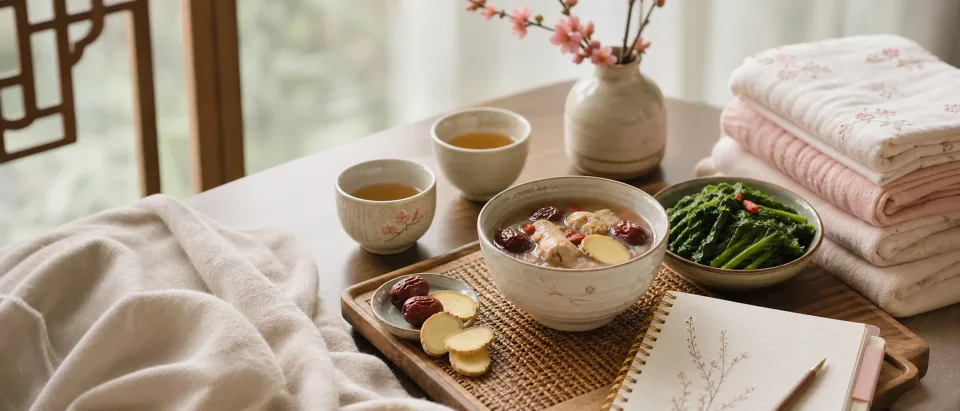
Warm soups, rice, ginger, red dates, eggs, fish, chicken, tofu, greens, sesame, and soft cooked meals can absolutely belong in postpartum recovery. The goal is not to westernize the month into a cold salad plan. The goal is to keep the comfort while making the plate complete.
CDC says well-nourished breastfeeding mothers generally need 330 to 400 additional calories per day compared with pre-pregnancy intake, and it encourages a healthy, diverse diet. CDC also notes iodine and choline needs rise during lactation, while most breastfeeding parents do not need to avoid whole categories of foods unless there is a specific reason.
The rules worth modernizing
A modern zuo yuezi rule is worth keeping when it improves recovery without removing safety. Some traditional rules were built for older homes, cold water, limited postpartum care, and a world before modern sanitation. ACOG’s postpartum-care model treats recovery as physical, emotional, feeding, sleep, and social care together, while CDC nutrition guidance supports varied meals during breastfeeding.
Use a practical test: does the rule help the mother eat, rest, heal, feed, sleep, and get care when needed? Keep prepared meals, fewer chores, visitor boundaries, and family help. Adapt food-temperature preferences into warm, complete meals. Drop rules that reduce hygiene, nutrition, safe movement, care-seeking, or the mother’s agency.
Why the mental-health part matters
The emotional value of 坐月子 may be the part modern postpartum care most needs to recover. A mother is not just a milk supply, a surgical wound, or a sleep-deprived manager of diapers. She is a person in a major physical and identity transition.
A supportive confinement month can reduce decision fatigue: the meal appears, the laundry is handled, the doorbell is managed, and the mother does not have to perform gratitude for every visitor. Ritual also matters. A bowl of soup can say: your recovery belongs to the family, not only to you.
But mental health support also means agency. If the mother feels trapped, criticized, watched, or overruled, the same tradition can become stressful. March of Dimes and ACOG both emphasize that postpartum mood symptoms deserve attention and support. Strong sadness, intense worry, hopelessness, intrusive scary thoughts, inability to sleep even when exhausted, or thoughts of harm are not character flaws and should not be hidden to preserve family harmony.
You do not have to choose between “traditional” and “scientific.” Warm soup can be tradition and nutrition. A visitor boundary can be cultural and psychologically protective. A grandmother’s recipe can be comfort even if it is not a clinical treatment. You can honor the spirit of 坐月子 while still showering, eating fruit, taking prescribed medicines, calling for help, and saying no to a rule that makes you feel smaller.
Usually helpful
Worth changing
Still meaningful
What to do: make a 30-day plan that works in a real home
A 30-day zuo yuezi plan is most useful when it assigns real support jobs instead of adding rules for the mother to manage. Start before birth if you can. First, list the non-negotiables: meals, water, shower access, clean pads, dental hygiene, rest blocks, infant-feeding support, and a way to contact your clinician.
Second, assign each job to a person, not to a vague family promise. Third, protect the mother’s agency: she can accept the soup, decline the visitor, ask for help, shower, eat fiber-rich foods, and call for care. The goal is to remove daily friction from recovery while keeping her choices intact.
Before birth
Daily meals, water nearby, shower access, dental hygiene, clean pads, rest blocks, and a way to contact your clinician.
First week
One person handles meals, one handles laundry, one manages visitors, one watches for mood and recovery changes, and one protects a sleep block when possible.
Weeks 2-4
Warm soups, cooked meals, ginger, red dates, visitor limits, and family recipes can stay if they comfort you.
After the month
Drop rules that made recovery harder. Keep the help that still matters: meals, rest, mood support, feeding support, and fewer unnecessary demands.
When to call instead of waiting it out
Confinement should never delay urgent postpartum care. ACOG’s postpartum-care framework includes physical recovery, chronic conditions, mood, feeding, sleep, and health maintenance; it is not a month of waiting silently. Contact your care team promptly for heavy bleeding, large clots, fever, worsening pain, signs of infection, chest pain, shortness of breath, severe headache, vision changes, calf pain or swelling, or any symptom your discharge instructions warned you about.
For mental health, March of Dimes describes postpartum depression as serious and treatable, and ACOG recommends perinatal depression and anxiety screening. Get support if sadness, intense worry, rage, intrusive thoughts, hopelessness, or numbness feels strong, lasts beyond the baby-blues window, or keeps you from sleeping, eating, bonding, or functioning. If you might hurt yourself, your baby, or someone else, seek emergency help now and ask another adult to stay with you and the baby.
Related questions about zuo yuezi
These questions came up repeatedly across search results and parent discussions: proof, food, herbs, hygiene, and whether confinement helps or hurts emotionally. The short answer is that zuo yuezi works best as a support system, not as a fixed medical checklist.
CDC nutrition guidance supports varied meals rather than broad food bans, while peer-reviewed Chinese postpartum studies show that some traditional practices help and some taboos can create risk. Use the answers below to keep family recipes, rest, and visitor boundaries, while avoiding rules that remove hygiene, nutrition, safe care-seeking, or the mother’s control.
Is zuo yuezi scientifically proven? expand_more
What should I eat during Chinese postpartum confinement? expand_more
Are confinement herbs safe while breastfeeding? expand_more
Is it okay to shower during zuo yuezi? expand_more
Can zuo yuezi help postpartum mental health? expand_more
What not to overthink
Do not overthink whether zuo yuezi is science or superstition. Doola compared WHO, ACOG, and CDC guidance with Chinese confinement studies. The safer frame is simple: keep meals, rest, hygiene, family help, feeding support, and reassurance; question rules that restrict food variety, delay medical help, remove agency, or hide mood symptoms. This guide is educational and cannot diagnose or approve herbs.
References
Source-cited references used for this article. Open the original guidance when you want the public-health details behind the summary.
 Optimizing Postpartum Care
acog.org
open_in_new
Optimizing Postpartum Care
acog.org
open_in_new