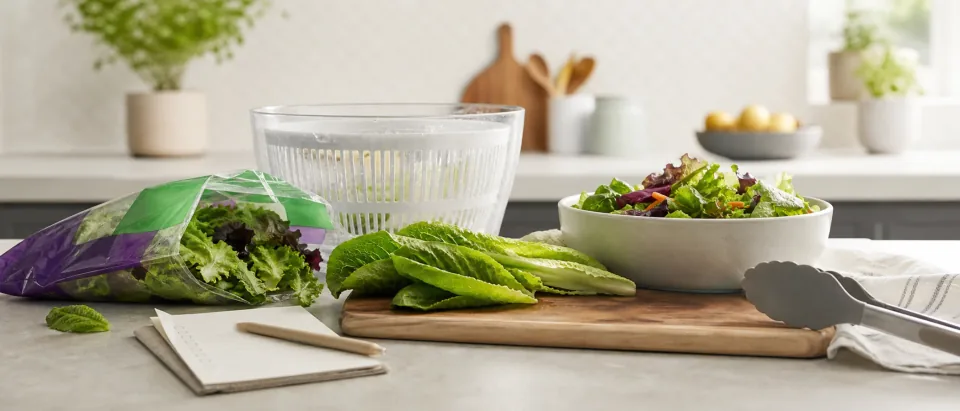
Can you eat bagged salad while pregnant? Usually yes when it is fresh, cold, in date, not recalled, and eaten promptly. Check first: recall status, use-by date, slimy or wilted leaves, raw sprouts, and whether restaurant greens have been kept cold. Avoid or call: recalled salad, raw sprouts, salad left warm, or fever, vomiting, diarrhea, dehydration, severe cramps, blood in stool, or feeling very unwell after eating it.
Source basis: This guide cross-checks the practical answer against CDC, FDA, FoodSafety.gov and the full references listed below.
Start with the bag, the date, and the temperature
Bagged salad is usually a reasonable pregnancy choice when the leaves look fresh, the package is still in date, the salad has stayed cold, and there is no recall. The answer changes when greens look slimy or wilted, the package has been open for a while, the salad sat out warm, or the mix includes raw sprouts.
Restaurant salad needs the same logic, but you have less control over handling. Choose places that turn food over quickly, keep salad chilled, and can answer basic questions about ingredients. If the salad bar looks warm, the greens look tired, or the sprouts are raw, pick a cooked side or another fresh option instead.
Fresh and cold
Check or avoid
Practical step
After eating
Ingredients matter
Clearer choice
Check or avoid
Already ate it
Why salad risk changes by handling
Fresh produce can carry germs if it is contaminated before purchase or during handling. That is why refrigeration, clean utensils, package dates, recall status, and raw sprouts matter more than the word salad by itself.
Prewashed greens are convenient, but they are still a ready-to-eat food. Treat the package like something that needs clean handling: keep it cold, avoid cross-contamination, use it by the date, and throw it away if it smells off or the leaves look slimy.
Fresh and cold
Higher concern
Best next move
How to order or prepare it
At home, start by checking the use-by date and recall status. Keep the bag refrigerated, open it with clean hands and tools, and serve it in a clean bowl. Wash whole produce before cutting. For salad kits, check the add-ins too, especially soft cheese, deli meat, seafood, or dressing that may contain raw egg.
At restaurants, choose a fresh salad from a place you trust rather than a warm salad bar or a display that has been sitting out. Ask to skip raw sprouts. If the salad includes deli meat, soft cheese, seafood, or a creamy dressing, check that ingredient separately because it can change the pregnancy answer.
If you already ate it
If you already ate bagged salad while pregnant, one serving does not automatically mean something bad happened. Write down the brand or restaurant, when you ate it, whether it was cold, and what made you worried. If it was packaged, keep the package details and check for recall notices.
Call your clinician or local advice line if fever, repeated vomiting, diarrhea, dehydration, severe cramps, blood in stool, or feeling very unwell appears, or if the salad was recalled. If you feel well and no recall applies, the next useful step is usually to choose a clearer, fresher option next time.
Write down
Watch for
Ask for care advice
Safer swaps that keep the meal easy
The best swap keeps the meal idea but removes the uncertain detail. Choose freshly washed whole produce, a cold sealed salad that is in date and not recalled, or a cooked vegetable side if the salad bar or restaurant handling feels unclear.
If the salad kit includes ingredients that need their own pregnancy check, make a quick swap: skip raw sprouts, choose pasteurized cheese, heat deli meat until steaming, or pick a dressing that does not rely on raw egg.
At home
At restaurants
When unsure
How we researched this
Doola reviewed CDC guidance for pregnant women, CDC produce safety guidance, FDA guidance on raw sprouts, and FoodSafety.gov pregnancy food-safety guidance. We translated those public-health sources into a practical salad decision: when bagged salad is usually okay, when restaurant handling or raw sprouts make it worth skipping, and when symptoms or recall details should move the question to a clinician.
References
Source-cited references used for this article. Open the original guidance when you want the public-health details behind the summary.