|Pregnancy food safety

Buldak Noodles During Pregnancy: Safety, Egg, and Sodium Checks

schedule 6 min read
Authors: Doola Research Team
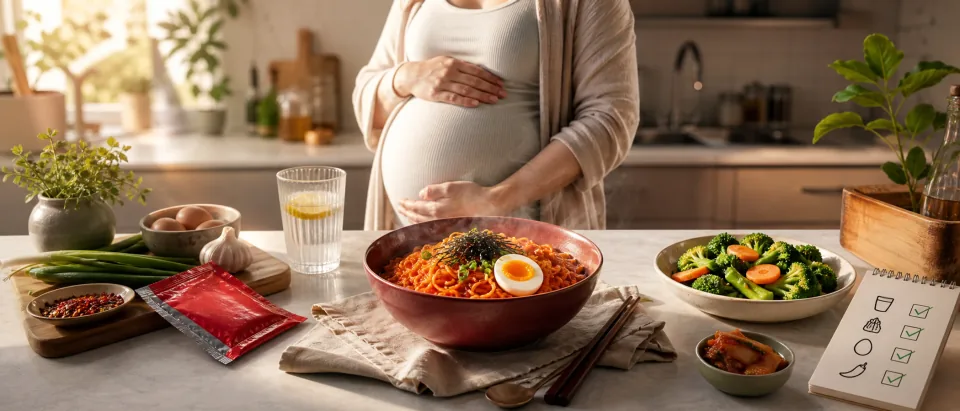
Editorial spicy instant noodle bowl with cooked egg, vegetables, seasoning packet, and pregnancy food-safety checklist cues.

Buldak noodles during pregnancy are usually about the bowl you make, not the brand name alone. Hot, fully cooked noodles can be a lower-concern choice, but check the add-ins: runny egg, raw sprouts, undercooked meat or seafood, poor leftover handling, heavy sodium, or severe symptoms after eating should change the answer.

Source basis: This guide cross-checks the practical answer against CDC, FoodSafety.gov, FDA and the full references listed below.

The bowl matters more than the brand name

For a Buldak packet, the plain safety split is simple: hot noodles eaten promptly are a different decision from noodles topped with runny egg, raw sprouts, raw seafood, undercooked meat, or leftovers that sat out. CDC pregnancy food-safety guidance is about those food patterns, not about one noodle brand.

That means the most useful question is not only "is Buldak safe?" It is what is in the bowl, how hot it was, and whether any topping falls into a higher-risk pregnancy category.

Usually lower concern ramen_dining

Hot cooked noodles

A packet cooked hot and eaten promptly is usually more about comfort, spice, and sodium than a special brand-specific pregnancy danger.
Why it matters fact_check

Egg, sprouts, meat, seafood

Runny egg, raw sprouts, raw seafood, undercooked meat, or unclear leftovers are the details that change the answer.
What to do task_alt

Use the bowl checklist

Check whether the bowl was hot, whether add-ins were fully cooked, and whether the label sodium fits your own pregnancy instructions.
Ask for advice medical_services

Symptoms after eating

Fever, dehydration, repeated vomiting, bloody diarrhea, severe cramps, or feeling very unwell after eating should not be treated as ordinary spice discomfort.
Related topics travel_explore

Need the quick Buldak check?

Read next with the Buldak Can-I-Eat lookup, ramen guide, spicy food guide, egg guide, or pho guide when toppings, sodium, or symptoms change the situation.

What changes the answer in a Buldak bowl

CDC lists several higher-risk pregnancy food choices that can show up in instant noodle bowls: raw or undercooked eggs, raw or undercooked meat, raw or undercooked fish or shellfish, raw sprouts, and unwashed produce. Cooked toppings and freshly hot noodles sit in a different bucket.

check_circle

Hot cooked noodles

The noodle packet itself is not the usual pregnancy food-safety problem.Eat it hot and promptly; check serving size, spice tolerance, and sodium.
egg_alt

Runny or soft egg

CDC lists raw or undercooked eggs as a riskier pregnancy choice.Use a fully cooked egg with firm yolk and white, or skip the egg.
grass

Raw sprouts or unwashed herbs

CDC lists raw sprouts as riskier because germs can be hard to remove.Skip raw sprouts; use cooked sprouts until steaming hot or washed vegetables.
set_meal

Meat or seafood add-ins

Undercooked meat, poultry, fish, and shellfish carry higher food-safety risk.Use fully cooked meat or seafood; seafood should be cooked to 145°F or opaque and flaky.
schedule

Leftovers

Time and temperature matter when food has been sitting out.Reheat until steaming hot and skip leftovers with unclear storage.

Spice and sodium are separate checks

The spicy sauce is usually a comfort question first. If it predictably triggers heartburn, nausea, diarrhea, or stomach pain, a smaller portion or a less spicy version may be the more practical choice.

Sodium is a label question. FDA Nutrition Facts guidance supports checking serving size and percent Daily Value instead of guessing. If your own clinician has given you sodium instructions, use those instructions for instant noodles too.

local_fire_department

Spice check

Spice itself is not the same as raw egg, raw sprouts, or undercooked meat. It may still make reflux or nausea worse.
nutrition

Sodium check

Look at serving size, sodium per serving, and whether the package is one serving or more.
medical_services

Care-team instructions

If you were told to watch sodium or blood pressure closely, follow that plan instead of treating all instant noodles as interchangeable.

If you already ate Buldak

First, name the bowl. Was it just hot noodles and sauce, or did it include runny egg, raw sprouts, meat, seafood, leftovers, or anything with unclear storage? That detail matters more than the brand name.

Then watch the pattern. Ordinary spice discomfort is different from fever, repeated vomiting, dehydration, bloody diarrhea, severe cramps, or feeling very unwell. FoodSafety.gov explains that pregnancy raises the stakes for foodborne illness, so symptoms after a risky topping deserve care advice.

looks_one
Step 1: List the add-ins. Egg, sprouts, meat, seafood, cheese, herbs, leftovers, and how hot the bowl was.
looks_two
Step 2: Separate spice from illness. Heartburn or stomach warmth after spice is different from fever, dehydration, or bloody diarrhea.
looks_3
Step 3: Hydrate and rest if symptoms are mild. Avoid another spicy serving if the first one clearly triggered reflux or nausea.
looks_4
Step 4: Ask for care advice if symptoms escalate. Fever, repeated vomiting, dehydration, blood in stool, severe cramps, or feeling very unwell need a different response.

Use Doola when the label or toppings change the answer

A general article can explain the pattern, but the exact bowl may have a different answer. A second sauce packet, soft-boiled egg, raw sprouts, fish cake, leftover meat, or a high-sodium label can change what you want to check.

Use Doola for the exact label, menu, or ingredient list. Use the Buldak Can-I-Eat leaf for the short lookup, and use the related ramen, spicy food, egg, and pho guides when you need more context.

Related questions

These are the Buldak-specific follow-ups that change the answer most often: check whether ramen and noodles are the same question, what to do after eating it, whether spice is the issue, and how to handle toppings or sodium.

Can I eat Buldak noodles while pregnant? expand_more
Usually yes when the noodles are cooked hot, eaten promptly, and not topped with higher-risk add-ins. The answer changes with runny egg, raw sprouts, raw seafood, undercooked meat, poorly handled leftovers, heavy sodium instructions from your own care team, or symptoms after eating.
Are Buldak ramen and Buldak noodles the same pregnancy question? expand_more
For pregnancy food safety, they are mostly the same decision: check the hot cooked noodles, toppings, serving size, sodium, and symptoms. The brand or flavor matters less than what is in the bowl and how it was handled.
Can I add egg, sprouts, meat, or seafood to Buldak while pregnant? expand_more
Yes only when the add-ins are handled safely. Use firm fully cooked egg, skip raw sprouts, and make sure meat or seafood is cooked through. Those toppings change the pregnancy answer more than the noodle brand.
What if I already ate Buldak while pregnant? expand_more
If it was hot noodles only and you feel fine, note it and move on. If the bowl included runny egg, raw sprouts, undercooked meat or seafood, or if you develop fever, repeated vomiting, dehydration, bloody diarrhea, severe cramps, or feel very unwell, ask for care advice.
Does the spicy sauce make Buldak unsafe during pregnancy? expand_more
Spice is usually more about your comfort than direct foodborne-illness risk. It can worsen heartburn, nausea, stomach pain, or diarrhea. The food-safety concern comes from toppings, cooking, storage, and symptoms rather than spice alone.
Should I worry about sodium in Buldak while pregnant? expand_more
Check the Nutrition Facts label for serving size and sodium per serving. If your clinician gave you sodium or blood-pressure instructions, use those instructions. If not, treat sodium as a label-and-frequency choice rather than a reason to panic after one bowl.

How we checked this

We checked CDC pregnancy food-safety guidance for eggs, meat, seafood, sprouts, produce, and safer food choices; FoodSafety.gov pregnancy foodborne-illness context; and FDA Nutrition Facts guidance for serving-size and sodium label reading. This guide is educational. It does not diagnose foodborne illness, clear a personal diet plan, or replace care from your clinician.

References

Source-cited references used for this article. Open the original guidance when you want the public-health details behind the summary.