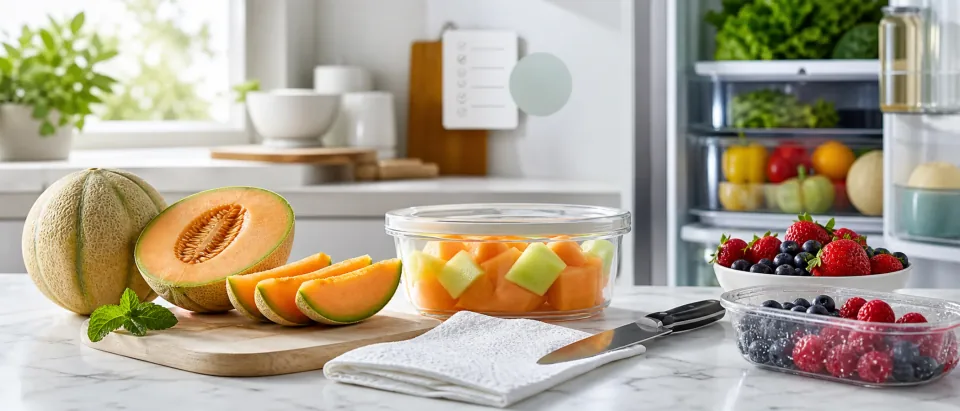
Cantaloupe during pregnancy is usually safe when the rind is washed before cutting and the cut melon stays cold. Check first: pre-cut melon, fruit trays, damaged melon, fruit past its date, recalled fruit, or cut fruit that sat warm. Do now: wash the outside before slicing, use a clean knife and board, refrigerate cut fruit promptly, and toss fruit left out too long.
Source basis: This guide cross-checks the practical answer against CDC, FoodSafety.gov, FDA and the full references listed below.
The rind and fridge change the answer
Cantaloupe during pregnancy is usually fine, but melon needs a little more care than fruit you peel and eat immediately. Germs on the rind can move to the flesh when you cut it, and cut melon needs cold storage.
That is why the best first question is not “is melon forbidden?” It is whether the melon was washed before cutting, cut with clean tools, refrigerated promptly, and eaten while fresh.
Clearer choice
Check or avoid
Practical step
After eating
Exact foods
Clearer choice
Check or avoid
Already ate it
Why the answer changes by version
Cut fruit has more exposed surface area, and melon rinds can transfer germs to the flesh when sliced if the outside is not cleaned first. Pre-cut melon also spends more time handled, packaged, transported, and refrigerated before you eat it.
Whole cantaloupe you wash and cut at home is easier to control than a warm fruit tray with unclear handling. Store-bought pre-cut fruit can still be a reasonable choice when it is cold, fresh, in date, and not recalled.
Lower concern
Caution point
Best next move
How to order or prepare it
At home, rinse the whole cantaloupe under running water before cutting, use a clean knife and board, then refrigerate leftovers promptly. At a store or cafe, choose pre-cut melon only if it is cold, fresh-looking, in date, and handled like a refrigerated food.
Skip cut melon that is sitting at room temperature, leaking, slimy, damaged, past date, or part of a recall. If you cannot tell how long a fruit tray has been out, choose whole fruit or another cold option.
If you already ate it
If you already ate cantaloupe or cut melon, one serving does not automatically mean something bad happened. Write down whether it was whole fruit cut at home, store-bought pre-cut fruit, a fruit tray, or something that sat out.
Call your care team if you develop fever, repeated vomiting, severe diarrhea, dehydration, severe cramps, or feel seriously unwell. Also call if the fruit was recalled or clearly handled unsafely.
Write down
Watch for
Ask for care advice
Safer swaps that keep the meal easy
The safer swap is the same fruit with better handling: whole melon washed and cut fresh, a sealed cold pre-cut cup from a reliable store, or another fruit you can wash yourself.
If a party platter or cafe fruit cup is the uncertain part, choose whole fruit, packaged pasteurized juice, or a different snack rather than trying to guess how long the cut melon has been warm.
At home
At restaurants
When unsure
How we researched this
We checked CDC produce-safety guidance, CDC pregnancy food-safety guidance, FoodSafety.gov, and FDA food-safety resources, then mapped them to the real melon decision: wash the rind, cut cleanly, keep cut fruit cold, check recalls, and call for concerning symptoms. This guide is educational and does not diagnose or replace your care team.
References
Source-cited references used for this article. Open the original guidance when you want the public-health details behind the summary.