Pick by ingredient, not brand. NHS says paracetamol, cetirizine and loratadine are among the best choices while breastfeeding. Decongestant tablets are the exception: NHS says pseudoephedrine may reduce milk supply, so ask a pharmacist first.
By symptom
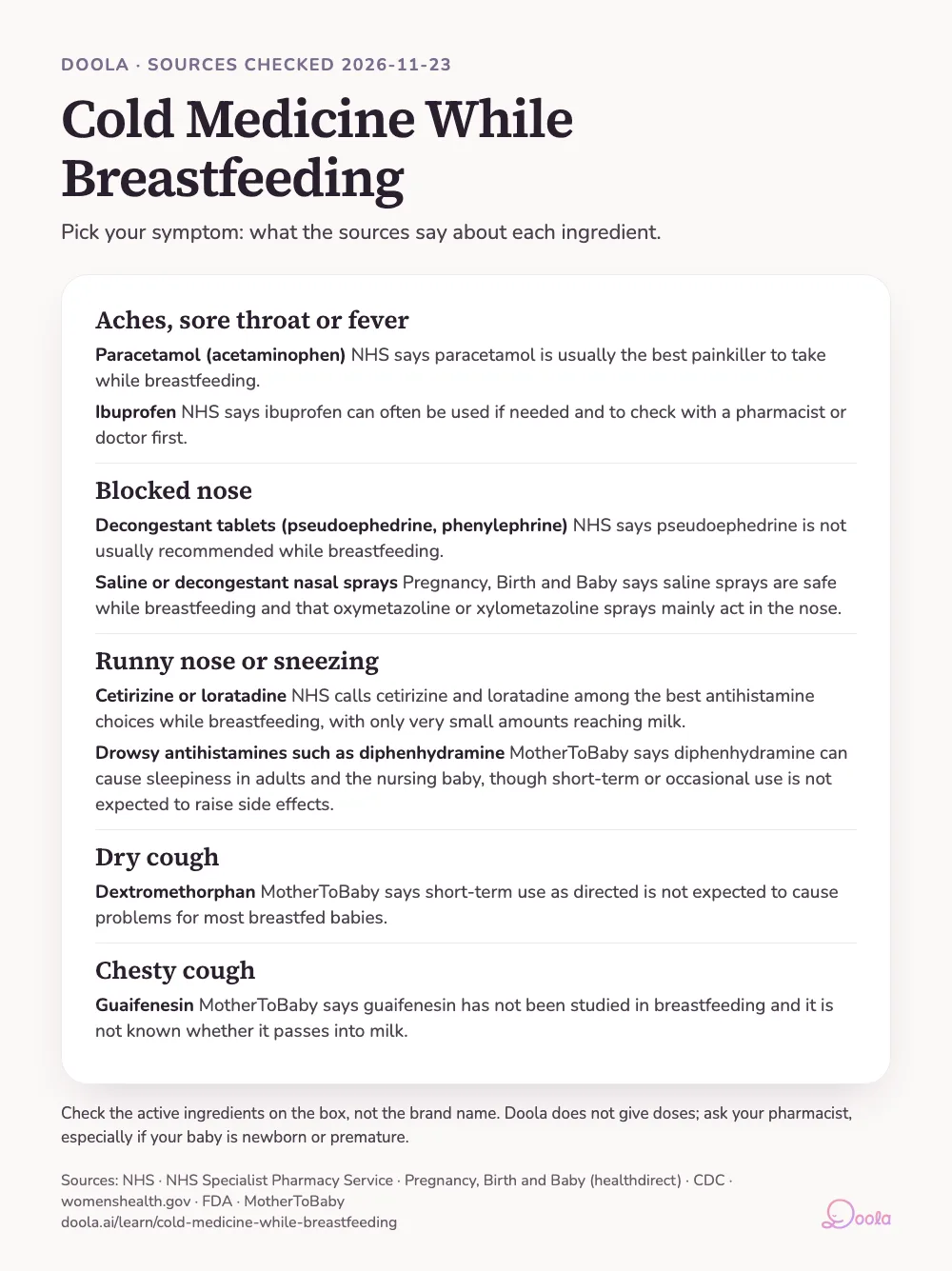
Pick your symptom: what the sources say about each ingredient
Blocked nose
- Decongestant tablets (pseudoephedrine, phenylephrine)
- NHS says pseudoephedrine is not usually recommended while breastfeeding. Pregnancy, Birth and Baby says decongestants like pseudoephedrine and phenylephrine are not recommended. NHS and MotherToBaby say pseudoephedrine may lower milk supply. Ask a pharmacist for an alternative.
- Saline or decongestant nasal sprays
- Pregnancy, Birth and Baby says saline sprays are safe while breastfeeding and that oxymetazoline or xylometazoline sprays mainly act in the nose. NHS says decongestant nasal sprays should not be used for more than a week, because that can make symptoms worse.
See every row as a table
| Symptom | Option | What the sources say |
|---|---|---|
| Aches, sore throat or fever | Paracetamol (acetaminophen) | NHS says paracetamol is usually the best painkiller to take while breastfeeding. Pregnancy, Birth and Baby says it may be used if you follow the label. No milk-supply warning in these sources. Check other products for a second dose of paracetamol hidden in a combination medicine. |
| Aches, sore throat or fever | Ibuprofen | NHS says ibuprofen can often be used if needed and to check with a pharmacist or doctor first. Pregnancy, Birth and Baby calls it generally safe when breastfeeding. Speak to a doctor first if you take other medicines or have a health condition, as Pregnancy, Birth and Baby advises. |
| Blocked nose | Decongestant tablets (pseudoephedrine, phenylephrine) | NHS says pseudoephedrine is not usually recommended while breastfeeding. Pregnancy, Birth and Baby says decongestants like pseudoephedrine and phenylephrine are not recommended. NHS and MotherToBaby say pseudoephedrine may lower milk supply. Ask a pharmacist for an alternative. |
| Blocked nose | Saline or decongestant nasal sprays | Pregnancy, Birth and Baby says saline sprays are safe while breastfeeding and that oxymetazoline or xylometazoline sprays mainly act in the nose. NHS says decongestant nasal sprays should not be used for more than a week, because that can make symptoms worse. |
| Runny nose or sneezing | Cetirizine or loratadine | NHS calls cetirizine and loratadine among the best antihistamine choices while breastfeeding, with only very small amounts reaching milk. Watch that baby keeps feeding well and is not unusually sleepy or irritable. |
| Runny nose or sneezing | Drowsy antihistamines such as diphenhydramine | MotherToBaby says diphenhydramine can cause sleepiness in adults and the nursing baby, though short-term or occasional use is not expected to raise side effects. Ask a pharmacist whether a non-drowsy option fits better, especially with a young baby. |
| Dry cough | Dextromethorphan | MotherToBaby says short-term use as directed is not expected to cause problems for most breastfed babies. Choose an alcohol-free liquid if you use a syrup. Call baby's provider about a rash or unusual sleepiness. |
| Chesty cough | Guaifenesin | MotherToBaby says guaifenesin has not been studied in breastfeeding and it is not known whether it passes into milk. If you use it, MotherToBaby says to choose an alcohol-free product. NHS notes cough medicines will not stop a cough. |
Match the ingredient to your main symptom
Start with the symptom that bothers you most, then look for that one active ingredient in the Drug Facts or ingredients box. Brand names such as DayQuil, Mucinex or Sudafed can cover several different formulas, so the label tells you more than the name.
The table shows what the sources we checked say about each ingredient while breastfeeding. Follow the label or your pharmacist's dose, and tell the pharmacist you are breastfeeding and how old your baby is.
| Symptom and ingredient | What sources say while breastfeeding | Milk supply and what to check |
|---|---|---|
| Aches, sore throat or fever: paracetamol (acetaminophen) | NHS says paracetamol is usually the best painkiller to take while breastfeeding. Pregnancy, Birth and Baby says it may be used if you follow the label. | No milk-supply warning in these sources. Check other products for a second dose of paracetamol hidden in a combination medicine. |
| Aches, sore throat or fever: ibuprofen | NHS says ibuprofen can often be used if needed and to check with a pharmacist or doctor first. Pregnancy, Birth and Baby calls it generally safe when breastfeeding. | Speak to a doctor first if you take other medicines or have a health condition, as Pregnancy, Birth and Baby advises. |
| Blocked nose: decongestant tablets (pseudoephedrine, phenylephrine) | NHS says pseudoephedrine is not usually recommended while breastfeeding. Pregnancy, Birth and Baby says decongestants like pseudoephedrine and phenylephrine are not recommended. | NHS and MotherToBaby say pseudoephedrine may lower milk supply. Ask a pharmacist for an alternative. |
| Blocked nose: saline or decongestant nasal sprays | Pregnancy, Birth and Baby says saline sprays are safe while breastfeeding and that oxymetazoline or xylometazoline sprays mainly act in the nose. | NHS says decongestant nasal sprays should not be used for more than a week, because that can make symptoms worse. |
| Runny nose or sneezing: cetirizine or loratadine | NHS calls cetirizine and loratadine among the best antihistamine choices while breastfeeding, with only very small amounts reaching milk. | Watch that baby keeps feeding well and is not unusually sleepy or irritable. |
| Runny nose or sneezing: drowsy antihistamines such as diphenhydramine | MotherToBaby says diphenhydramine can cause sleepiness in adults and the nursing baby, though short-term or occasional use is not expected to raise side effects. | Ask a pharmacist whether a non-drowsy option fits better, especially with a young baby. |
| Dry cough: dextromethorphan | MotherToBaby says short-term use as directed is not expected to cause problems for most breastfed babies. | Choose an alcohol-free liquid if you use a syrup. Call baby's provider about a rash or unusual sleepiness. |
| Chesty cough: guaifenesin | MotherToBaby says guaifenesin has not been studied in breastfeeding and it is not known whether it passes into milk. | If you use it, MotherToBaby says to choose an alcohol-free product. NHS notes cough medicines will not stop a cough. |
Single-ingredient products versus multi-symptom boxes
Multi-symptom day and night products often combine a pain reliever, a cough ingredient, an antihistamine and a decongestant in one dose. That can mean taking something you do not need, including the decongestant that sources flag for milk supply.
NHS warns not to take other cold medicines alongside paracetamol or ibuprofen without checking, because you could take too much. Pregnancy, Birth and Baby also notes that some cold and flu tablets contain codeine or decongestants, which are not recommended while breastfeeding.
A simple approach is one product per symptom you actually have. If a box lists more than one active ingredient, read each one and ask a pharmacist whether all of them are needed.
Read the active ingredients
Watch for codeine
Decongestants and milk supply
This is the part of cold medicine most likely to affect breastfeeding. NHS says pseudoephedrine may reduce the amount of milk you make and is not usually recommended while breastfeeding. MotherToBaby says the same about milk supply and suggests talking with your provider or a lactation specialist if you notice a drop.
Pregnancy, Birth and Baby says decongestant tablets, including pseudoephedrine and phenylephrine, can reduce milk supply and make a baby irritable. Separately, FDA proposed in November 2024 to stop allowing oral phenylephrine as a decongestant because its review found it is not effective for that use; that proposal does not cover phenylephrine nasal sprays.
For a blocked nose, Pregnancy, Birth and Baby says saline sprays are safe while breastfeeding, and NHS says steam can ease a blocked nose. If you want something stronger, ask a pharmacist about options that act in the nose.
Why your baby's age changes the caution
CDC lists the age of the infant and how much of baby's feeding is breast milk among the factors providers weigh when a breastfeeding parent takes a medicine. The NHS Specialist Pharmacy Service says newborns, and premature babies in particular, are at greater risk because their bodies clear medicines more slowly.
If your baby is a newborn, was born early, or is unwell, tell the pharmacist before you buy anything. NHS says side effects in breastfed babies are rare, but to contact a health professional if baby is not feeding as well as usual or seems unusually sleepy or irritable.
Ask before any new medicine
The NHS Specialist Pharmacy Service says newborns and premature babies are at greater risk from medicines in milk. Ask a pharmacist, doctor or midwife first, and make sure baby keeps waking to feed.
Same ingredient checks
CDC says the proportion of feeds that are breast milk still matters. Use the symptom table, avoid unneeded ingredients, and watch baby's feeding and sleepiness.
Get advice for both of you
CDC says breastfeeding or feeding expressed milk should continue when baby has flu. Call baby's clinician about baby's symptoms rather than treating them with your medicine.
Keep breastfeeding while you have a cold
Pregnancy, Birth and Baby says to keep breastfeeding when you have a cold, because the virus does not pass through breast milk. Womenshealth.gov says common illnesses such as colds and flu cannot be passed through breast milk, and that antibodies in milk can help protect your baby.
CDC says breast milk contains antibodies that can help protect babies from flu. If you are too sick to feed directly, CDC says to keep expressing milk regularly so baby still gets it, ideally given by a well caregiver.
To reduce spread, wash your hands before feeds and after coughing or sneezing, and cough into a tissue. CDC says a sick breastfeeding parent can wear a mask.
Relief that does not need medicine
NHS says most colds improve within about 1 to 2 weeks with rest, plenty of fluids and healthy food. Pregnancy, Birth and Baby adds that drinking plenty of fluids can help with milk supply while breastfeeding.
For a sore throat, NHS suggests gargling salt water or a warm lemon and honey drink. For a blocked nose, steam or a saline nasal spray can help. NHS notes there is little evidence that vitamin C, echinacea or garlic prevent or shorten a cold, and Pregnancy, Birth and Baby says there is not much safety information on complementary products while breastfeeding.
Honey is for you, not baby
Rest when you can
When to get help
NHS says to see a GP if your temperature stays high for more than 3 days or is very high, you feel worse over time, symptoms last beyond 10 days, or a cough lasts more than 3 weeks. Get urgent help if you have chest pain, find it hard to breathe or are coughing up blood.
Pregnancy, Birth and Baby says to see a doctor if you think you have flu, because antiviral medicine works best when started early. Call your baby's clinician if baby is not feeding as well as usual, seems unusually sleepy or irritable, or has a rash after you start a medicine. This guide cannot diagnose your illness or clear a medicine for you.
Before you buy
Symptoms not settling
Breathing or chest symptoms
Feeding or sleepiness changes
How we checked this
The Doola Research Team read NHS medicine and cold pages, the NHS Specialist Pharmacy Service, CDC breastfeeding guidance, womenshealth.gov, Pregnancy, Birth and Baby, and an FDA announcement on oral phenylephrine, all checked on 23 November 2026. MotherToBaby fact sheets were used only for dextromethorphan, guaifenesin, diphenhydramine and pseudoephedrine details that those pages do not cover.
We report what each source says about an ingredient while breastfeeding and do not give our own doses. Where a source does not cover something, such as a set waiting time before feeding, we say so rather than fill the gap. This guide is educational and does not replace a pharmacist, doctor or midwife.
Related questions
Short answers to the questions people ask most about cold medicine, milk supply and breastfeeding while sick.
What can breastfeeding moms take for a cold? expand_more
Is it okay to breastfeed while sick with a cold? expand_more
How long after taking cold medicine can I breastfeed? expand_more
Which tablet is best for a cold while breastfeeding? expand_more
Does Sudafed affect milk supply? expand_more
Can I take DayQuil or Mucinex while breastfeeding? expand_more
What baby signs mean I should call after taking a medicine? expand_more
References
Source-cited references used for this article. Open the original guidance when you want the public-health details behind the summary.
 Pregnancy, breastfeeding and fertility while taking paracetamol for adults
nhs.uk
open_in_new
Ibuprofen for adults
nhs.uk
open_in_new
Pregnancy, breastfeeding and fertility while taking pseudoephedrine
nhs.uk
open_in_new
Pregnancy, breastfeeding and fertility while taking cetirizine
nhs.uk
open_in_new
Pregnancy, breastfeeding and fertility while taking loratadine
nhs.uk
open_in_new
Common cold
nhs.uk
open_in_new
Cough
nhs.uk
open_in_new
The Doola app
The next question, answered with sources.
Scan menus, labels and plates, ask follow-up questions in your own words, and keep what you learn for your next appointment.