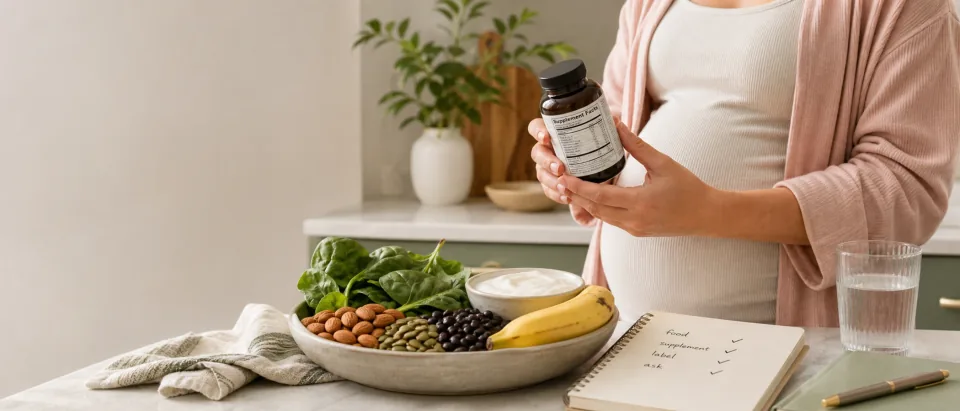
Magnesium during pregnancy is usually easiest to think about in two buckets: magnesium from food, and magnesium from supplements. Food sources such as nuts, seeds, beans, leafy greens, dairy, and fortified foods are part of normal nutrition. The check-first part is a supplement label: dose, form, added ingredients, medications, kidney disease, and why you want to take it.
Source basis: This guide cross-checks the practical answer against NIH Office of Dietary Supplements, MedlinePlus, FDA and the full references listed below.
The useful split: food, supplement, or medicine-like claim?
The word magnesium can show up in very different places: almonds, spinach, black beans, prenatal vitamins, electrolyte powders, sleep gummies, laxatives, antacids, and high-dose capsules. Those should not all get the same pregnancy answer.
The lowest-drama version is magnesium in ordinary food. NIH ODS, MedlinePlus, and NHS pregnancy nutrition guidance support a food-first framing by listing food sources and emphasizing healthy diet basics. The more careful version is a new supplement or medicine-like product, especially if the front label promises sleep, cramp, constipation, blood-pressure, anxiety, or “calm” benefits.
Bottom line for searchers: magnesium-rich foods are usually a diet-quality question; a new magnesium supplement is a product-label question; a laxative, antacid, or symptom-treatment claim is a care-context question. That split is why one pregnant person may simply eat more beans and yogurt while another should check a capsule, powder, gummy, or medicine label before using it.
Magnesium from food
New supplement products
Upper limits are about supplements
Treatment-style reasons
Use the exact label
What changes the magnesium answer?
A practical pregnancy check starts with the product category, not the front-of-bottle promise. The same mineral can be low-concern in dinner, already accounted for in a reviewed prenatal vitamin, or a bigger question in a high-dose sleep blend.
The source-backed distinction is this: NIH ODS discusses magnesium from food separately from magnesium added through supplements and medicines, while FDA guidance makes the Supplement Facts label the starting point for dietary supplements. That means the answer changes when the product changes.
Food sources
Prenatal vitamin already reviewed
Magnesium capsule, powder, gummy, or drink mix
Sleep, cramp, constipation, or blood-pressure claim
Laxative, antacid, or medicine containing magnesium
Why magnesium comes up for sleep, cramps, and constipation
Many magnesium searches are not really about the mineral. They are about being tired, crampy, constipated, anxious, or tired of waking up at 3 a.m. That is understandable, but it changes the safety question.
NIH ODS describes magnesium as involved in many body processes, but that does not mean a supplement treats every symptom attached to it online. If the product is being used for a pregnancy symptom, the symptom deserves a real plan first. The label can be part of that conversation, not the whole answer.
This is where Doola's boundary matters: we can help you organize the ingredient and label question. We should not tell you a dose, treat a symptom, or clear a supplement for your personal pregnancy.
Sleep products
Cramp products
Constipation products
What to check before starting a magnesium supplement
According to FDA supplement guidance, the label is the right starting point for a magnesium supplement during pregnancy. Look for the Supplement Facts panel, serving size, amount of magnesium per serving, form of magnesium, other ingredients, suggested use, warnings, and manufacturer contact details.
Then check the context around the label: Are you also taking a prenatal vitamin? Is the product combined with herbs, sleep aids, electrolytes, caffeine, stool-softening ingredients, or antacid/laxative ingredients? Do you take medicines or have kidney disease? Is the reason for taking it a symptom that needs care advice?
A useful label note to copy: “I am pregnant and considering this magnesium product. It lists this form, this amount per serving, these other ingredients, and this suggested use. I am taking these medicines or prenatal vitamins, and I want it for this reason.” That turns a vague supplement question into a reviewable product question.
Magnesium-rich foods are the calmer starting point
If you are not trying to solve a symptom with a supplement, food is the cleaner place to start. NIH ODS and MedlinePlus both list foods such as legumes, nuts, seeds, whole grains, leafy greens, milk, yogurt, and fortified foods as magnesium sources.
That does not mean every meal has to become a nutrient spreadsheet. A practical plate might include beans, lentils, pumpkin seeds, almonds, spinach, whole grains, yogurt, or fortified cereal across the week. The goal is variety, not a single “magnesium food” you force every day.
NHS pregnancy supplement guidance emphasizes folic acid, vitamin D, and a healthy diet as the baseline. That is another reason not to treat magnesium as a routine add-on for everyone just because it is trending in sleep or cramp content.
Where Doola helps after the article answer
Doola is most useful when you have the actual product in front of you: a magnesium gummy, sleep powder, electrolyte packet, prenatal vitamin, antacid, laxative, or supplement blend. The exact wording matters because FDA supplement labels list serving size, dietary ingredients, amount per serving, other ingredients, suggested use, and warning language. For example, using Doola with a real product label can separate magnesium amount from added herbs, caffeine, laxative ingredients, or sleep claims.
Use Doola to organize the label question before you ask a clinician, pharmacist, or dietitian: what form of magnesium is listed, how much is in one serving, what else is in the formula, and whether the front label is promising sleep, cramp, constipation, calm, or blood-pressure effects. Doola can make the question clearer; it should not be treated as medical clearance.
Magnesium during pregnancy: common questions
Magnesium during pregnancy is best answered as a food, supplement, label, and symptom-context question. These answers use NIH ODS for magnesium food and supplement context, FDA for label checks, MedlinePlus for food-source examples, and NHS for routine pregnancy nutrition framing.
Fast answer: food magnesium and supplement magnesium should not be treated the same. Food sources belong inside normal prenatal nutrition. A new capsule, powder, gummy, drink mix, laxative, antacid, or sleep product needs a label check because dose, form, serving size, other ingredients, medicines, kidney context, and symptom claims can change the pregnancy answer.
Is magnesium safe during pregnancy? expand_more
Is magnesium glycinate safe during pregnancy? expand_more
Can magnesium help pregnancy leg cramps or sleep? expand_more
What should I check on a magnesium supplement label? expand_more
Can I get enough magnesium from food while pregnant? expand_more
How we checked this
We used NIH Office of Dietary Supplements guidance for magnesium food sources, pregnancy life-stage intake context, supplement upper-limit boundaries, side effects from high supplemental intake, and medication interactions. FDA supplement guidance shaped the label-check workflow, and NHS pregnancy nutrition guidance helped keep the baseline focused on routine pregnancy nutrients and diet.
The article is educational and source-linked. It does not recommend a dose, prescribe magnesium, treat sleep problems or leg cramps, clear laxatives or antacids, replace medication advice, or assess your personal kidney, medication, or pregnancy-risk context.
References
Source-cited references used for this article. Open the original guidance when you want the public-health details behind the summary.