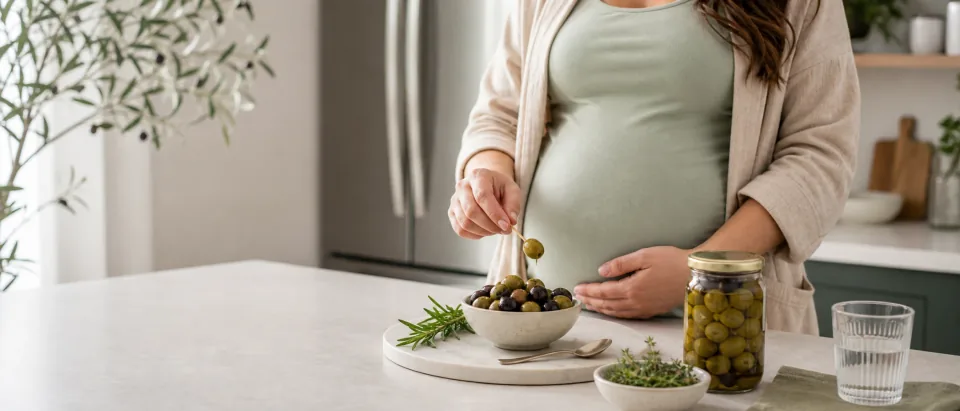
Olives during pregnancy: usually okay when they come from an intact jar or can, are stored as directed, and do not smell or look off. Check first: olive bars, opened jars, stuffed olives, unpasteurized cheese fillings, high sodium, and any jar that is leaking, bulging, moldy, or warm when it should be refrigerated. Do now: use a clean spoon, refrigerate opened olives, and check the exact filling or label when the answer depends on more than the olive.
Source basis: This guide cross-checks the practical answer against FDA, CDC, ACOG and the full references listed below.
The useful split: jarred, olive bar, or stuffed
Jarred olives during pregnancy are usually the easiest version to judge. Choose an intact jar or can, check the date, follow storage wording, use a clean spoon, and refrigerate opened olives as directed. If the jar is leaking, bulging, moldy, fizzy, or smells wrong, skip it.
Olive-bar olives are a ready-to-eat storage question. CDC pregnancy food-safety guidance puts extra attention on foods where refrigeration and handling are unclear. A self-serve olive bar can be fine in a well-run store, but you may not know how long the olives sat out or whether utensils stayed clean.
Stuffed olives depend on the filling. Pimento-stuffed olives are different from olives stuffed with soft cheese, seafood, deli meat, or a house-made mixture. If the filling is cheese, check pasteurization and cold storage; if it is seafood or meat, use the food-safety rule for that ingredient too.
Intact jar or can
Olive bar or antipasto
Filling changes the answer
Spoiled or damaged
Check label and storage
Intact jar or can
Olive bar or party bowl
Stuffed olives
Very salty servings
Storage and spoilage signs to check
Use package condition as the first safety check. FDA food-safety guidance treats damaged containers, spoilage, and unclear storage as reasons to avoid a food. With olives, that means skipping jars or cans that are leaking, bulging, cracked, moldy, fizzy, or smell wrong.
After opening, storage wording matters. FDA storage guidance emphasizes keeping foods cold when the label says refrigeration is needed. Opened olives should be covered, refrigerated as directed, and served with a clean utensil instead of fingers or a spoon that touched other foods.
Restaurant and antipasto servings need context. If olives were served cold, fresh, and handled cleanly, the concern is lower. If they sat warm beside soft cheeses, deli meats, seafood, or shared utensils, the mixed plate deserves a closer check.
Olives are usually a safety question first, then a sodium question
Olives are naturally salty because of curing and brining. That does not make them off-limits during pregnancy, but it can matter if you eat them often, have blood-pressure guidance, or notice swelling and are trying to manage salty foods.
ACOG nutrition guidance emphasizes balanced eating rather than treating one food as magic or forbidden. A small serving of olives can fit a meal; a large bowl every day is a different nutrition pattern. If you have individualized sodium limits, follow those instructions over a general article.
When the exact olive label or filling matters
The word “olive” is not always enough. A plain jarred olive, blue-cheese-stuffed olive, anchovy-stuffed olive, olive-bar mix, and antipasto plate with deli meat are different decisions because the filling, storage, and surrounding foods change the answer.
Doola Scan can help when the label or ingredient list is the deciding detail: pasteurized cheese wording, seafood filling, preservatives, sodium, storage after opening, or a prepared-food label that is hard to compare.
Use Can-I-Eat for the quick olive lookup
Use the food checker for mixed plates
Use the app for labels
How we checked this
We treated olives as a jarred-produce, ready-to-eat, and filling-specific food question. We checked FDA pregnancy food-safety and storage guidance, CDC safer food choices for pregnant women, and ACOG nutrition guidance, then mapped those sources to the olive situations parents actually search for.
This guide is educational. It cannot inspect your jar, confirm a local recall, diagnose foodborne illness, or replace clinician advice for symptoms or sodium limits.
Olive pregnancy questions
The short version: olives are usually safe from an intact jar when they are stored correctly and not spoiled. Check olive bars, stuffed fillings, sodium, and warning signs separately because FDA storage guidance, CDC ready-to-eat food guidance, and ACOG nutrition guidance each answer a different part of the decision.
Are jarred olives safe during pregnancy? expand_more
What is the risk with olive-bar olives while pregnant? expand_more
Can I eat stuffed olives during pregnancy? expand_more
Can olives be too salty during pregnancy? expand_more
Are green, black, or kalamata olives different during pregnancy? expand_more
What if I already ate questionable olives while pregnant? expand_more
References
Source-cited references used for this article. Open the original guidance when you want the public-health details behind the summary.