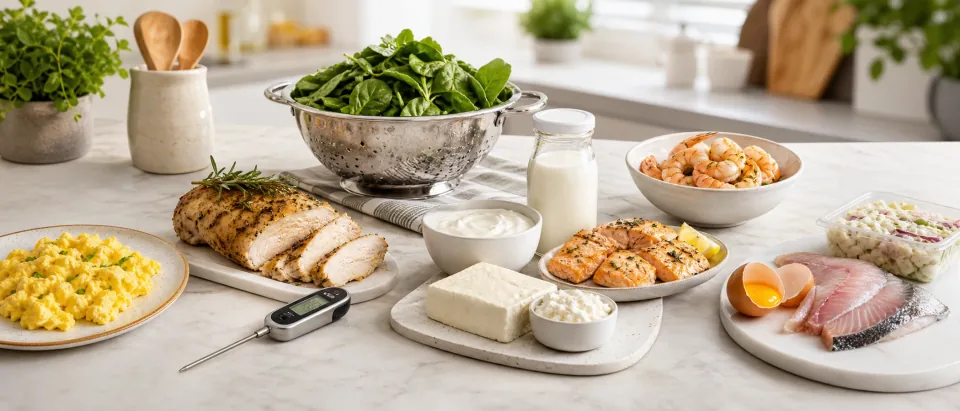
Raw and undercooked foods during pregnancy: Avoid the risky version, not every food family. What changes the answer: raw or undercooked eggs, meat, poultry, seafood, unpasteurized dairy or juice, raw sprouts, and chilled ready-to-eat foods kept too long. Do now: choose cooked, pasteurized, washed, and freshly handled versions.
Source basis: This guide cross-checks the practical answer against FoodSafety.gov, CDC, FDA and the full references listed below.
Why the raw version changes the answer
CDC and FDA pregnancy food-safety guidance points to the same practical pattern: pregnancy is rarely about banning an entire food family. The risk rises when the food is raw, undercooked, unpasteurized, recalled, or already prepared and chilled for too long. Listeria and salmonella are bacteria that can cause foodborne illness; parasites are germs that can live in raw or undercooked animal foods. Cooking, pasteurization, washing, cold storage, and recall checks are the details that change the answer. For a wider framework that also considers freshness and amount, see our guide to foods to avoid during pregnancy.
Cooked or pasteurized
Raw or unclear
Change the version
Symptoms change it
Check the specific food
Raw or lightly cooked eggs
Raw seafood or undercooked meat
Unpasteurized dairy or juice
Ready-to-eat chilled foods
When a specific dish needs a closer look
A practical way to use official food-safety lists is to ask, “What is the raw or undercooked part?” FDA guidance calls out mousse, tiramisu, cookie dough, and homemade mayonnaise because raw or lightly cooked egg can carry salmonella. For seafood, source guidance separates cooked fish from raw sushi, ceviche, oysters, or refrigerated smoked fish. For salads, the question is often raw sprouts, old deli salad, or ingredients that were not kept cold.
Desserts and sauces
Seafood
Salads and produce
Meat and leftovers
When the exact dish matters more than the list
Broad food-safety guidance is useful, but the dish name still matters because CDC and FDA warnings show up differently in real meals. Mousse usually comes down to raw or pasteurized egg. Rum cake comes down to how much alcohol remains and whether the dessert was baked. Pasta salad comes down to refrigeration, deli handling, mayo-style dressing, and how long it sat out. Use these exact checks when the question is a real plate of food, then come back to this guide for the pattern.
Dessert question
Salad question
What to do if you already ate something undercooked
One bite does not automatically mean something bad will happen. CDC guidance makes the useful next step practical: identify the food, whether it was raw, undercooked, unpasteurized, recalled, or poorly chilled, and whether symptoms show up. Symptoms and known recalls matter more than trying to replay every bite.
What not to overthink: change the version
Safer swaps are version changes that keep the craving but remove the raw, undercooked, unpasteurized, or poorly chilled risk. Choose scrambled or fully cooked eggs instead of runny eggs, cooked rolls instead of raw sushi, alcohol-free tiramisu-style pudding instead of boozy tiramisu, fresh homemade pasta salad kept cold instead of an old deli tub, and pasteurized dairy instead of raw-milk cheese. You do not have to memorize every rule if you can spot the risky detail.
Cooked beats raw
Pasteurized beats unclear
Fresh beats old
How we checked this
This article is an educational decision guide built from official pregnancy and food-safety sources, then organized around the kitchen decisions parents actually face: raw versus cooked, pasteurized versus unpasteurized, fresh versus held too long, and exact-food lookups. That structure can help you compare a real food on your plate, but it does not diagnose food poisoning or replace your own clinician.
When to call after a risky food
When to call: most accidental bites do not turn into illness, but symptoms change the decision. CDC guidance makes fever, severe vomiting, diarrhea, dehydration, strong cramps, or feeling very unwell after a risky food worth prompt care advice because those symptoms can point to foodborne illness. Known recalls also matter: if the food was recalled for listeria, salmonella, or another outbreak concern, save the package or receipt details and contact your care team for the safest next step.
Call sooner
Save details
Related questions about raw foods
FDA and NHS guidance share the same source pattern: separate the safer version from the risky version. Raw egg desserts are different from baked desserts because the egg may not be cooked. Raw sushi is different from cooked seafood because raw fish can add parasite or foodborne-illness concerns. Raw sprouts are treated cautiously because bacteria can grow during sprouting. If an exposure already happened, symptoms, recalls, and storage details matter more than worry alone.
What raw foods should I avoid while pregnant? expand_more
Are raw egg desserts different from baked desserts? expand_more
Is sushi the same risk as cooked seafood? expand_more
What should I do if I already ate undercooked food while pregnant? expand_more
Why are raw sprouts treated differently from other vegetables? expand_more
References
Source-cited references used for this article. Open the original guidance when you want the public-health details behind the summary.
 NHS: Foods to Avoid in Pregnancy
nhs.uk
open_in_new
NHS: Foods to Avoid in Pregnancy
nhs.uk
open_in_new