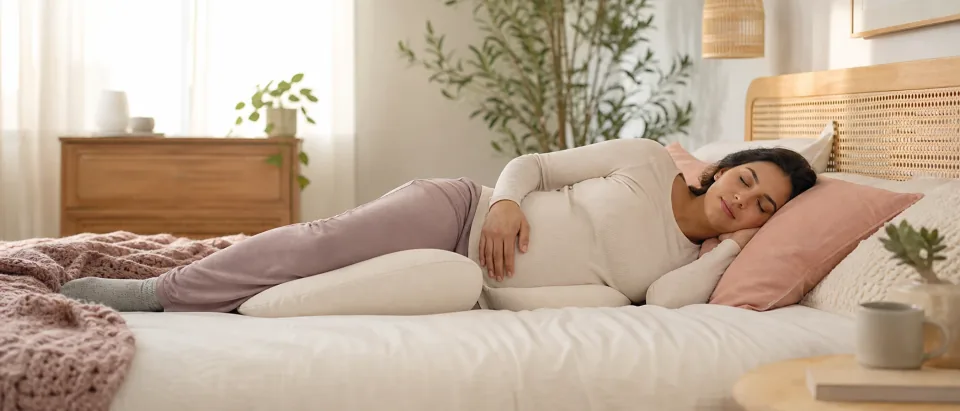
Side sleeping during pregnancy is the position NHS recommends going to sleep in once your bump is bigger, especially after 28 weeks. Left or right is okay: the practical goal is starting sleep on a side, not holding one perfect pose all night. If you wake on your back, turn back to your side without panicking.
Source basis: This guide cross-checks the practical answer against NHS and the full references listed below.
The calm split: side, back, or pillow problem?
The practical rule is simpler than most late-night searches make it sound: NHS recommends going to sleep on your side, either left or right, especially once pregnancy is past 28 weeks. If you wake up on your back, that is not a reason to panic. Turn back onto a side and settle again. The goal is a safer starting position and a more comfortable setup, not perfect control over every movement while asleep.
Start sleep on a side
Woke up on your back
After 28 weeks
Pain or distress needs another plan
Product wording
Left side, right side, back: what changes the answer
Left side and right side are both side-sleeping positions. NHS says the safest position to go to sleep in pregnancy is on your side, either left or right. The bigger change is back sleeping later in pregnancy: NHS says that after 28 weeks, falling asleep on your back can double the risk of stillbirth, likely because of blood and oxygen flow. This guidance is about the position you go to sleep in, not blaming yourself for every sleep movement.
Left side
Right side
Back sleeping after 28 weeks
Waking on your back
A pillow setup that supports the real problem
A pregnancy pillow is optional, but pillow support can make the NHS side-sleeping advice easier to live with. NHS suggests supporting the bump with pillows and placing a pillow between the knees, which maps to the two places many pregnant sleepers feel pull: the belly and the hips. A regular pillow can work if it keeps the knees stacked, reduces bump tugging, and lets you breathe and turn without feeling trapped.
The buying test is not whether a pillow is expensive or full-body. Check what body part it supports, whether it overheats, whether the cover is washable, and whether the shape lets you switch between left and right side sleeping. If a pillow makes hip, back, or pelvic pain sharper, it is not the right setup for that night.
Between the knees
Under the bump
Behind the back
When side sleeping starts to matter more
Earlier in pregnancy, comfort often decides your position because the bump is smaller. As pregnancy progresses, the physical weight of the bump changes how side, back, and stomach positions feel. NHS gives the clearest timing marker: after 28 weeks, go to sleep on your side rather than your back. If you are not yet in late pregnancy, side-sleeping practice can still help because it gives your body time to find a pillow setup before sleep gets harder.
Early pregnancy
Side sleeping can be useful practice, but many people still change positions naturally.
After 28 weeks
NHS guidance makes side-sleeping the safer starting position from this point.
Late pregnancy
Pillows can help the bump, knees, hips, and back settle into side sleeping.
How Doola helps with pregnancy pillow and support products
Doola is useful after the NHS safety answer, when the question becomes a product-detail question: what does this pregnancy pillow actually support, and will it help side sleeping tonight? Doola can help organize shape, firmness, material, cooling fabric, wedge versus full-body design, return policy, and warning language so a shopping page is easier to compare.
Doola should not replace a midwife, doctor, or physiotherapist when sleep loss, pain, or mood symptoms need care. Its role here is narrower and practical: turn confusing product copy into clearer support cues, then route medical questions back to care advice instead of pretending a pillow solves everything.
When sleep needs more than a position fix
Sleep position is only one part of pregnancy sleep. NHS says tiredness and sleep problems are common, but lack of sleep can feel difficult and sleeplessness with other symptoms can sometimes connect with mood. If sleep is consistently upsetting, pain keeps waking you, or you feel hopeless or unable to cope, ask your midwife or doctor rather than only buying another pillow. A position change should make the night calmer, not add a new source of fear.
How we checked this
We checked NHS pregnancy sleep guidance first because it directly answers the side-sleeping, back-sleeping, and pillow-support questions. We also checked NHS back-pain guidance for comfort context. This page is source-linked educational guidance for sleep-position decisions and product questions; it does not diagnose sleep disorders or replace care advice.
Related questions parents ask
Most side-sleeping questions come from a reasonable worry: you can choose a starting position, but you cannot control sleep all night. The practical answer is to start sleep on either side after 28 weeks, use pillows to support the bump and knees, and turn back to a side if you wake on your back. Symptoms such as persistent pain, distressing insomnia, or mood changes need more than position advice.
What symptoms mean side sleeping is not enough? expand_more
What if I wake up sleeping on my back? expand_more
When should I start side sleeping during pregnancy? expand_more
Do I need a pregnancy pillow for side sleeping? expand_more
What should I do tonight to sleep on my side? expand_more
References
Source-cited references used for this article. Open the original guidance when you want the public-health details behind the summary.