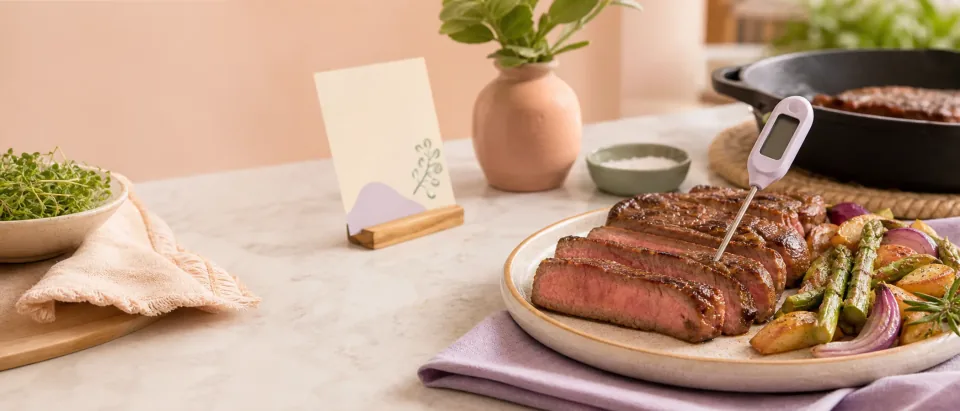
Steak temp for pregnant women is safest as a thermometer question: for whole steak, use 145°F plus a 3-minute rest. Pregnancy steak temperature should come from the thickest part of the meat, not just a medium or pink label. At a restaurant: ask for steak cooked to temperature and avoid unclear rare or undercooked meat.
Source basis: This guide cross-checks the practical answer against USDA FSIS, CDC, FoodSafety.gov and the full references listed below.
Meat temperature and restaurant decision map
Meat searches split across steak temperature, rare or medium doneness, pork and lamb, hot dogs, brats, deli sandwiches, and restaurant orders. Use the exact path below before treating every meat question as the same answer.
The number that matters more than “medium”
USDA FSIS says whole cuts of beef, including steaks and roasts, should reach 145°F and then rest for at least 3 minutes. CDC pregnancy guidance points to the same whole-cut meat temperature and separates it from ground meats, which should reach 160°F. So the useful question is not only “was it medium?” but “did the thickest part reach the safe temperature and rest?”
Thermometer
145°F + rest
160°F
Ask clearly
Watch symptoms
Whole steak
Medium-rare steak
Ground beef or burger
Restaurant steak
Why pink is not the whole story
A pink center can feel alarming, but color is not a precise safety tool. USDA FSIS tells consumers to use a food thermometer because appearance can mislead you. A steak that reached 145°F and rested is a different situation from a steak that only looks “medium” on a plate. At home, the thermometer gives you a calmer answer. At a restaurant, uncertainty is the reason to order more cooked.
Pink does not always equal unsafe
Brown does not guarantee safe
Rest time matters
How to check steak without overthinking dinner
For home cooking, put the thermometer into the thickest part of the steak, away from bone or pan surface, and wait for a stable reading. If you are cooking thin steak, USDA FSIS notes that inserting from the side can help the sensing area reach the center. For restaurant food, you usually cannot measure it yourself, so ordering well-done is the simpler pregnancy-safe request.
If you already ate steak that seemed too pink
Try not to spiral from color alone. The risk depends on how undercooked it was, whether it was whole steak or ground meat, and whether symptoms appear. Avoid repeating undercooked meat, drink fluids as usual, and contact your care team if you develop fever, vomiting, diarrhea, severe stomach pain, or feel unusually unwell after eating. If the meat was recalled or obviously raw, get advice sooner.
When the label, cut, or menu wording is unclear
Steak questions often come with confusing wording: medium, medium-well, roast beef, sliced beef, burger, leftover steak, or ready-to-eat meat. Doola Scan and the pregnancy food checker can help you check the exact food or menu wording and connect it to pregnancy food-safety rules. They are useful when the article gives the principle but your actual plate has more details.
How we checked this
We anchored the temperature claims in USDA FSIS safe-temperature and thermometer guidance, then cross-checked the pregnancy-specific meat guidance against CDC’s safer food choices for pregnant women. This page gives educational food-safety context; it cannot diagnose foodborne illness, verify a restaurant’s internal temperature, or replace care advice after symptoms.
Related steak pregnancy questions
Use these answers to check safe steak temperature, compare whole steak with ground beef, and decide when symptoms or a recalled-meat exposure should move from kitchen question to clinician call.
What temp can pregnant women eat steak? expand_more
Can I eat medium steak while pregnant? expand_more
Is pink steak safe during pregnancy? expand_more
What if I already ate undercooked steak while pregnant? expand_more
References
Source-cited references used for this article. Open the original guidance when you want the public-health details behind the summary.