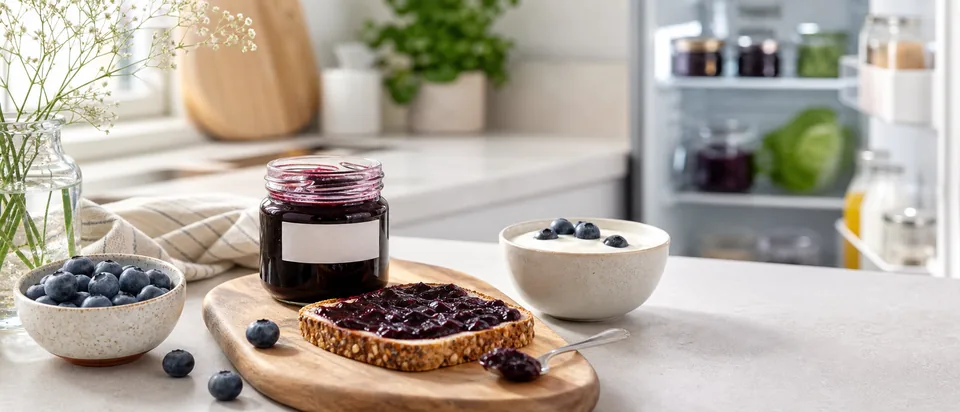
Blueberry preserves during pregnancy: the benefit is mostly flavor and fruit convenience, not a special pregnancy treatment. A sealed, in-date jar is usually a low-concern food when it is stored as directed and eaten with a clean spoon. Check first: added sugar, opened-jar storage, homemade canning safety, mold, bulging lids, and any blood-sugar guidance. Do now: use a thin spread with yogurt, toast, oats, or another steadier snack instead of treating preserves as a fruit replacement.
Source basis: This guide cross-checks the practical answer against FDA, USDA MyPlate, Dietary Guidelines for Americans and the full references listed below.
Start with the jar, then the sugar
Blueberry preserves are usually a lower-concern pregnancy food when the jar is commercial, sealed before opening, in date, not moldy, and stored as the label says. The real split is not whether blueberries are good or bad. It is whether you are eating a safe jarred food and whether the added sugar fits your day.
Think of preserves as a sweet spread with some fruit, not a replacement for whole blueberries. That framing keeps the answer calm: enjoy a small amount if the jar checks out, pair it with a steadier food, and skip jars that look spoiled or were stored unclearly.
Commercial jar, clean spoon
Sugar and storage
Make it steadier
Spoilage signs
Exact label
Commercial preserves, in date
Homemade preserves
Blood-sugar concerns
Benefits are clearer with berries than with a big spoon of jam
Blueberries themselves can be a helpful pregnancy fruit because fruit contributes fiber, fluid, and micronutrients in a normal eating pattern. Preserves are different because the fruit is concentrated with sugar. USDA MyPlate encourages fruit during pregnancy, while the Dietary Guidelines emphasize limiting added sugars. Those two ideas can both be true.
The practical version is simple: a thin layer of preserves can make yogurt, oats, toast, or nut butter more appealing. A large serving of jam by itself is mostly a sweet food. If your care team has given you glucose or gestational diabetes guidance, use that advice for the portion question.
Better use
Less useful
Best swap
The 20-second jar safety check
FDA food-safety guidance for pregnancy focuses on avoiding contaminated foods and handling produce safely. For preserves, that translates into a jar check. Look at the lid, date, storage instructions, and surface of the preserve. Use clean utensils so crumbs, butter, yogurt, or saliva do not get carried back into the jar.
Homemade jam needs more confidence than a sealed store jar
Homemade blueberry jam can be lovely, but pregnancy is not the moment to guess about an unknown jar. A commercial jar gives you a date, ingredients, and storage instructions. A homemade jar depends on who made it, how it was processed, whether the seal held, and how it has been stored.
If you know the source and the jar looks and smells normal, the decision may be straightforward. If the source is unclear, the seal failed, the jar was stored warm after opening, or you feel unsure, choose a fresh blueberry snack or a sealed commercial jar instead.
Where Doola helps with the exact label
Preserves labels can vary: blueberry content, added sugar, sweeteners, preservatives, refrigeration wording, and homemade-style claims all change what you may want to check. This guide gives the general decision. Doola can help when you are looking at a real jar and want to organize the label details before eating.
How we checked this
We used FDA pregnancy food-safety and produce-handling guidance for the jar and fruit-safety questions, USDA MyPlate for pregnancy eating-pattern context, and the Dietary Guidelines for added-sugar framing. The page is educational and label-focused; it does not replace individualized nutrition advice, especially for gestational diabetes or blood-sugar plans.
References
Source-cited references used for this article. Open the original guidance when you want the public-health details behind the summary.