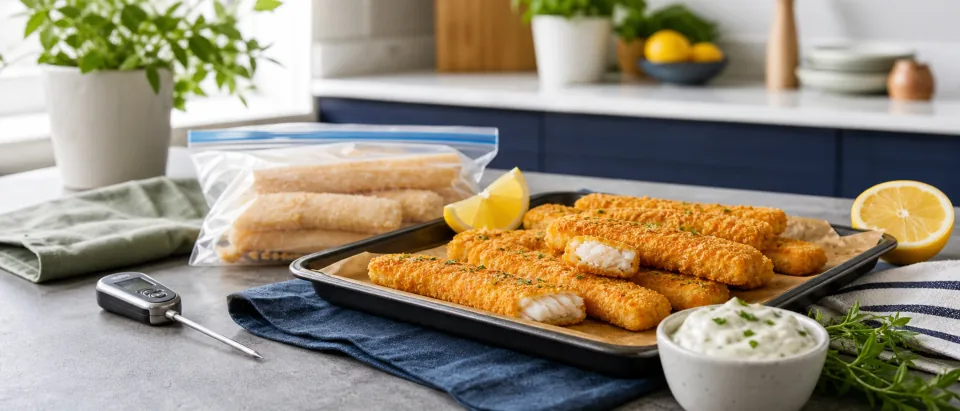
Fish sticks during pregnancy can be okay when they are fully cooked, served hot, made from a lower-mercury fish, and handled safely. Check first: the package directions, internal heating, fish type, sodium, allergens, tartar sauce or dips, and whether leftovers sat out. Do now: cook from frozen as directed, avoid underheated centers, and check the exact product if the label or fish species is unclear.
Source basis: This guide cross-checks the practical answer against Seafood advice, Pregnancy food safety, Safe cooking and the full references listed below.
The useful split: fully cooked fish or unclear frozen meal
Fish sticks during pregnancy can be a normal cooked-seafood choice. The key is cooking them fully and serving them hot, not eating a cold, partly heated, or long-sitting tray.
The label still matters. Fish species, sodium, allergens such as wheat or egg, sauces, and cooking directions can matter more than the generic phrase fish sticks.
Fully cooked fish sticks
Fish type and label
Undercooked or long-sitting tray
Use the package directions
What changes the answer
The best answer depends on whether the fish is fully cooked, what species is used, and what else is on the plate. Frozen breaded fish is not the same decision as raw seafood, deli fish salad, or mystery seafood sticks.
Frozen fish sticks cooked as directed
Unknown fish species
Seafood sticks or imitation crab
Leftover fish sticks
When Doola can help with the exact product
Doola is useful when the answer depends on a frozen package, ingredient list, fish species, sauce, allergen, or restaurant meal rather than the general idea of cooked fish.
Use Can-I-Eat for fish sticks
Use Doola Scan for packages
Use the food checker for meals
How we checked this
We treated fish sticks as a cooked seafood, frozen-food, label, mercury-context, and leftover-handling question. We checked FDA seafood advice, FDA pregnancy food-safety guidance, FoodSafety.gov cooking-temperature guidance, and FDA label guidance, then mapped those sources to the fish-stick searches already visible for Doola.
Fish stick pregnancy questions
Can I eat fish sticks while pregnant? expand_more
Do fish sticks need a temperature check? expand_more
Are seafood sticks the same as fish sticks? expand_more
What if I already ate underheated fish sticks? expand_more
References
Source-cited references used for this article. Open the original guidance when you want the public-health details behind the summary.