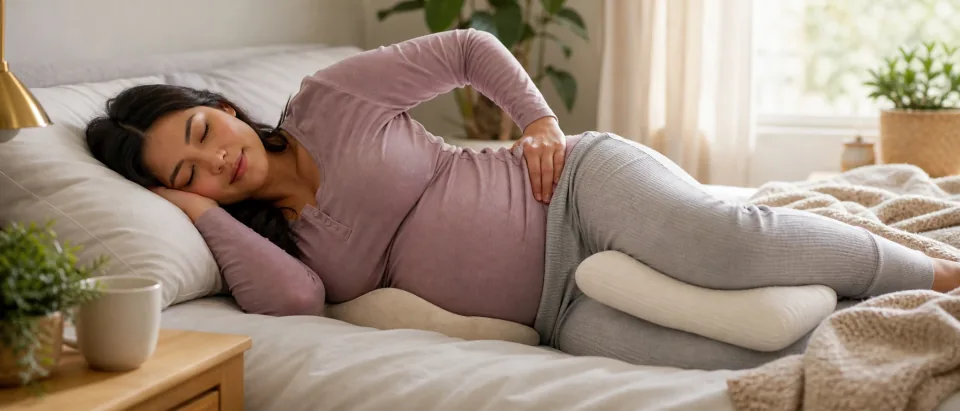
Hip pain while sleeping pregnant is often a comfort and pressure problem, especially when side sleeping puts weight through one hip. Try first: support your knees, bump, and back so the pelvis feels more level. Ask for care advice if pain affects walking, stairs, turning in bed, or getting out of a car.
Source basis: This guide cross-checks the practical answer against NHS, RCOG and the full references listed below.
The fast split: pressure pain or pelvic pain?
Check the pain pattern before buying another product. Hip pain while sleeping pregnant is usually common when it is only side pressure, but it needs a different plan when pain affects walking, stairs, turning in bed, or getting out of a car. Try knee, bump, and back support tonight; call or ask for care advice if movement is becoming difficult.
One hip feels sore from side pressure
Knees are not supported
Turning in bed hurts
One position makes pain worse
Product details are confusing
What the night pattern can tell you
The pattern matters. Pain only on the hip touching the mattress often points to pressure or alignment. Pain that shows up while walking, climbing stairs, standing on one leg, turning in bed, or getting out of a car can fit the pelvic girdle pain pattern described by NHS. RCOG says PGP is common, affecting about 1 in 5 pregnant women, and early treatment can help normal activities continue.
One sore side after lying still
Top leg pulls downward
Turning in bed is painful
Back pain plus concerning symptoms
A pillow setup to try before buying another one
The goal is to keep the pelvis from twisting while you sleep on your side. NHS back-pain guidance suggests bending the knees and placing a pillow between them, which can reduce strain through the hips and lower back. Try one pillow between the knees, a small pillow or folded towel under the bump if it pulls, and a pillow behind your back if you keep rolling. If pain improves, the issue may be support and pressure. If pain keeps returning or limits movement in the day, the pillow setup is not the whole answer.
Knees stacked
Bump supported
Back gently braced
Why hip pain can feel worse later
As pregnancy progresses, the bump gets heavier and sleep positions become less flexible. NHS back-pain guidance explains that pregnancy changes can strain the lower back and pelvis. Later pregnancy can also make side sleeping feel more necessary, which means one hip may carry pressure for longer. That is why the answer is usually a mix of sleep-position support, daytime movement clues, and care advice when movement becomes difficult.
Earlier pregnancy
A small pillow change or side switch may be enough if pain is only positional.
Later pregnancy
Knee, bump, and back support can reduce pulling as side sleeping becomes harder.
PGP pattern
Pain with stairs, turning in bed, walking, or car transfers should be discussed.
How Doola helps with pillows, bands, and belts
Doola cannot diagnose hip pain or prescribe a pregnancy pillow, belly band, or pelvic support belt. It can help organize product details that are easy to miss: wedge versus full-body pillow, firmness, cooling material, washable cover, size, return policy, compression wording, support-belt warnings, and whether the product is meant for comfort or pelvic support.
That matters because hip-pain searches often lead to shopping pages. A product can help support a side-sleeping setup, but NHS and RCOG guidance make clear that movement-limiting pelvic pain belongs in a care plan, not just another cart.
When hip pain should not be solved by shopping
Ask a midwife, GP, or physiotherapist if hip or pelvic pain makes walking, stairs, standing on one leg, turning in bed, getting dressed, or getting out of a car difficult. NHS pelvic-pain guidance lists those movement problems, and RCOG says early diagnosis and treatment can relieve pain and help daily activity. Also seek urgent advice if back pain comes with fever, bleeding, pain when peeing, side pain under the ribs, or numbness/loss of feeling.
How we checked this
We checked NHS back-pain guidance, NHS pelvic-pain guidance, and RCOG pelvic girdle pain patient information. Those sources support the practical split used here: side pressure can often be helped with support, but pain that changes movement may be pelvic girdle pain and deserves assessment. This page is educational guidance, not diagnosis or treatment.
Related questions parents ask
Hip pain at night can be a pillow problem, a side-pressure problem, or a pelvic-pain symptom clue. NHS back-pain guidance supports simple side-sleeping support, while NHS and RCOG pelvic-pain guidance are more useful when pain affects walking, stairs, turning in bed, dressing, or getting out of a car.
What symptoms mean hip pain is more than side pressure? expand_more
What should I do tonight for hip pain while sleeping pregnant? expand_more
Can hip pain at night be pelvic girdle pain? expand_more
Should I switch sides if one hip hurts? expand_more
When should I ask about hip or pelvic pain? expand_more
References
Source-cited references used for this article. Open the original guidance when you want the public-health details behind the summary.