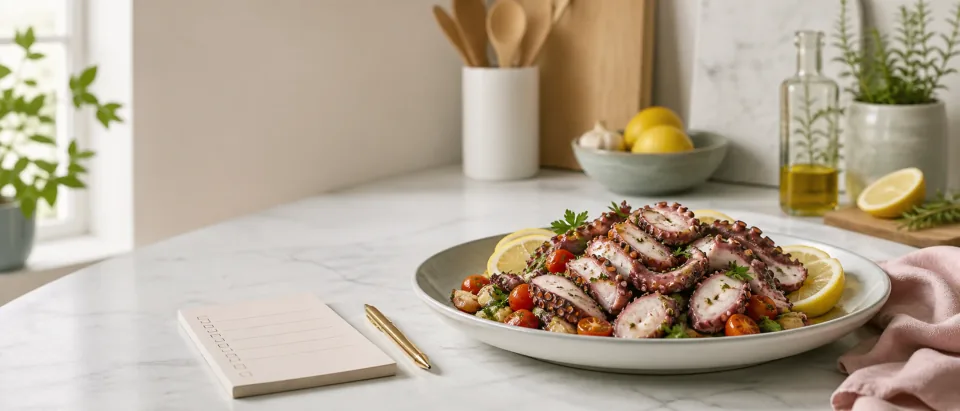
Octopus during pregnancy: usually okay when it is fully cooked, fresh, and handled cleanly. Avoid or check first: raw octopus, sushi-style dishes, seafood salads, buffet seafood, or leftovers with unclear refrigeration. Do now: choose cooked octopus, eat it hot or properly chilled, and skip seafood that smells off, sat out, or leaves you feeling unwell.
Source basis: This guide cross-checks the practical answer against FDA/EPA, FoodSafety.gov, CDC and the full references listed below.
The useful split: cooked, raw, or restaurant octopus
Cooked octopus during pregnancy is usually the lower-concern version. Grilled, boiled, braised, or pan-seared octopus is a different decision from raw octopus, sushi-style dishes, seafood salad, or buffet seafood because official food-safety guidance separates cooked seafood from raw or undercooked seafood.
Raw or undercooked seafood is the line to respect. FoodSafety.gov pregnancy guidance advises avoiding raw or undercooked seafood. If a menu does not make the preparation clear, ask whether the octopus is fully cooked before ordering.
Restaurant handling matters after cooking. A hot cooked dish served fresh is more reassuring than a chilled seafood salad, an open buffet tray, or leftovers with unclear time out of the fridge.
Cooked through
Chilled or restaurant
Raw seafood changes risk
Raw or undercooked
Ask cooked or raw
Compare seafood
Hot grilled or boiled octopus
Octopus sushi or raw octopus
Seafood salad or chilled tapas
Leftover octopus
The cooking and storage checks that matter
FoodSafety.gov lists fish and shellfish with a 145°F safe minimum internal temperature. At home, the practical goal is cooked-through seafood, clean utensils, and prompt refrigeration after cooking so cooked octopus does not become a storage problem.
If you are eating out, you may not have a thermometer. Use the menu and server as your check: grilled, boiled, braised, or cooked octopus is the goal; raw, marinated raw, or barely cooked seafood is not the pregnancy-friendly choice.
When timing changes the octopus check
The pregnancy stage does not usually change the basic octopus answer: cooked and handled cleanly is the lower-concern version. Timing matters more for how the seafood was served, how long it sat out, and whether symptoms appear after a questionable dish.
More reassuring
Fully cooked octopus served hot, or cooked octopus chilled promptly by a reliable kitchen, is the lower-concern scenario.
First trimester
First-trimester searches should use the same split: choose cooked octopus and avoid raw, undercooked, buffet, or unclear seafood.
Leftovers
Leftover octopus is only reassuring if it was refrigerated promptly and still smells and looks fresh. Skip seafood that sat out.
After symptoms
Fever, vomiting, diarrhea, dehydration, severe cramps, allergic symptoms, or feeling very unwell after questionable seafood deserves care advice.
Mercury matters, but it is not the whole octopus question
Seafood questions during pregnancy often turn into mercury questions. FDA/EPA fish advice encourages seafood as part of pregnancy nutrition while steering people toward lower-mercury choices and away from listed high-mercury fish.
For octopus, the more immediate practical question is usually preparation: fully cooked, not raw, and handled cleanly. If you are eating seafood often, rotate choices and use the broader seafood guide to keep mercury and variety in view.
When the menu details are not obvious
Menus do not always tell you whether octopus is grilled, boiled, marinated raw, chilled after cooking, mixed into seafood salad, or served from a tray. For pregnancy, that preparation and holding detail is the answer: cooked-through and safely held is different from raw, undercooked, or room-temperature seafood.
Use the official food-safety split as your menu check. FoodSafety.gov pregnancy guidance says to avoid raw or undercooked seafood, and its temperature chart lists fish and shellfish at 145°F. If the server cannot confirm cooked preparation or safe cold holding, choose a clearer cooked seafood dish.
Doola Scan can help check a menu, label, or dish description for raw seafood clues, chilled storage, smoked or cured wording, sauces, and other ingredients that change the answer.
Use Can-I-Eat for quick lookup
Compare raw seafood
Use the food checker for menus
Open Doola for dish checks
How we checked this
We treated octopus as a seafood preparation question: cooked vs raw, hot vs chilled, restaurant vs home, and seafood-frequency context. FDA/EPA fish advice provided the pregnancy seafood and mercury framework; FoodSafety.gov provided the 145°F seafood temperature anchor and the pregnancy warning to avoid raw or undercooked seafood; CDC pregnancy food-safety guidance supported the higher-risk reader context.
This guide is educational. It cannot inspect a restaurant kitchen, confirm a dish temperature after the fact, diagnose foodborne illness, or replace personalized care advice for symptoms, allergies, or seafood restrictions.
Octopus pregnancy questions
The short version: cooked octopus is usually the safer form during pregnancy because the practical decision rests on preparation and storage. FoodSafety.gov warns pregnant people to avoid raw or undercooked seafood, while FDA/EPA fish advice frames seafood as a pregnancy nutrition choice when mercury and species selection are considered.
Can I eat cooked octopus while pregnant? expand_more
Is raw octopus or octopus sushi safe during pregnancy? expand_more
Is octopus high in mercury during pregnancy? expand_more
Can I eat octopus in the first trimester? expand_more
Are octopus leftovers safe while pregnant? expand_more
What if I already ate questionable octopus while pregnant? expand_more
References
Source-cited references used for this article. Open the original guidance when you want the public-health details behind the summary.