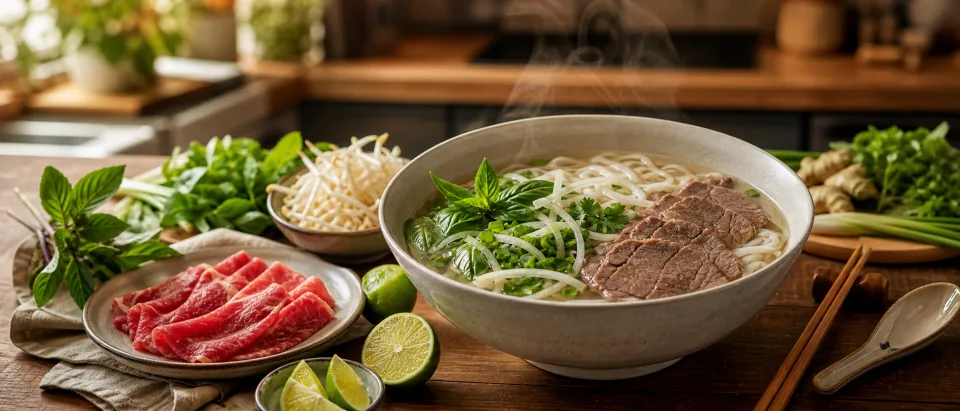
Pho during pregnancy is usually safe when the broth is steaming hot, the beef or chicken is cooked through, herbs are washed, and bean sprouts are cooked or skipped. The risk changes with rare beef, raw sprouts, lukewarm broth, or unclear restaurant handling. Order it safer: ask for well-cooked meat, no raw sprouts, and eat it hot.
Source basis: This guide cross-checks the practical answer against CDC, FDA, FoodSafety.gov and the full references listed below.
Hot noodle soup and add-ins decision map
Noodle searches split across ramen, pho, Buldak, raw sprouts, runny eggs, rare meat, seafood, sodium labels, and restaurant handling. Use the exact path below before treating every bowl as the same pregnancy question.
The quick pho safety check
Pho can be a reasonable pregnancy meal when the bowl arrives steaming hot, the beef or chicken is cooked through, herbs are washed, and bean sprouts are cooked in the hot broth or skipped. The risky version is the one that stays partly raw: rare beef, raw sprouts added late, lukewarm broth, or herbs that look poorly washed.
Clearer choice
Check or avoid
Practical step
After eating
Exact foods
Clearer choice
Check or avoid
Already ate it
Why hot broth is not the whole answer
Hot broth helps, but it is not a magic safety guarantee if raw ingredients are added after the bowl cools. CDC pregnancy guidance favors meat cooked to a safe temperature, and CDC/FDA guidance treats raw or undercooked sprouts as a higher-risk choice for pregnant people.
That is why the useful pho question is practical: did the meat actually cook through, did the sprouts cook rather than just warm, and do the herbs look clean and fresh? If those answers are clear, the bowl is much easier to feel comfortable with.
Lower concern
Caution point
Best next move
How to order pho while pregnant
At a restaurant, keep the request simple: cooked beef or chicken, steaming-hot broth, and no raw sprouts on the side. If sprouts are important to you, add them immediately while the broth is still very hot and let them wilt thoroughly; if the bowl is only warm, skip them.
At home, cook the protein fully, rinse herbs well, keep raw meat away from ready-to-eat toppings, and do not leave the soup sitting out. FoodSafety.gov's pregnancy advice is about reducing foodborne illness risk, so the handling details matter as much as the ingredient list.
If you already ate it
If you already ate pho, start with what actually happened. Was the broth hot? Did the meat cook through? Were raw sprouts added? Did the herbs look clean? A single bowl does not automatically mean something bad happened, but those details help you decide whether to simply watch how you feel or ask for advice.
Call your clinician or local advice line if fever, vomiting, diarrhea, dehydration, severe cramps, or feeling very unwell appears after a restaurant meal, or if you learn the food was recalled. If you feel fine, the practical move is usually to choose the clearer preparation next time.
Write down
Watch for
Ask for care advice
Safer swaps that keep the meal easy
The easiest swap is still pho: cooked chicken pho, well-done beef pho, or vegetable pho without raw sprouts. You are not trying to avoid Vietnamese food; you are removing the parts that are hardest to verify during pregnancy.
Doola Scan can help when the question is packaged broth, sauce, a ready-meal label, or an ingredient list. For a restaurant bowl, the better tool is still a direct ordering question: cooked meat, hot broth, washed herbs, and no raw sprouts.
At home
At restaurants
When unsure
How we checked this
We checked CDC, FDA, and FoodSafety.gov pregnancy food-safety guidance, then applied it to the real pho decision: hot broth, cooked meat, raw sprouts, washed herbs, and symptoms after eating. This guide is educational and cannot diagnose foodborne illness or replace your own care team.
References
Source-cited references used for this article. Open the original guidance when you want the public-health details behind the summary.