Pregnancy cravings and food aversions are common, especially when nausea, smell sensitivity, reflux, or tiredness changes what sounds possible to eat. Usually common: wanting a few simple foods, suddenly hating a usual food, or needing smaller meals. Check first: choose foods that are washed, cooked, pasteurized, and stored safely. Call your care team: if vomiting keeps fluids down poorly, you feel dehydrated, you are losing weight, or cravings involve nonfood items like ice, dirt, starch, or cleaning-product smells.
Source basis: This guide cross-checks the practical answer against ACOG, NHS, MedlinePlus and the full references listed below.
A quick way to sort the craving or aversion
Most pregnancy cravings and food aversions are not a sign that you are doing anything wrong. The useful question is what the change is doing to your day: are you still drinking, eating something tolerable, and choosing foods that are handled safely?
If the answer is yes, it is usually reasonable to work with what sounds possible. If vomiting, dehydration, weight loss, fever, or nonfood cravings enter the picture, move from internet searching to pregnancy care advice.
Foods suddenly change
Nausea changes choices
Choose the safe version
Intake is not holding
Check the exact food
Craving, aversion, nausea, or smell sensitivity?
These can overlap, but they are not the same thing. A craving is a food that suddenly sounds especially appealing. An aversion is a food, smell, or texture that suddenly feels hard to tolerate. Nausea can make both stronger because your body starts sorting foods by what feels least likely to make you feel worse.
That is why the same person can want crackers, fruit, pickles, spicy food, or one safe comfort meal for several days, then suddenly reject it. The goal is not to decode every craving. The goal is to keep fluids, calories, and safe food choices moving while you watch for the few signs that need care.
Craving
Aversion
Nausea pattern
Nonfood urge
What to eat when only a few foods sound possible
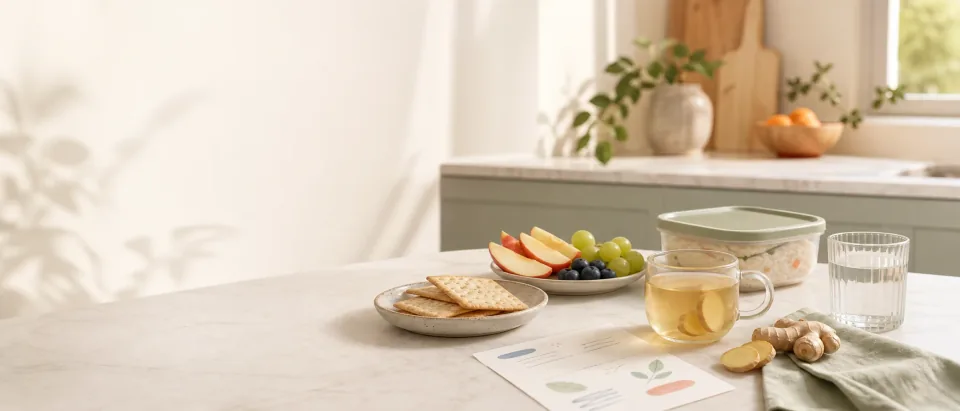
Start with the food that is both tolerable and safe. Plain crackers, toast, fruit, yogurt made with pasteurized milk, simple soups, cooked grains, eggs cooked through, or cold foods with safe handling can all be reasonable options depending on what you can tolerate.
If a craving points toward a higher-risk food, change the form before you panic. Soft cheese needs a pasteurization and storage check. Deli meat is safer when heated until steaming. Produce needs washing. Leftovers need proper refrigeration and reheating. Restaurant food needs the same practical check: how was it cooked, stored, and served?
Only bland foods sound okay
Strong salty or sour craving
Craving a risky food
Nonfood craving
A same-day plan that does not require a perfect diet
A hard day of aversions does not need a perfect meal plan. Try to keep the next step small: sip something, eat a safe food that sounds possible, and avoid turning one strange craving into a full diagnosis.
If you are worried about a specific food, name the exact food and check the practical detail that changes risk: raw or cooked, pasteurized or not, washed or not, refrigerated or left out, recalled or not, and how you feel after eating it.
Early pregnancy
Use small, tolerated foods and fluids; call if vomiting or dehydration takes over.
After a craving
The food-safety answer changes for raw, unpasteurized, recalled, undercooked, or poorly stored foods.
Repeated pattern
Care advice matters when tolerated foods keep shrinking or nonfood cravings keep returning.
When the craving is for one specific food
A cravings article can help you understand the pattern, but exact foods still need exact checks. Burrata, deli meat, sushi, raw eggs, sprouts, leftovers, and restaurant salads do not all have the same answer.
Use Doola's food-safety guides or scan the exact label/menu when the next decision is about the item in front of you.
When cravings or aversions deserve care advice
Call your care team if vomiting is repeated, you cannot keep fluids down, you feel dehydrated, you are losing weight, or you have fever, severe pain, faintness, blood in vomit or stool, or symptoms after a suspect food exposure.
Also ask about repeated nonfood cravings or urges around substances such as dirt, clay, starch, ice, chalk, or cleaner smells. You do not have to make the craving sound dramatic. A simple description helps your clinician decide whether anemia, minerals, medication, or another factor should be checked.
Common questions about cravings and aversions
These answers cover the questions people usually ask after the first worry passes: timing, what to eat, deficiency fears, and when the pattern needs care advice.
Are food aversions normal in early pregnancy? expand_more
What can I eat if everything sounds bad while pregnant? expand_more
Can pregnancy cravings affect the baby? expand_more
Do pregnancy cravings mean I am deficient in something? expand_more
Should I force myself to eat foods I now hate? expand_more
When should I call about pregnancy cravings or aversions? expand_more
How we checked this
We checked pregnancy nausea and nutrition guidance from ACOG and NHS, pica information from MedlinePlus, and pregnancy food-safety guidance from FoodSafety.gov and FDA. We used those sources to separate common appetite changes from the situations that need a safer food choice or care advice.
This guide is educational. It cannot diagnose hyperemesis, anemia, nutrient deficiency, eating disorders, foodborne illness, or fetal risk. Use it to organize what is happening and what to ask next.
References
Source-cited references used for this article. Open the original guidance when you want the public-health details behind the summary.
 Morning Sickness: Nausea and Vomiting of Pregnancy
acog.org
open_in_new
Nutrition During Pregnancy
acog.org
open_in_new
Morning Sickness: Nausea and Vomiting of Pregnancy
acog.org
open_in_new
Nutrition During Pregnancy
acog.org
open_in_new
 Vomiting and morning sickness in pregnancy
nhs.uk
open_in_new
Vomiting and morning sickness in pregnancy
nhs.uk
open_in_new
 Pica
medlineplus.gov
open_in_new
Pica
medlineplus.gov
open_in_new