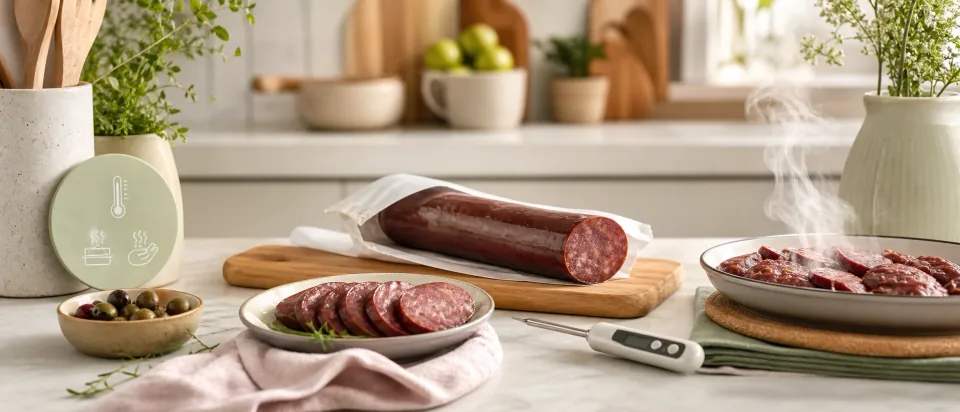
Summer sausage while pregnant is safest when heated until steaming hot or 165°F. Cold summer sausage is a processed ready-to-eat meat question, so check whether the package was intact, stored as directed, in date, unrecalled, and not left out. Do now: if you already ate it and feel well, note the details; ask for care advice if fever, flu-like symptoms, vomiting, diarrhea, dehydration, severe stomach pain, or feeling seriously unwell appears.
Source basis: This guide cross-checks the practical answer against FoodSafety.gov, CDC, USDA FSIS and the full references listed below.
Summer sausage creates a confusing pregnancy question because it can look shelf-stable, party-ready, and already cooked. The useful answer depends on the exact package and serving situation.
This guide keeps the quick lookup separate from the deeper explanation: Can-I-Eat owns the exact yes/no summer sausage check, while this Learn page explains heating, storage, recalls, listeria context, and what to do if you already ate it.
What changes the summer sausage answer
Summer sausage during pregnancy is not one single risk category. USDA FSIS describes summer sausage as a semi-dry sausage, and real packages vary: some are shelf-stable until opened, some require refrigeration, and some are served cold from a party tray. The label and serving situation matter.
The public-health lever is heat. FoodSafety.gov tells pregnant people to heat hot dogs, luncheon meats, cold cuts, fermented sausage, and dry sausage to steaming hot or 165°F. CDC similarly treats heated deli meats and dry sausages as safer choices. That makes hot summer sausage a clearer pregnancy choice than cold slices with unclear storage.
Intact package, stored correctly
Heated until steaming hot
Cold party tray or open package
Recalled, expired, damaged, or off
Symptoms after a suspect food
Check nearby cured meats
Heated summer sausage
Cold slices from an intact package
Party tray or opened package
Recalled, expired, damaged, or off-smelling sausage
If you already ate cold summer sausage while pregnant
Do not start with panic. One serving of cold summer sausage does not mean you will get sick. Start with facts you can still collect: brand, date, whether it was shelf-stable or refrigerated, whether it had been opened, how long it sat out, whether it was recalled, and how you feel now.
Symptoms change the next step. CDC listeria guidance is one reason ready-to-eat meats get extra pregnancy caution. If you develop fever, flu-like symptoms, vomiting, diarrhea, severe stomach pain, dehydration, or feel seriously unwell after a questionable serving, ask your care team what they want you to do.
Why heating and storage get so much attention
FoodSafety.gov gives pregnant people a clear processed-meat rule: heat hot dogs, luncheon meats, cold cuts, fermented sausage, and dry sausage to steaming hot or 165°F. Summer sausage is close enough to that dry/semi-dry sausage family that heating is the simplest conservative move when you want a pregnancy-safe choice.
Storage still matters after heating. USDA FSIS explains that sausage products vary by type and label directions. Some summer sausages may be shelf-stable before opening; others need refrigeration. Once opened, sliced, or served on a board, the safest answer depends on label wording, refrigeration, time out, and clean handling.
Heat answers the biggest question
Label beats assumptions
Symptoms deserve a person
When the exact summer sausage label matters
Summer sausage labels can vary by storage wording, package size, sodium, preservatives, ingredients, casing, and whether the product is sold shelf-stable or refrigerated. Those details do not diagnose safety, but they can change the practical next step.
Doola can help when you are holding the package and need the label translated into pregnancy-relevant checks: storage after opening, serving size, sodium, preservatives, expiration, and whether the question should move to an exact Can-I-Eat lookup.
How we checked this
We checked FoodSafety.gov guidance for pregnant people, CDC safer food choices for pregnant people, CDC listeria guidance for deli foods and prepared meats, and USDA FSIS sausage safety guidance. Then we mapped those sources to Doola's GSC query evidence for summer sausage pregnancy searches.
This article is educational. It cannot inspect your package, confirm a local recall, diagnose symptoms, or replace clinician advice.
Summer sausage pregnancy questions
These answers cover the exact questions behind the summer sausage query family: whether it is allowed, whether heating helps, what to do after cold slices, where listeria fits, and how to use the package label.
Can I eat summer sausage while pregnant? expand_more
Should I heat summer sausage during pregnancy? expand_more
What if I already ate cold summer sausage while pregnant? expand_more
Is summer sausage a listeria risk during pregnancy? expand_more
Can Doola check a summer sausage label? expand_more
References
Source-cited references used for this article. Open the original guidance when you want the public-health details behind the summary.