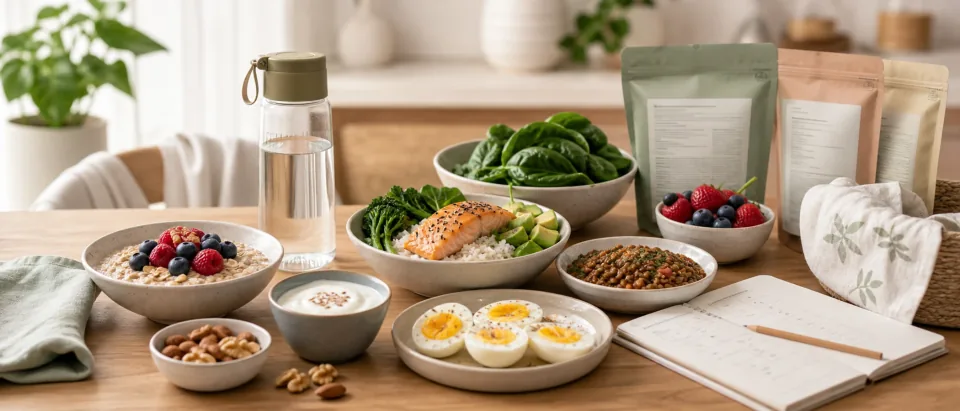
Usually, foods to increase milk supply are support, not a supply test. The safer first steps are enough calories, frequent milk removal, hydration to thirst, and checking baby signs. Use foods as support: oats, protein meals, healthy fats, and snacks can help you eat enough; lactation herbs and teas need exact-label checks.
Source basis: This guide cross-checks the practical answer against CDC, WIC, ACOG and the full references listed below.
Food helps the system; milk removal drives the signal
The honest answer is gentler than most lactation marketing: food can help you have enough energy and nutrients to breastfeed, but it is rarely the only switch that changes supply. WIC explains that supply worries should be checked against baby signs, while ACOG says galactagogues should not replace evaluation of feeding and milk-removal factors.
That means a useful milk-supply food plan has two jobs. First, make eating easier so you are not under-fueled. Second, keep the safety check clear: if baby signs are off, food is not the place to wait. Latch, pumping fit, feeding frequency, diapers, weight, and whether baby is transferring milk decide the next step.
Enough food, often
Pair food with feeding checks
Label-based products
Baby signs matter
When worry is high
Foods worth repeating when breastfeeding makes you hungry
CDC breastfeeding nutrition guidance points to a practical baseline: many well-nourished breastfeeding parents need about 330 to 400 extra calories per day, and lactation raises needs for iodine and choline. The food list below is not a prescription. It is a low-decision way to keep meals steady when hunger, feeding, and sleep are all uneven.
The best "milk supply foods" are often ordinary foods you can actually eat: oats, eggs, yogurt, beans, lentils, tofu, fish lower in mercury, nuts, nut butter, rice bowls, soups, fruit, cooked vegetables, and snacks close to where you nurse or pump. They support the body doing the work; they do not replace feeding support.
Oats and grains
Protein at easy meals
Fats and snacks
What changes supply more than a snack does
Food is one support layer. Milk removal is the stronger signal. If baby is not latching deeply, feeds are skipped, pump parts fit poorly, or pain shortens feeds, supply can look low even with a perfect pantry. ACOG's breastfeeding challenges guidance puts latch, pain, perceived low supply, medications, and support into the same practical problem set.
So if you are worried, pair food with a quick feeding check: how often milk is removed, whether baby swallows, whether latch hurts, whether diapers and weight are on track, and whether the pump setup changed. That check is more useful than adding three new lactation snacks and waiting.
Lactation cookies, teas, powders, and herbs need a label check
Lactation products can feel comforting because they turn a scary question into something you can buy. Some are basically snacks with oats, fat, and sugar. Others act more like supplements because they contain fenugreek, fennel, blessed thistle, moringa, caffeine, or blended botanicals. The safety question depends on the exact label, dose, health history, medicines, allergies, and baby's context.
LactMed's fenugreek review notes limited evidence, possible side effects, and the need to avoid replacing breastfeeding evaluation with galactagogues. ACOG's breastfeeding challenges guidance also treats perceived low supply as something to assess through latch, pain, feeding, medications, and support, not only a product choice. The practical move is to check the exact label, avoid vague blends, and get feeding help if baby signs are off.
Oatmeal or oat bars
Lactation cookies
Lactation teas
Fenugreek capsules
When to call: food is not the fix
Most supply worries are common, stressful, and fixable with better information and support. A calm next step is to eat, keep milk moving, and check the baby signs that matter. When to call: do not wait for a food or tea to work if baby signs are off. WIC and CDC breastfeeding guidance both point families toward observable intake clues: wet and dirty diapers, weight trend, swallowing, alertness, and whether baby can feed effectively. A hungry parent deserves food; a baby with intake concerns deserves timely feeding support.
Call baby's clinician or lactation support promptly if wet or dirty diapers drop, weight gain is concerning, baby is hard to wake, baby looks yellow, feeding is painful, baby cannot stay latched, or you feel something is wrong. Bring the details you have: feeding times, diapers, stool color, pumping output pattern, latch pain, and recent weight checks.
First days
Colostrum is small-volume and feeds are frequent. Watch diapers, weight, jaundice, latch, and alertness while milk transitions.
Weeks 1-6
Eat often, keep drinks nearby, and get latch or pumping help if transfer, pain, diapers, or weight make you worry.
Later breastfeeding
WIC notes softer breasts and shorter feeds can happen as supply adjusts. Check baby signs before assuming supply has dropped.
Sources behind this guide
This guide was checked against CDC breastfeeding nutrition guidance, WIC low-supply guidance, CDC newborn breastfeeding basics, ACOG breastfeeding challenges guidance, FDA fish advice for breastfeeding, and LactMed's fenugreek review. Food and product questions shaped the structure, but trusted sources set the safety boundaries.
This guide is educational and evidence-checked. It does not diagnose milk supply, assess a latch, clear herbs or medicines, tell you whether baby is getting enough, or replace pediatric or lactation care.
Milk-supply food questions parents search next
Most follow-up questions come from the same worry: "Can I do something today?" The source-backed answer is yes, but the action is broader than one food. CDC supports enough calories and varied meals while breastfeeding. WIC points parents toward diapers, weight, swallowing, and alertness when supply is the worry. ACOG and LactMed add caution around galactagogues and herbs. Use foods to make breastfeeding easier on your body, check labels on lactation products, and call for support when baby intake signs are off.
What foods actually help milk supply? expand_more
Do oats increase breast milk? expand_more
Are lactation cookies and teas safe? expand_more
How fast can food increase milk supply? expand_more
How do I know if baby is getting enough milk? expand_more
Can drinking more water increase milk supply? expand_more
References
Source-cited references used for this article. Open the original guidance when you want the public-health details behind the summary.
 ACOG: Breastfeeding Challenges
acog.org
open_in_new
ACOG: Breastfeeding Challenges
acog.org
open_in_new