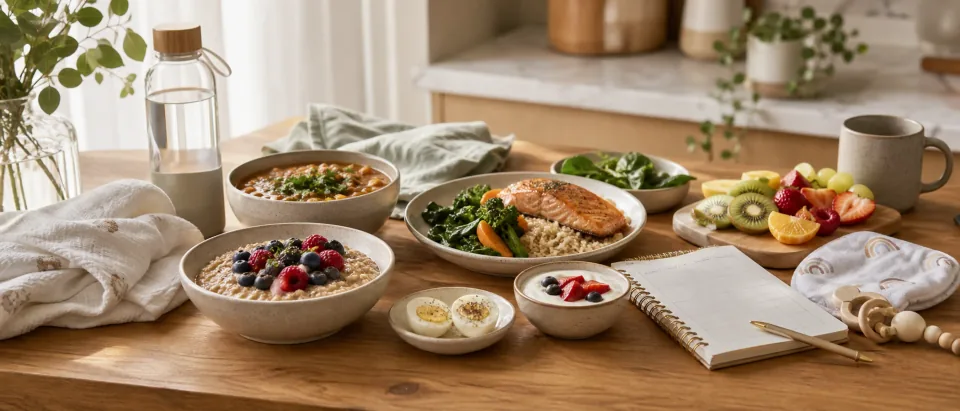
A postpartum meal plan should make eating easier, not stricter. CDC breastfeeding nutrition guidance points to enough calories, varied meals, iodine, choline, and moderate caffeine. Start with protein, fiber-rich carbohydrates, produce, healthy fats, and reachable drinks. Next step: use baby clues, not lactation snacks, to judge supply.
Source basis: This guide cross-checks the practical answer against CDC, FDA, WIC and the full references listed below.
The no-perfect-plan starting point
A good postpartum meal plan is not a reset diet or a perfect color-coded calendar. It is a backup system for the weeks when you are healing, feeding a baby, sleeping in fragments, and eating whenever two hands appear. CDC breastfeeding nutrition guidance supports a practical food-first frame: enough food, variety, and key nutrients matter more than a special postpartum menu.
If you are breastfeeding, the plan needs a little more attention to calories and nutrients. CDC guidance says many well-nourished breastfeeding parents need about 330 to 400 extra calories per day, and lactation increases needs for iodine and choline. That does not mean special foods. It means eating enough ordinary food often enough.
Repeatable beats perfect
Protein, carb, color, fat
Add calories and nutrients
Herbs, teas, powders
Symptoms or baby intake
Three days of meals you can actually repeat
Use this as a flexible pattern, not a rule. CDC guidance supports varied meals and enough energy during breastfeeding, while FDA seafood advice changes which fish belong in the plan. Swap foods for your culture, budget, allergies, appetite, and what someone else can cook. The goal is to keep recovery and feeding from depending on willpower at 2 a.m.
One-hand snacks
Warm meals
Hydration stations
How breastfeeding changes the plan
Breastfeeding can make hunger feel sudden. That is normal for many parents, and CDC's calorie guidance gives a reason: milk production can increase energy needs. The practical move is to add food you can repeat, not to chase a perfect lactation menu.
CDC also highlights iodine and choline during lactation. In food terms, that can mean eggs, dairy, seafood, iodized salt, beans, lentils, meat, poultry, or clinician-reviewed supplements if your diet excludes key groups. If you are vegan, vegetarian, dairy-free, or avoiding seafood, the supplement question becomes more personal.
Supply worries belong in a different bucket. WIC notes that soft breasts, shorter feeds, cluster feeding, and low pump output can be false alarms. Baby's diapers, weight, latch, swallowing, alertness, and feeding comfort matter more than any one milk-boosting food.
What to limit, check, or skip
Most normal foods do not need to disappear after birth. CDC guidance says breastfeeding mothers generally do not need to avoid specific foods, but seafood and caffeine deserve clearer limits. FDA fish advice applies to people who are breastfeeding: choose lower-mercury fish more often and avoid the highest-mercury fish.
Caffeine can usually stay moderate. CDC describes about 300 mg per day, roughly two to three cups of coffee, as a low-to-moderate amount for most breastfeeding mothers. Very high intake may affect some babies, and younger or preterm babies may process caffeine more slowly.
The stricter check is for products that behave like supplements: lactation teas, fenugreek capsules, herbal soups, powders, energy drinks, weight-loss products, sleep aids, or anything promising supply, hormones, mood, or faster recovery. LactMed notes that galactagogues should not replace evaluation of modifiable milk-production factors, and supplement labels can differ from actual ingredients.
Lower-mercury fish
Highest-mercury fish
Caffeine
Herbs and lactation products
Build a postpartum pantry before you need it
The best plan is the one that survives a missed grocery trip. Stock foods that can become meals in five minutes: microwave grains, canned beans, lentils, soup, tuna or salmon, eggs, nut butter, frozen vegetables, frozen dumplings, yogurt, cheese, tortillas, pasta, sauce, oats, fruit, and prewashed greens.
If family or friends ask how to help, give them a short food job instead of a vague request. Ask for chopped fruit, soup portions, rice bowls, lactation-safe snacks without herbs, grocery pickup, or washed bottles and containers. This turns support into something you can actually use.
For families practicing zuo yuezi or another postpartum food tradition, keep the helpful parts: warm meals, practical rest, family support, and fewer decisions. Question rules that remove food variety, delay medical help, or push herbs without a clear label.
When food is not the fix
A meal plan can support recovery, but it should not carry symptoms that need help. Call your care team for fever, heavy bleeding, severe pain, breast redness with flu-like symptoms, dizziness, wound concerns, or mood symptoms that feel intense, unsafe, or impossible to talk about.
Call baby's clinician or get lactation support if feeding is painful, baby is hard to wake, wet diapers drop, weight gain is concerning, or you are worried baby is not transferring milk. Those are not meal-plan problems. They are feeding or recovery questions that deserve a person who can assess the situation.
First week
Prioritize warm meals, snacks, drinks, and support. If breastfeeding, expect hunger and thirst to change quickly.
Weeks 2-6
Keep meals simple while bleeding, sleep, feeding, mood, and wound healing settle. Escalate symptoms rather than trying to eat through them.
After six weeks
Return to broader goals gradually. If breastfeeding continues, keep calorie, nutrient, seafood, caffeine, and supplement checks in the plan.
Sources behind this guide
We checked this guide against CDC maternal diet and breastfeeding guidance, FDA fish advice for people who are pregnant or breastfeeding, WIC breastfeeding support on milk-supply worries, LactMed herb and supplement context, and ACOG postpartum and breastfeeding guidance. Search intent shaped the meal-plan format; official and clinical sources shaped the safety claims.
Doola Learn is educational and source-linked. It does not diagnose postpartum recovery problems, clear herbs or medicines, replace lactation care, or tell you whether a specific baby is getting enough milk.
Postpartum meal plan questions parents search next
These are the practical follow-up questions that usually come after the first plan. CDC anchors calories, caffeine, iodine, and choline; FDA anchors seafood choices; WIC anchors milk-supply reality checks; LactMed anchors herb and lactation-supplement caution.
What should a postpartum meal plan include? expand_more
Do I need a different meal plan if I am breastfeeding? expand_more
What easy postpartum meals can I prep ahead? expand_more
What foods should I avoid after giving birth? expand_more
Can food increase milk supply? expand_more
Are lactation snacks and teas safe postpartum? expand_more
References
Source-cited references used for this article. Open the original guidance when you want the public-health details behind the summary.