Direct answer
What is zuo yuezi?
Postpartum confinement, also called zuo yuezi or 坐月子, is a traditional postpartum care period focused on rest, warm meals, household support, and recovery after birth. The safest modern version keeps practical support while updating rules that restrict hygiene, nutrition, movement, medical care, or the mother’s ability to say no. WHO and ACOG postpartum guidance support recovery, feeding, sleep, mood, family context, hygiene, warning-sign care, and social support; CDC nutrition guidance supports varied food instead of broad postpartum food bans.
Food should lower effort
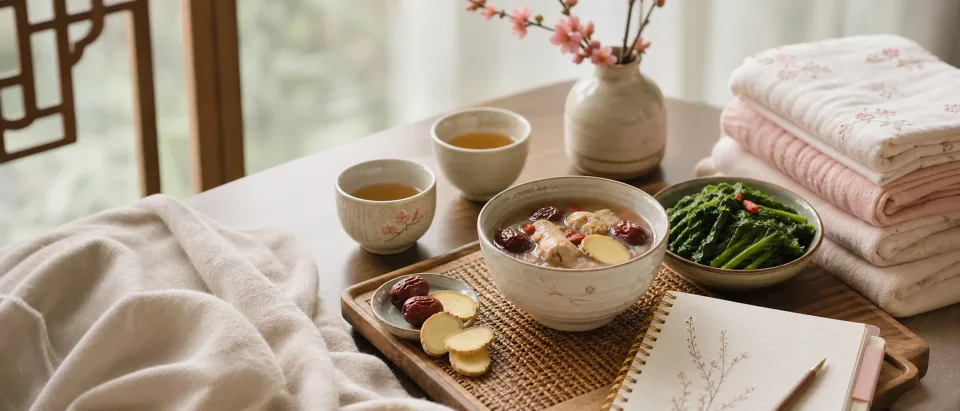
Soup helps when it means someone noticed you needed to eat. CDC breastfeeding nutrition guidance still points to varied food, protein, fiber, calcium, iron-rich foods, and fluids rather than narrow postpartum bans.
Family should become infrastructure
The strongest version assigns jobs: meals, laundry, visitors, dishes, older-child care, protected sleep, and one mother check-in.
Culture should preserve agency
A grandmother’s recipe can be comfort. A rule that makes the mother smaller, scared, or unheard needs changing.
01 · Start here
What a new mother actually needs in the first month
The first month after birth is not just a body healing. It is feeding, bleeding, sleeping in fragments, learning a baby, recovering an identity, and trying to stay emotionally intact while everyone asks about the baby first.  ACOG describes postpartum care as an ongoing process that includes physical recovery, mood, feeding, sleep, fatigue, and social support.
The better question is not whether zuo yuezi is science or superstition. It is: does this practice give her more rest, nourishment, cleanliness, support, and voice?
If yes, keep it. If no, adapt it. A rule that improves meals, hygiene, feeding support, sleep, mood, or care-seeking is doing useful work. A rule that creates fear, isolation, poor nutrition, or delayed care is not.
02 · Evidence
What the sources support, translated into home life
A modern zuo yuezi plan is a source-backed support model, not one fixed medical rulebook. According to WHO and
ACOG, safer postpartum care includes physical recovery, feeding support, sleep, social help, mental health, nutrition, hygiene, and timely care when symptoms are concerning. Chinese postpartum studies show why the practical test matters: traditional confinement can combine helpful family support with food restriction, hygiene taboos, and delayed care.
WHO and ACOG
Postnatal care should support recovery, feeding, sleep, mood, family context, and warning signs.
Make the household responsible for meals, rest blocks, visitor limits, and knowing when to call.
CDC nutrition
Breastfeeding parents generally need a healthy, varied diet and often more calories.
Keep warm soups if they comfort her, but add protein, fiber, fruit or vegetables, calcium, iron, and fluids.
Chinese studies
Traditional practices mix helpful support with harmful taboos, and food restriction is common in some settings.
Treat every rule as a design choice: does it improve rest, nutrition, hygiene, agency, or care-seeking?
The best modern version is not less cultural. It is more precise: keep the care, remove the parts that make recovery smaller, and use source-backed guidance when a rule affects hygiene, nutrition, breastfeeding, warning signs, mental health, or herbs, supplements, and medications.
03 · The keep/adapt/drop test
A practical way to talk with family
When a confinement rule comes up, do not debate whether it is traditional enough. Ask what job it is trying to do, then choose the safest version of that job. This is a care-design test, not a medical approval test: when a rule affects hygiene, nutrition, warning signs, medication, herbs, breastfeeding, or access to care, use WHO, ACOG, CDC, or clinician guidance instead of family pressure.
Keep
Warm meals, soup, less housework, visitor limits, older-child help, feeding help, protected sleep.
These lower effort and make recovery visible.
Adapt
Avoiding cold foods, staying indoors, limiting visitors, using ginger or red dates.
Turn preferences into complete meals, fresh air when wanted, real boundaries, and food-like ingredients.
Drop
No showering, no tooth brushing, no fruit or vegetables, forced herbs, delayed care, shaming, isolation.
These can reduce hygiene, nutrition, safety, or agency.
A sentence that often works: “I want to keep the support part of zuo yuezi. Let’s make the rules help me recover instead of making me afraid to do normal care.”
04 · Food
Make confinement food nourishing, not narrow
Traditional postpartum foods can fit beautifully: soups, ginger, red dates, rice, eggs, fish, chicken, pork, tofu, sesame, greens, and soft cooked meals. The goal is not to turn the month into a cold salad plan. The goal is to keep the comfort and make the plate complete.
Protein
Eggs, fish lower in mercury, chicken, pork, tofu, beans, lentils, or dairy if tolerated.
Fiber
Cooked vegetables, fruit, oats, sweet potatoes, beans, and whole grains so constipation does not become part of recovery.
Minerals
Iron-rich foods plus vitamin C; calcium-rich foods or supplements if your clinician recommends them.
Fluids
Water, soup, tea, and fluids to thirst, especially when breastfeeding.
CDC supports a healthy, varied diet and notes many well-nourished breastfeeding parents need about 330 to 400 extra calories per day.
05 · Herbs and tonics
Treat herbs like ingredients, not family pressure
Herbal-safety decisions after birth are ingredient and dose decisions, not family etiquette decisions. The risk changes with breastfeeding, bleeding, C-section recovery, blood pressure, medications, dose, and the exact formula.
Food-like ingredients in normal meals are different from concentrated pills, powders, tinctures, or strong formulas. If someone wants to use a concentrated product, write down the exact name, ingredients, amount, and timing before using it.
Doola can help keep that conversation specific by saving the exact product or ingredient instead of letting a family argument stay vague. For pregnancy and postpartum label questions, start with the supplement checker or ingredient checker.
06 · Mental health
The emotional part is not a side note
Postpartum emotional support is part of the care plan, not an optional extra. A good confinement month can lower decision fatigue: food appears, laundry happens, and the doorbell is managed. But the same tradition can become stressful when it turns into criticism, surveillance, isolation, or family conflict. Support is not the same as control.
Strong sadness, intense worry, rage, numbness, hopelessness, intrusive scary thoughts, inability to sleep even when exhausted, or thoughts of harm should not be hidden to preserve family harmony. March of Dimes treats these as care signals, and
ACOG frames postpartum care as an ongoing process rather than one six-week visit.
Related Doola guides can help name what is happening: postpartum rage, postpartum anxiety, and postpartum recovery.
07 · Build the month
A 30-day plan that works in a real home
Before birth
Name the non-negotiables: meals, water, shower access, clean pads, dental hygiene, rest blocks, feeding support, and a way to contact care.
Write the plan before everyone is tired.
First week
Assign jobs to people: meals, laundry, visitors, dishes, older-child care, baby soothing, and one person who checks on the mother.
Help should arrive as tasks, not opinions.
Weeks 2 to 4
Keep what feels supportive. Change what feels controlling. The plan should get lighter as the mother feels steadier.
A good system adapts as recovery changes.
After the month
Carry the useful parts forward: meal help, fewer demands, mood check-ins, and permission to recover at her own pace.
Thirty days is a beginning, not a finish line.
08 · When to call
Confinement should never mean waiting silently
ACOG and WHO postpartum guidance both treat ongoing care and warning signs as part of recovery, so postpartum confinement should never mean waiting silently. Contact care promptly for heavy bleeding, large clots, fever, worsening pain, signs of infection, chest pain, shortness of breath, severe headache, vision changes, calf pain or swelling, or any symptom your discharge instructions warned you about.
For mood, get support if sadness, worry, rage, intrusive thoughts, hopelessness, or numbness feels intense, unsafe, or impossible to talk about. If someone might be harmed, seek emergency help now and ask another adult to stay with the mother and baby.
Keep reading
Related postpartum guides
FAQ
Common questions about zuo yuezi
What is zuo yuezi?
Zuo yuezi, or 坐月子, is a traditional postpartum care period focused on rest, warm meals, household support, and recovery after birth.
Is postpartum confinement evidence-based?
Not as one fixed medical protocol. The better-supported parts are rest, nutrition, feeding support, hygiene, social support, mood attention, and timely care. Some traditional rules can help; strict taboos around food, hygiene, movement, or care-seeking can make recovery harder.
Can you shower during zuo yuezi?
Yes. Hygiene matters after birth. Use warm water, dry well, and follow any C-section, tear, wound, or clinician instructions.
What should you avoid during zuo yuezi?
Avoid rules that reduce safety or agency: no showering, no tooth brushing, broad food bans, forced herbs, delayed care, shaming, isolation, or pressure to ignore mood symptoms.
What foods are good after birth?
Keep comforting foods like soups, rice, ginger, red dates, eggs, fish lower in mercury, chicken, tofu, sesame, greens, and soft cooked meals, then make the plate complete with protein, fiber, calcium, iron-rich foods, and enough fluids.
References
How we checked this
This article is a source-mapped evidence summary, not a medical protocol. It compares the spirit of zuo yuezi with WHO postnatal-care guidance, ACOG postpartum-care guidance, CDC breastfeeding nutrition guidance, peer-reviewed studies on Chinese confinement practices, and March of Dimes information on postpartum mood. The citation set was chosen to answer three practical questions: what support is useful, what rules can reduce hygiene or nutrition, and when a mother should seek clinician care. Doola can organize questions, but it cannot diagnose, treat, approve herbs, or replace care.
ACOGOptimizing Postpartum Care