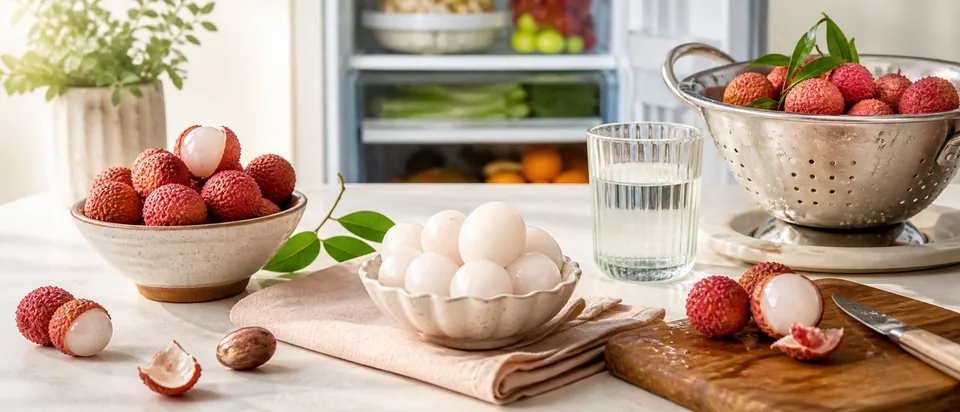
Lychee during pregnancy: usually okay as a normal fruit portion when the fruit is fresh, washed before peeling, ripe, and not spoiled. Check first: canned lychee in syrup, lychee drinks or desserts, unclear storage, mold, or any blood-sugar guidance from your care team. Do now: wash whole lychee before peeling and discard anything that smells fermented or looks off.
Source basis: This guide cross-checks the practical answer against FDA, CDC and the full references listed below.
The useful split: fresh, canned, or questionable
Fresh lychee during pregnancy is usually a normal fruit decision: choose intact fruit, wash it before peeling, peel it with clean hands, and eat it soon after opening. FDA produce guidance recommends washing produce before eating, cutting, or peeling, so the peel does not make washing irrelevant.
Canned lychee is a product-label decision: the can or jar may be fine, but syrup, added sugar, serving size, and storage after opening matter. FDA label guidance separates added sugars on packaged foods, which is why canned lychee in heavy syrup is closer to dessert than plain fresh fruit.
Questionable lychee is a food-safety decision: skip fruit that smells fermented, looks moldy, leaks, feels slimy, sat warm after peeling, or came from a prepared tray with unclear refrigeration. Pregnancy food-safety guidance treats contaminated fruit and juice seriously, so freshness and storage are part of the answer.
Fresh, washed, ripe
Canned, drinks, desserts
Spoiled or unclear
Wash, peel, store
Freshness and labels
Fresh whole lychee
Canned lychee in syrup
Prepared trays or dessert
Wash lychee before peeling, even though you do not eat the shell
Wash whole lychee before peeling it. FDA produce guidance says to rinse fresh produce under running water before eating, cutting, or peeling. With lychee, that matters because your fingers, a knife, or the cracked shell can move residue from the outside of the peel onto the fruit you eat.
This is the same practical logic as other peelable produce: the edible part may be protected until the moment you open it, but the opening step is when outside residue can reach the inside. Washing first, then peeling with clean hands, makes the safety step easy to remember.
The pregnancy-safe routine is simple and repeatable: rinse the whole fruit, dry it with a clean towel, peel with clean hands, discard bruised or spoiled pieces, and eat peeled fruit soon. For canned lychee, follow the storage wording on the label after opening and keep leftovers refrigerated.
Fresh lychee is fruit; canned lychee is often dessert-adjacent
Fresh lychee can fit like other fruit when it is handled cleanly. It gives sweetness, fluid, and fruit variety, but it is not a special pregnancy requirement and should not be treated as a cure or guaranteed benefit.
Canned lychee, lychee drinks, and lychee desserts need a different lens. Syrup and added sugar can make the serving much sweeter than plain fruit, and FDA nutrition-label guidance asks packaged foods to list added sugars separately. That makes the label useful when comparing canned fruit, fruit cups, drinks, or desserts.
The practical pregnancy answer: fresh washed lychee is usually a fruit portion; canned lychee in heavy syrup is usually a sweetened packaged food; lychee drinks need pasteurization and added-sugar checks; lychee desserts depend on the full recipe and storage. If your care team gave you glucose, gestational diabetes, or individualized nutrition guidance, follow that plan and treat syrupy versions more like a sweet add-on than a simple fruit serving.
Fresh fruit
Canned syrup
Drinks and desserts
Where Doola helps with the exact product
The general answer is clear enough for fresh lychee: wash it, check freshness, peel it cleanly, and keep the portion normal. The question gets harder when you are holding a can, cup, drink, dessert, or prepared tray with syrup, sweeteners, preservatives, storage wording, or unclear refrigeration.
Doola helps most when the decision depends on those exact details. For example, a can of lychee may need serving-size and syrup checks, a lychee drink may need pasteurization and added-sugar checks, and a prepared dessert may need ingredient and refrigeration checks. Doola keeps those label, storage, and food-safety details together so the question becomes concrete instead of vague.
How we checked this
We used FDA pregnancy food-safety guidance for fruit and juice, FDA produce-handling guidance for washing before peeling, CDC pregnancy food-safety guidance for higher-risk food decisions, and FDA nutrition-label guidance for added-sugar framing. Those sources support the main splits in this article: fresh lychee, canned syrup, juice or drinks, prepared fruit, and spoiled fruit.
This guide is educational and cannot replace individualized nutrition or pregnancy care advice. It is meant to help you organize the product details that change the answer, especially freshness, washing, refrigeration, pasteurization, syrup, added sugar, and symptoms after questionable food.
References
Source-cited references used for this article. Open the original guidance when you want the public-health details behind the summary.