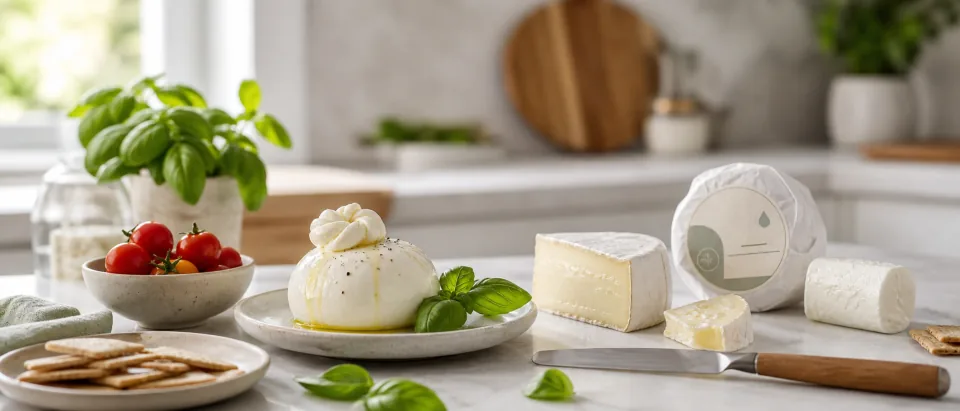
Can you eat burrata while pregnant? Usually yes when the burrata is made with pasteurized milk, kept cold, eaten before its use-by date, and served from a source you trust. Check this first: look for pasteurized milk on the label or ask the restaurant because burrata safety depends on pasteurization and handling. Avoid or call: skip unpasteurized burrata, unclear restaurant handling, recalled cheese, or opened burrata that sat out; call your care team for fever, flu-like symptoms, vomiting, diarrhea, or feeling very unwell after a higher-risk cheese exposure.
Source basis: This guide cross-checks the practical answer against CDC, FDA, FoodSafety.gov and the full references listed below.
The burrata answer starts with pasteurization
Can pregnant women eat burrata? Usually yes when it is made with pasteurized milk, kept refrigerated, eaten fresh, and served from a source you trust. The answer changes when burrata is unpasteurized, sitting out, restaurant-made with unclear handling, or tied to a recall. For burrata pregnancy searches, the safest quick check is not the cheese name alone; it is pasteurization plus cold handling.
Clearer choice
Check or avoid
Practical step
After eating
Exact foods
Clearer choice
Check or avoid
Already ate it
Is burrata pasteurized? Check this before you eat
Some burrata is pasteurized and some is not, so the label or restaurant answer matters more than the cheese name. In the US, many supermarket burrata products use pasteurized milk, but imported, specialty, house-made, or restaurant burrata can still be unclear unless the package or kitchen confirms it.
For pregnancy, the practical rule is: pasteurized milk, kept cold, eaten fresh, and not recalled is the safer path. If the menu only says “fresh burrata” and staff cannot verify pasteurization or refrigeration, choose a cooked cheese dish or another appetizer.
What to look for
What to ask
When to skip
Why pasteurized burrata is different from uncertain burrata
Burrata is a fresh soft cheese, so the risk is less about the elegant name and more about milk treatment and cold handling. FDA, CDC, and FoodSafety.gov all point pregnant people away from unpasteurized dairy because it can carry Listeria and other foodborne pathogens. Pasteurized burrata that stays cold is a different decision from a loose restaurant portion that has been opened, held, or handled without a clear answer.
The practical split is simple: verify pasteurized milk and refrigeration, or choose something cooked. That gives you a calmer answer than trying to memorize every soft cheese name.
Lower concern
Caution point
Best next move
How to order burrata at a restaurant while pregnant
At home, check the package for pasteurized milk, keep the cheese cold, and avoid saving opened burrata at room temperature. At a restaurant, ask one direct question: is the burrata pasteurized and kept chilled? If the answer is vague, the safer move is not to interrogate the menu; it is to pick a cooked cheese dish or a different appetizer.
This also applies to brie, queso fresco, feta, and other soft cheeses. The name changes, but the useful question stays the same: pasteurized, cold, fresh, and not recalled?
If you already ate burrata while pregnant
If you already ate burrata while pregnant, one serving does not automatically mean something bad happened. Write down the brand or restaurant, time eaten, amount, whether it was cold, and whether you know it was pasteurized. If it was packaged, keep the package details and check recall information.
Call your clinician or local advice line if fever, chills, vomiting, diarrhea, severe cramps, dehydration, or feeling very unwell after a risky cheese exposure appears, or if the exposure involved a recalled food. If you feel well, the most useful next step is usually to avoid the unclear version next time and choose the safer preparation.
Write down
Watch for
Ask for care advice
Safer swaps that still feel like the same meal
The best swap keeps the meal idea but removes the uncertainty. Choose pasteurized burrata from a chilled package, mozzarella made with pasteurized milk, a baked cheese dish, or another appetizer where the kitchen can confirm handling. If the only option is unpasteurized or vague, skipping that serving is the simpler choice.
Doola Scan and the pregnancy food checker are useful when the label or menu language gets messy: pasteurized, cultured, fresh, soft-ripened, imported, raw milk, served cold. Those terms can change the answer more than the food name alone.
At home
At restaurants
When unsure
How we researched this
We checked CDC, FDA, and FoodSafety.gov guidance on pregnancy food safety, unpasteurized dairy, Listeria risk, and safer dairy choices. We also refreshed this page after GSC showed exact burrata pregnancy queries gaining impressions around positions 11-16. This guide is educational and source-linked; it cannot verify a restaurant's handling or replace care advice after symptoms or recalled-food exposure.
References
Source-cited references used for this article. Open the original guidance when you want the public-health details behind the summary.