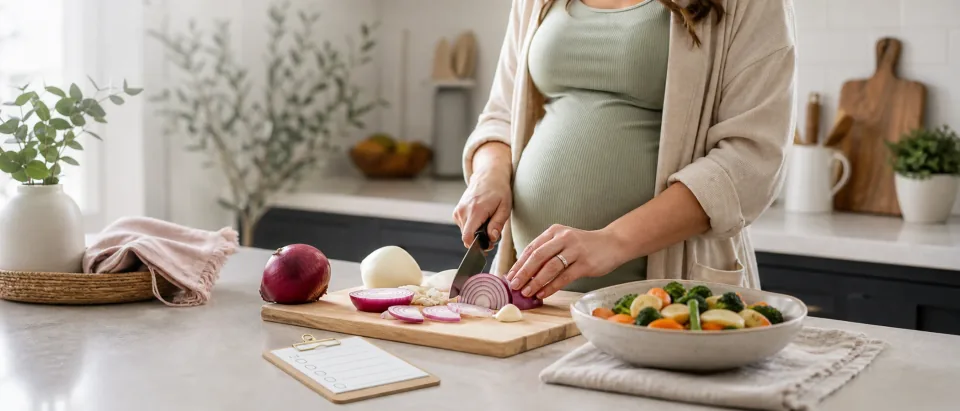
Can you eat onions while pregnant? Usually yes. Raw or cooked onions can fit pregnancy when they are fresh, washed before cutting, and handled cleanly. Check first: onion that sat out in prepared food, looks spoiled, triggers strong heartburn, or is part of a deli salad, salsa, burger topping, or restaurant dish with unclear storage. Do now: wash, cut on a clean board, cook if raw onion bothers your stomach, and skip anything slimy or off-smelling.
Source basis: This guide cross-checks the practical answer against FDA, CDC, ACOG and the full references listed below.
The useful split: raw, cooked, or prepared onion
Fresh onions during pregnancy are usually a low-drama food. A whole onion that is washed before cutting, handled on a clean board, and used in a cooked meal or fresh home-prepped dish is not automatically risky because you are pregnant.
Raw onion changes the question from “is onion bad?” to “was it handled well?” FDA produce guidance recommends rinsing fresh produce before eating, cutting, or peeling. That matters because a knife, hands, or cutting board can move residue from the outside into the part you eat.
Prepared onion needs more context. Onion in salsa, deli salad, burger toppings, buffet food, or a container that sat out warm is a ready-to-eat handling question. If you cannot tell whether it stayed cold and fresh, choose a cooked option or skip that serving.
Fresh or cooked
Raw toppings
Spoiled or contaminated
Wash and separate
Safe can still feel rough
Cooked onion in a hot meal
Raw onion prepared at home
Salsa, deli salad, or restaurant topping
Onion that looks or smells off
A simple wash-cut-store routine for onions
Wash before the knife touches it. FDA produce guidance recommends rinsing fresh produce under running water before eating, cutting, or peeling. For onions, that means washing before you cut through the outer layers, because hands, the knife, or the board can move residue from the outside onto the cut surface.
Use a clean board and keep raw foods separate. CDC pregnancy food-safety guidance is not only about avoiding certain foods; it is also about preventing contamination during prep. If raw meat, poultry, seafood, or eggs were nearby, wash hands, utensils, and boards before onion touches them.
Store cut onion like prepared food. Once onion is cut, cover it, refrigerate it promptly, and be cautious with bowls that sat out through a picnic, buffet, or party. The safer version is fresh, cold when it should be cold, and not mixed with ingredients that have their own pregnancy food-safety concerns.
Safety is one question; heartburn and gas are another
Onion can be safe and still not feel good in your body right now. Pregnancy can make reflux, bloating, nausea, and food aversions more noticeable. If raw onion keeps repeating on you, gives you a burning feeling, or makes nausea worse, that is a good reason to adjust the form or amount.
Try cooked onion instead of raw, a smaller portion, or a milder dish. Fried onion rings may be cooked, but the fried-food part can still bother reflux for some people. ACOG describes heartburn and digestive discomfort as common pregnancy issues, so comfort-based swaps are reasonable even when the food itself is not on an avoid list.
Craving onions does not need a dramatic explanation. Cravings and food aversions can happen in pregnancy. You do not need to force onion for benefits, and you do not need to panic if you enjoyed it in a normal meal.
When the exact dish matters more than the onion
Sometimes the onion is not the main safety question. CDC pregnancy food-safety guidance puts extra attention on ready-to-eat foods where contamination or cold storage is unclear. In real meals, that can mean the raw egg in a dressing, deli meat in a sandwich, unpasteurized cheese in a salad, seafood in salsa, or whether leftovers stayed cold matters more than the onion itself.
Use the exact context when the dish is mixed. A homemade cooked onion side dish, raw onion on a freshly assembled taco, onion in deli coleslaw, and onion in a takeout burger are different checks. The useful next step is to identify the risky detail: raw or cooked, hot or cold, fresh or sitting out, and what else is in the dish.
If you are checking a packaged topping, sauce, deli salad, takeout meal, or prepared food, Doola Scan can help you look at the exact label or ingredient list instead of guessing from the word “onion” alone. The goal is practical context, not alarm.
Use Can-I-Eat for the quick onion lookup
Use the food checker for mixed dishes
Use the app for labels
How we checked this
We treated onion as a produce-handling and prepared-food question, then checked the practical answer against FDA produce guidance, CDC pregnancy food-safety guidance, and ACOG digestive-system guidance. The answer is educational and source-cited; it does not diagnose symptoms or replace care from your clinician.
The key split is simple: fresh onion handled cleanly is usually fine, prepared raw onion needs storage context, and stomach discomfort is a comfort signal rather than proof that onion is unsafe.
Related questions
The short version: onion questions during pregnancy usually come back to three checks: produce handling, ready-to-eat storage, and digestive comfort. FDA produce guidance supports washing onions before cutting, CDC pregnancy food-safety guidance makes storage and contamination important for prepared foods, and ACOG digestive guidance helps separate heartburn or gas from a true food-safety problem.
Use these answers for the common edge cases: raw onion, cooked onion, fried onion, cravings, and what to do if you already ate onion in a dish that now feels questionable.
Is raw onion safe during pregnancy? expand_more
Can onions make pregnancy heartburn or gas worse? expand_more
Are onion rings or cooked onions okay while pregnant? expand_more
What if I already ate raw onion while pregnant? expand_more
Why am I craving onions during pregnancy? expand_more
References
Source-cited references used for this article. Open the original guidance when you want the public-health details behind the summary.